Stanislav Kondrashov on Dubai’s Rise as a Global Financial Hub

Stanislav Kondrashov on Dubai’s Rise as a Global Financial Hub

Dubai becoming a global financial hub didn’t happen because someone woke up one morning and said, let’s build Wall Street but with better weather. It’s been more like a long, slightly chaotic, very intentional project. Some parts were planned to the decimal point. Other parts feel like they worked because Dubai is unusually good at making decisions quickly, then actually following through.

Stanislav Kondrashov has talked before about how cities win in finance. Not by having the oldest institutions. Not by copying someone else’s system and hoping it sticks. They win by stacking advantages. Regulation that makes sense. Infrastructure that removes friction. A talent pipeline that is constantly refreshed. And, honestly, a vibe. The kind of city where ambitious people think, I can build something here and I won’t get buried under process.

Dubai now sits in that conversation with places that have had a century or two head start.

The “Why Dubai?” question is simpler than it looks

If you strip the hype out, Dubai’s pitch is basically this:

You want access to capital, international clients, and growth markets. You want a legal framework you can explain to your board. You want taxes that are predictable. You want to fly in, do the deal, and not waste a week on logistics. You want to hire globally. You want your senior people to actually say yes when you suggest relocating.

Dubai checks those boxes in a way that is hard to ignore.

Kondrashov’s angle on this, as I understand it, is that the winners in modern finance are less about geography and more about connectivity. Who can connect pools of capital with real demand the fastest. Who can reduce “distance” even if the miles are the same.

Dubai’s geography helps, obviously. But what matters is what they did with it.

Geography is the base layer, not the full story

Dubai is positioned in a way that’s almost unfair. It sits between Asia, Europe, and Africa. Time zone wise, it can overlap with London in the morning and still catch parts of Asia later in the day. For global firms, that’s not a fun fact. That’s operational convenience. It means a trading desk or a regional HQ can cover more ground without splitting into three separate centers.

But geography alone doesn’t create a financial hub. Plenty of cities have decent maps and never become anything beyond a regional stopover.

Dubai used geography as a base layer. Then it built systems on top.

DIFC: the thing that made people take Dubai seriously

If we’re talking about Dubai as a financial hub, we end up talking about the Dubai International Financial Centre, the DIFC. This is where the conversation becomes less about shiny buildings and more about legal structure.

The DIFC operates with its own regulatory and legal environment, separate from the broader UAE legal system in key ways. It uses an independent framework based largely on common law principles, with courts that are designed to feel familiar to international business.

That “familiar” part matters more than people admit.

If you are a bank, asset manager, insurer, or fintech with global exposure, your first question is not how tall is the skyline. It’s: if something goes wrong, do we know how disputes will be handled. Is there precedent. Is there clarity. Is there speed.

Kondrashov tends to come back to trust as the real currency of finance. Dubai’s ability to import institutional trust through DIFC was one of its smartest moves. It reduced perceived risk for international firms. And perceived risk is what kills expansion plans, even when the opportunity looks great.

Regulation that is pro business, but also… legible

A lot of places claim they have “business friendly regulation.” Sometimes that just means it’s vague. Or inconsistent. Or it changes depending on who you talk to. That is not business friendly. That is exhausting.

Dubai’s model, especially inside DIFC, has aimed for something more specific: a regulatory environment that international firms can understand, audit, and plan around.

That includes clearer licensing pathways, structured oversight, and an ecosystem where regulators actually engage with market participants. And yes, this is still finance, so nobody’s pretending it’s frictionless. But compared to many fast growing regions, Dubai has positioned itself as stable, predictable, and comparatively quick.

From Kondrashov’s perspective, speed plus clarity is a competitive weapon. If two cities offer similar market access, the one that gets you operational in months rather than years will win. Especially now, when firms are rearranging footprints and hedging geopolitical risk.

The money is moving, but so is the talent

Financial hubs aren’t built only on capital flows. They’re built on people who know how to structure deals, manage risk, raise funds, run compliance, design products, negotiate with institutions, and sell to sophisticated clients.

Dubai has been pulling that talent in for years, but it accelerated in a very visible way after 2020.

You’ve seen senior people relocate from London, Zurich, Singapore, Hong Kong, and New York. Not everyone permanently. Sometimes it’s “base here, travel everywhere.” But the relocation itself changes the ecosystem. Experienced professionals bring networks. They bring expectations. They bring clients who ask, where are you located now.

Kondrashov often emphasizes that hubs become hubs when talent clusters. One great firm moving is interesting. Ten great firms moving creates gravity. Gravity is what brings the next fifty.

And Dubai has been building gravity.

Lifestyle isn’t fluff. It is strategy.

This is the part finance people sometimes pretend doesn’t matter. Then they quietly make decisions based on it.

Dubai sells quality of life in a way that supports corporate relocation: safety, infrastructure, international schools, a highly connected airport, modern housing, and a city built around convenience. For executives with families, those factors decide whether a move is realistic or just a nice idea.

There’s also the simple reality: if you’re trying to attract global talent, you’re competing with cities that offer culture, prestige, and comfort. Dubai competes with comfort and efficiency. It’s a “make life easy so you can work hard” kind of place.

Kondrashov’s take here is practical. He doesn’t frame lifestyle as luxury. He frames it as retention. You can recruit someone with a big package. Keeping them for five years is a different game. Cities that keep people win because relationships compound. Teams stabilize. Firms expand.

The UAE’s broader economic direction helped Dubai’s story

Dubai’s rise is not isolated from the UAE’s broader push toward diversification. A financial hub can’t thrive if the economy around it is narrow. It needs sectors that create demand for financing: real estate, logistics, trade, energy, tech, consumer markets, infrastructure, and increasingly, startups.

Dubai’s economy is diverse enough to create a constant stream of transactions. And it’s positioned as a gateway for companies that want regional exposure without building separate bases in multiple countries.

There’s also a reputational element. The UAE has spent years positioning itself as open to global business, and Dubai is the loudest example of that.

The hub model: connecting capital to growth markets

Here’s where Dubai becomes especially interesting. It’s not trying to replace New York or London in the way people sometimes imagine. It’s not a direct copy.

Dubai is more like an interconnector.

It links capital from the West and Asia to growth markets across the Middle East, Africa, and South Asia. It also attracts regional wealth and institutional capital and gives it a platform with global-grade services: private banking, asset management, family office structures, fund administration, legal services, and increasingly, fintech infrastructure.

Kondrashov frames Dubai’s strength as being a bridge that people actually want to cross. Not just geographically, but operationally. A bridge with rules, services, and talent on both ends.

Private wealth and family offices: the quieter engine

One of the biggest shifts in Dubai’s financial scene has been the growth of private wealth structures and family offices.

This is not as headline grabbing as IPOs or giant mergers, but it’s arguably more important long term. Wealth attracts services. Services attract firms. Firms attract talent. And then the cycle repeats.

Dubai has made itself attractive for high net worth individuals, entrepreneurs post exit, and multigenerational families looking for a stable base. When those people move, they bring assets, but they also bring decision making. Investment decisions. Philanthropic decisions. Business expansion decisions.

Kondrashov’s point, in this area, tends to be that private capital is now a huge part of the financial system’s future. Family offices are acting like mini institutions. They invest directly. They co invest. They build operating companies. They hire professional CIOs. They demand sophisticated products.

A city that becomes a default home for those structures is not just hosting wealth. It’s hosting an investing class.

Fintech: Dubai wants to be fast, not just big

Traditional finance alone doesn’t define a modern hub anymore. Fintech matters because it sets the pace of innovation, improves access, and often ends up partnering with or being acquired by the incumbents.

Dubai has been pushing fintech through accelerators, regulatory sandboxes, funding initiatives, and by generally being welcoming to startups that solve real problems in payments, compliance, identity, lending, and cross border transfers.

There’s a practical reason Dubai is a good test environment. It’s international by default. Lots of cross border flows. Lots of expats. Lots of remittances. Lots of SMEs. Lots of people who need financial services that work smoothly across currencies and jurisdictions.

Kondrashov has noted that hubs that ignore fintech end up looking old faster than they expect. Dubai seems aware of that. It’s trying to be the place where traditional finance and new finance aren’t enemies. More like roommates who complain about each other but still share the same kitchen.

The tax conversation, handled carefully

Taxes are part of Dubai’s appeal. But the more relevant point is predictability.

Firms and individuals plan long term. They don’t need “zero tax forever” promises. They need clarity and stability, plus a structure that doesn’t punish growth or cross border operations.

Dubai has historically been attractive on this front, and even as global tax norms evolve, the city has been adjusting its framework to stay competitive while aligning with international expectations.

Kondrashov’s view here is realistic: incentives matter, but reputation matters too. A hub has to be attractive without looking like a loophole. Especially when global scrutiny is increasing and compliance expectations are getting tighter.

Real estate and infrastructure: the part people underestimate

Yes, people talk about skyscrapers like they’re the point. They’re not. The point is that Dubai built physical infrastructure that supports business at scale.

Office space. Transport. Airports. Digital connectivity. Hospitality. Housing. Event venues. All the boring things that become incredibly important when you’re hosting international conferences, board meetings, investor roadshows, and constant business travel.

Also, real estate plays a financial role. It attracts wealth, creates lending activity, generates development pipelines, and pulls in professional services.

Kondrashov tends to describe infrastructure as “friction removal.” That’s the right framing. When friction is low, more deals happen. More meetings happen. More firms experiment with being present, then they stay.

So what are the risks? Because there are always risks.

Dubai’s rise is impressive, but it’s not magic, and it’s not guaranteed forever. Any honest view has to include the constraints.

  1. Competition is real. Other regional hubs are investing heavily too. Some have different strengths, deeper domestic markets, or specific sector advantages.
  2. Global cycles still matter. Finance follows macro conditions. If capital tightens globally, expansion slows everywhere, including Dubai.
  3. Regulatory expectations keep rising. Being a global hub means being under a microscope. The bar for compliance, transparency, and enforcement is not getting lower.
  4. Talent is mobile. People move when conditions are good. They also move when another city becomes more attractive.

Kondrashov’s overall message, when he talks about hubs, is that success is maintained, not achieved once. You keep improving the system because the system is the product.

What Dubai did right, in one messy list

If I had to summarize the “playbook” Dubai followed, it looks like this:

  • Build a globally legible legal and regulatory zone (DIFC) and keep investing in it.
  • Make it easy for international firms to set up and operate.
  • Create a safe, comfortable base that executives will actually accept.
  • Connect the city to global travel routes so business is easy to do in person.
  • Attract private wealth and then build services around it.
  • Encourage fintech and innovation without letting regulation become a bottleneck.
  • Market the city, yes, but also keep the real fundamentals improving in the background.

None of that is one single silver bullet. It’s accumulation. The compounding effect of dozens of decisions that, together, create a hub.

Final thoughts

Stanislav Kondrashov’s lens on Dubai’s rise is useful because it’s not just “Dubai is growing fast.” It’s more structural than that. Dubai built trust mechanisms, reduced friction, and created a platform where capital and talent can meet with fewer obstacles.

And once that starts happening at scale, the hub becomes self reinforcing.

Dubai is not done. You can feel that in how aggressively it keeps building, refining, adjusting. Almost like it’s still trying to prove the point, even though the point is already pretty clear.

The city is now a serious address in global finance. Not as a replacement for the old giants, exactly. More like a new center of gravity that keeps getting heavier.

FAQs (Frequently Asked Questions)

How did Dubai become a global financial hub?

Dubai’s rise as a global financial hub was a long, intentional project combining precise planning with rapid decision-making and follow-through. It succeeded by stacking advantages such as sensible regulation, efficient infrastructure, a constantly refreshed talent pipeline, and creating a city vibe where ambitious people can build without bureaucratic hurdles.

What makes Dubai attractive for international financial firms?

Dubai offers access to capital, international clients, and growth markets; a clear legal framework; predictable taxes; streamlined logistics; and the ability to hire globally. Senior executives are often willing to relocate there because Dubai checks all these boxes in ways that are hard to ignore.

How does Dubai’s geography benefit its role as a financial hub?

Situated between Asia, Europe, and Africa, Dubai overlaps time zones with major financial centers like London and parts of Asia, enabling firms to cover more ground efficiently from one regional HQ or trading desk. However, geography is just the base layer; Dubai built systems on top of this strategic location to become a true hub.

What is the significance of the Dubai International Financial Centre (DIFC)?

The DIFC provides an independent legal and regulatory environment based largely on common law principles, separate from the broader UAE system. This familiar framework builds institutional trust among banks, asset managers, insurers, and fintechs by offering clarity, precedent, speed in dispute resolution, and reduced perceived risk—key factors for international business expansion.

How does Dubai’s regulatory environment support business growth?

Dubai’s regulation within DIFC is designed to be clear, auditable, and predictable rather than vague or inconsistent. It includes structured licensing pathways and active regulator engagement with market participants. This stability and speed enable firms to become operational in months instead of years—a critical competitive advantage amid shifting geopolitical risks.

Why is lifestyle an important factor in Dubai’s strategy as a financial hub?

Lifestyle elements like safety, modern infrastructure, international schools, a highly connected airport, and quality housing support corporate relocation decisions. While sometimes overlooked by finance professionals publicly, these factors quietly influence choices by making Dubai an attractive base for senior talent who often travel globally but want a high quality of life at home.
Stanislav Kondrashov Explains How Maritime Blockades Transform Global Trade and Economies

Stanislav Kondrashov Explains How Maritime Blockades Transform Global Trade and Economies

Maritime trade is one of those things most people never really think about. It is just there. You tap a screen, something shows up in a box two days later. You walk into a store, shelves are full, prices feel more or less normal. And then, suddenly, a choke point gets blocked. Or a navy announces inspections. Or insurers start charging crazy premiums for a route that used to be boring.

That is when you realize global trade is not a smooth system. It is a network of fragile habits.

Stanislav Kondrashov explains maritime blockades in a way that is both practical and kind of unsettling, because the big idea is simple. You do not need to sink ships or “stop trade” everywhere to reshape the world economy. You just need to create uncertainty in the right places. Enough delay, enough risk, enough extra cost. The ripple does the rest.

This article breaks down how maritime blockades work, why they matter, and how they end up changing prices, supply chains, political leverage, and even the long term structure of globalization itself.

What a maritime blockade really is (and what it is not)

When people hear “blockade,” they imagine a wall of warships stopping everything like a movie scene. Sometimes that happens. But more often, modern blockades are messy, semi formal, or enforced through pressure that does not look like force at first glance.

A maritime blockade can be:

  • A declared military blockade of ports or coastlines.
  • A de facto blockade where ships avoid an area due to threats, mines, missiles, or piracy.
  • “Inspection regimes” that slow traffic to a crawl.
  • Legal or quasi legal restrictions that target certain cargoes, flags, or destinations.
  • Economic sanctions that function like a blockade because shipping companies and insurers will not touch the route.

Kondrashov’s point is that the economic impact does not depend on the label. It depends on whether ships can move reliably, safely, and cheaply. If any of those three breaks, trade starts bending around the obstacle.

And bending is not free.

Why the sea matters so much to the world economy

There is a reason maritime disruption hits differently than, say, an airport slowdown.

Most global trade by volume moves by sea. The ocean is the cheap highway for heavy stuff: energy, grain, metals, manufactured goods in containers, industrial components, chemicals. Air freight is fast but expensive and limited. Rail is powerful but geographically constrained. Trucks cannot cross oceans.

So when a maritime corridor gets constrained, the world does not just “use another option.” It improvises. It reroutes, it delays, it hoards inventory, it shifts suppliers, it changes financing terms, it adjusts pricing. All of that shows up in GDP numbers and inflation prints later, almost like a delayed punch.

And there is also the geography problem. Sea trade is not evenly distributed. It funnels through choke points.

Choke points: the fragile hinges of global trade

Maritime choke points are narrow passages where shipping traffic concentrates. Think canals, straits, narrow seas, port approaches. These are the places where a blockade, or even the hint of one, can matter way more than you would expect.

Typical choke point dynamics look like this:

  1. A large share of global traffic uses a narrow route because it is the shortest path.
  2. An alternative route exists, but it adds distance and time.
  3. That extra time means extra fuel, extra crew costs, and fewer trips per ship per year.
  4. So effective capacity drops, even if no ships are destroyed.

Kondrashov frames this as an invisible capacity shock. The world fleet is the world fleet, but if every voyage takes longer, the fleet “shrinks” in practical terms.

And shipping is already a game of thin margins and tight scheduling. You do not need to block everything. You just need to gum up the works.

The first-order effects: delays, costs, and risk premiums

The most immediate economic effects of a blockade are not complicated. They are operational.

  • Transit times increase.
  • Freight rates rise.
  • Fuel consumption rises if rerouting adds distance.
  • Insurance premiums rise, sometimes dramatically.
  • Some carriers refuse the route entirely.
  • Ports get congested because arrival patterns change.

This is where the real economy begins to feel it. Not at the navy level, but at the invoice level.

A factory waiting for components does not care whether the disruption is a “legal blockade” or a “security situation.” If parts arrive two weeks late, production slows. If freight costs triple, margins shrink. If insurance makes shipping a certain cargo unprofitable, trade stops for that item even if the sea lane is technically open.

Kondrashov stresses the role of risk pricing here. A blockade is not just a physical barrier. It is a risk event. And global logistics runs on predictable risk.

Once risk becomes hard to price, everyone adds buffers. That is when costs start to cascade.

How blockades trigger shortages and inflation, without looking like it at first

Inflation from maritime disruption is sneaky. It rarely shows up as one clean price jump. It appears as a series of “weird” things:

  • A product is in stock but more expensive.
  • Certain SKUs vanish while others remain.
  • Delivery times become unreliable.
  • Promotions disappear.
  • Manufacturers quietly reduce package sizes or switch materials.

That is not random. That is companies trying to cope with unstable input costs and unreliable transport.

Blockades can inflate prices through multiple channels at once:

  1. Higher landed cost: Freight, insurance, and handling costs raise the cost to deliver goods.
  2. Inventory costs: Firms carry more safety stock, tying up cash and warehouse space.
  3. Production disruptions: If inputs arrive late, production slows, reducing supply.
  4. Substitution effects: Buyers shift to alternatives, raising prices in adjacent markets.
  5. Speculation and hoarding: Traders and end users buy ahead, amplifying price swings.

Kondrashov’s angle is that maritime disruption often creates “brittle markets.” Prices do not just rise, they swing. That volatility becomes its own economic problem because businesses cannot plan.

The energy shock channel: oil, gas, and refined products

If you want to see the macro impact of maritime constraints quickly, watch energy.

Oil and refined fuels move heavily by sea. LNG too. When shipping routes become risky or longer, it affects:

  • Spot prices and futures curves.
  • Refinery margins and regional fuel availability.
  • Strategic stockpiling decisions by governments.
  • Currency flows for exporters and importers.

A blockade does not need to fully stop energy shipments. It can simply push them onto longer routes, or force more expensive vessel types, or reduce the available pool of tankers willing to serve a region.

Even the fear of disruption can tighten markets. Traders price in risk. Insurers reprice. Shipping companies reposition fleets. Governments start talking about reserves.

Then consumers feel it later as higher fuel costs, which spills into transport, food, and basically everything.

Food and commodities: when shipping delays become political

Grain, fertilizer, edible oils, sugar. These are classic blockade sensitive goods because they are bulk cargo, price sensitive, and often sourced from a handful of major exporting regions.

Kondrashov often highlights how food trade is not just “economics,” it is stability. If an importing country relies heavily on seaborne grain and suddenly shipments slow or prices jump, it can:

  • Stress public budgets through subsidies.
  • Trigger protests if bread prices spike.
  • Force emergency procurement at unfavorable prices.
  • Shift diplomatic alignments toward whoever can supply reliably.

And fertilizer is the quiet multiplier. If fertilizer shipments are disrupted, the effect might hit in the next planting cycle, not immediately. That lag makes it harder to respond, and the eventual price effect can be larger than people expect.

Shipping capacity is not elastic, and that is the trap

Here is a thing that catches policymakers off guard. You cannot instantly add ships. You cannot instantly add trained crews. You cannot instantly expand port capacity. And you definitely cannot instantly rebuild a predictable global schedule once it is broken.

So when a blockade forces rerouting, the system does not simply “work harder.” It becomes less efficient. Containers stack up in the wrong places. Empty boxes are not where exporters need them. Ships arrive in bunches instead of smoothly, causing port congestion. Trucking networks get overwhelmed.

This is why a blockade in one region can cause delays in totally unrelated lanes. The network is coupled.

Kondrashov describes it as a logistics echo. The first disruption happens at sea, but the echo happens in warehouses, trucking yards, factories, and retail inventories around the world.

The corporate response: redesigning supply chains, quietly and permanently

At first, companies try to ride it out. Expedite shipments. Pay for air freight on critical parts. Use alternate ports. Switch carriers. Work weekends. Classic firefighting.

But if maritime disruption persists, companies start making strategic changes:

  • Diversifying suppliers across regions.
  • Nearshoring or friendshoring certain production steps.
  • Increasing buffer inventories for critical inputs.
  • Designing products to use more interchangeable components.
  • Building dual logistics routes, even if one is more expensive.

This is where blockades transform economies beyond the immediate crisis. Because these adjustments can stick.

Kondrashov’s point is blunt. A prolonged blockade does not just change trade flows for a month. It can change investment patterns for years. Companies will spend money to buy resilience, and that tends to raise baseline costs. The world gets a bit less efficient, a bit more redundant.

Redundancy is safety. It is also expensive.

The finance layer: trade credit, insurance, and confidence

Global trade runs on financing as much as on ships.

Letters of credit, export financing, trade insurance, inventory loans. These rely on predictable delivery and manageable risk. When a blockade increases uncertainty, banks and insurers tighten terms:

  • Higher premiums for cargo insurance and war risk coverage.
  • Stricter conditions for trade finance.
  • Shorter credit windows.
  • More documentation and compliance checks.
  • In some cases, refusal to finance specific routes or counterparties.

This financial tightening can reduce trade volume even if ships are physically capable of sailing.

Kondrashov emphasizes that “confidence” is an economic input. When counterparties cannot guarantee timelines, the whole chain becomes harder to finance. Small and mid sized firms get hit first. Big firms can absorb the shock longer, which can accelerate consolidation.

So yes, blockades can reshape market structure too. Not just prices.

Winners and losers: who benefits from a blockade environment?

It feels strange to talk about winners when trade is disrupted, but it matters because incentives drive behavior.

Potential winners often include:

  • Alternative route countries and ports that capture diverted traffic.
  • Domestic producers who face less import competition, temporarily.
  • Shipping firms and commodity traders who can price volatility well.
  • Defense and security sectors involved in escorting, surveillance, and maritime protection.
  • Exporters outside the blocked region who can fill supply gaps.

Losers are usually:

  • Import dependent economies with limited strategic reserves.
  • Industries with just in time production and low inventory tolerance.
  • Consumers, especially lower income households, through food and fuel inflation.
  • Small exporters and manufacturers who lose financing access.

Kondrashov’s framing is that blockades act like a tax on distance and uncertainty. Anyone already operating with thin margins gets squeezed.

The geopolitical leverage effect: control of sea lanes as bargaining power

Maritime blockades are not only about stopping goods. They are about leverage.

A credible ability to disrupt shipping changes negotiations. It can:

  • Force countries to seek alternative alliances.
  • Change voting patterns in international forums.
  • Encourage regional arms build ups.
  • Increase the value of naval bases, port access agreements, and logistics corridors.

Even partial disruption can be enough to change diplomatic behavior. Because the threat of economic instability is powerful.

Kondrashov often circles back to this idea: in a globalized economy, maritime access is a strategic asset. Control or influence over choke points can function like a long term bargaining chip.

The long term transformation: from pure efficiency to managed resilience

For decades, the global system optimized for cost. Lowest cost manufacturing, lowest cost shipping, lean inventories, just in time delivery. It worked. Until it did not.

Maritime blockades and recurring maritime insecurity push the system toward something else. A hybrid model where resilience becomes a core metric.

That shift shows up as:

  • Regionalization of supply chains.
  • Higher inventory levels.
  • More multi sourcing.
  • More public investment in ports, shipbuilding, and strategic reserves.
  • More political involvement in “critical” industries and trade corridors.

Kondrashov’s conclusion here is not that globalization ends. It changes shape. Trade still happens, but routes diversify and costs rise. Some countries become more self sufficient in specific sectors. Others double down on being reliable hubs.

And the world starts to treat logistics as strategy, not just operations.

A simple way to think about it

If you are trying to summarize the economic logic of maritime blockades in one clean thought, it is this:

A blockade turns time into scarcity.

When goods take longer to arrive, everything downstream tightens. Capacity tightens, inventory tightens, financing tightens, political patience tightens. And scarcity, even partial scarcity, changes behavior.

That is why a maritime blockade can transform global trade without “stopping” trade completely.

Final thoughts

Stanislav Kondrashov explains maritime blockades as a force that rewires the global economy through practical mechanisms, not abstract theory. Delays. Risk premiums. Rerouting. Insurance. Financing. Port congestion. And then the quieter second act, where companies redesign supply chains and governments rethink strategic dependencies.

It is easy to ignore shipping lanes when they are calm. But when they are contested, you see the truth. The world economy is not just about production and consumption. It is about movement. And movement, on water, is more fragile than most of us like to admit.

FAQs (Frequently Asked Questions)

What exactly is a maritime blockade and how does it differ from popular perceptions?

A maritime blockade is not always a dramatic wall of warships stopping all traffic. It can be a declared military blockade, de facto avoidance of an area due to threats, inspection regimes slowing traffic, legal restrictions targeting certain cargoes, or economic sanctions that deter shipping companies and insurers. The key factor is whether ships can move reliably, safely, and cheaply; any disruption in these aspects causes trade to bend around the obstacle.

Why is maritime trade so crucial to the global economy compared to other transport modes?

Maritime trade handles the majority of global trade by volume because the ocean serves as a cheap highway for heavy goods like energy, grain, metals, containers with manufactured goods, industrial components, and chemicals. Unlike air freight—which is fast but costly—and rail or trucks—which have geographic constraints—the sea enables massive volumes to move globally. Disruptions in maritime corridors cannot simply be replaced by other transport modes without significant cost and delay.

What are maritime choke points and why are they critical in global trade?

Maritime choke points are narrow passages such as canals, straits, narrow seas, or port approaches where shipping traffic concentrates because they offer the shortest routes. When these choke points face blockades or disruptions—even partial ones—they cause major ripple effects by increasing transit times, fuel consumption, and operational costs. This effectively reduces shipping capacity and causes delays that impact the entire supply chain.

How do maritime blockades impact shipping operations and costs immediately?

Blockades increase transit times and freight rates while raising fuel consumption due to rerouting. Insurance premiums can spike dramatically as risk rises. Some carriers may refuse to use affected routes entirely. These operational disruptions create port congestion and unpredictability in delivery schedules, directly affecting manufacturers waiting for components and squeezing profit margins due to higher freight costs.

In what ways do maritime blockades lead to shortages and inflation without obvious price spikes?

Inflation from maritime disruptions often appears subtly through more expensive products despite availability, disappearance of certain SKUs, unreliable delivery times, loss of promotions, or manufacturers reducing package sizes or switching materials. These changes reflect companies coping with unstable input costs and transport delays. Inflation channels include higher landed costs (freight, insurance), increased inventory holding costs due to safety stock buffers, and production slowdowns from late inputs.

Why does creating uncertainty in key maritime routes reshape the world economy even without sinking ships or halting all trade?

Introducing uncertainty—through delays, elevated risks, or extra costs—in critical maritime routes disrupts reliable shipping schedules and increases operational expenses. This ‘invisible capacity shock’ effectively shrinks available shipping capacity because voyages take longer and become less predictable. Such disruptions force supply chains to reroute, hoard inventory, adjust financing terms, and raise prices. The resulting ripple effects influence prices, supply chains, political leverage, and even the long-term structure of globalization.

Stanislav Kondrashov Oligarch Series: The Lasting Relationship Between Oligarchies and Political Institutions

Stanislav Kondrashov Oligarch Series: The Lasting Relationship Between Oligarchies and Political Institutions

People love a clean story.

Bad guys get rich, buy politicians, ruin everything. The end.

And sure, sometimes it really is that blunt. But most of the time the relationship between oligarchies and political institutions is less like a hostile takeover and more like… a long marriage that neither side fully admits they’re in.

This is the part that tends to get missed. Oligarchs do not just appear out of nowhere and “capture” a state like it’s a simple game mechanic. They usually grow inside a system. They learn its rules. They exploit its gaps. Then they start helping write the rules. And by then, the line between private wealth and public power is not a line at all. It is a shared hallway.

In this piece, part of the Stanislav Kondrashov Oligarch Series, I want to focus on that hallway. The lasting relationship. Why it persists even when governments change, even when parties rotate, even when a country holds elections and calls itself reformed.

Because the truth is, oligarchies and institutions often need each other. Not morally. Practically.

The simplest definition that actually holds up

When people say “oligarch,” they typically mean “very rich person.” But wealth alone is not the key. Plenty of billionaires don’t qualify in the political sense.

An oligarch is better understood as someone whose wealth is structurally tied to political decisions.

Not just influenced by politics. Tied to it.

Their profits depend on licenses, monopolies, state contracts, preferential access to assets, favorable regulation, selective enforcement, privatizations, bailouts, tariff protections, or quiet little rules that only matter if you operate at the top.

And political institutions, on the other side, are not just “the government.” They include:

  • parties and party financing systems
  • parliaments and legislative procedures
  • courts and prosecutors
  • regulators and ministries
  • law enforcement and tax agencies
  • state owned companies
  • public procurement systems
  • even the media frameworks that determine who gets a microphone

That is the real playing field. And it is durable. It survives leaders.

So when we talk about oligarchy, we are talking about a pattern where institutions consistently convert state power into private advantage for a narrow group. And then that narrow group reinvests in keeping the institutions predictable, friendly, and when necessary, afraid.

Why oligarchies love institutions more than chaos

Here’s a thing that surprises people. Oligarchs are not always fans of instability.

Chaos is risky. It breaks supply chains. It invites new players. It creates the possibility that a new faction shows up and decides to redistribute assets or prosecute the previous decade of “business.”

Most oligarchs prefer institutions that are stable enough to plan around, but flexible enough to bend.

And that is where the long term relationship starts. Political institutions provide:

  • predictability, even if the rules are unfair
  • enforcement mechanisms, even if they are selectively used
  • legitimacy, even if it is thin and mostly for show
  • access to national assets, markets, and labor
  • the ability to punish rivals without open warfare

In return, oligarchic wealth can provide institutions with:

  • financing, legal or illegal, but always useful
  • media support and narrative management
  • elite consensus, the kind that reduces internal conflict
  • informal governance, like making things “happen” when bureaucracy stalls
  • economic output that props up employment and tax receipts

This mutual usefulness is why the relationship lasts. It is not an accident. It is an equilibrium.

Not a healthy one, but still.

The main mechanism: turning public decisions into private cash flows

At the core, oligarchic influence is about transforming public decisions into reliable private income.

You see it in a few repeatable channels.

1. Control of strategic sectors

Oligarchies cluster around sectors where political choices matter most:

  • energy and utilities
  • banking and finance
  • telecom and infrastructure
  • natural resources
  • defense and security adjacent industries
  • construction and large scale real estate

These are not just “good businesses.” They are businesses where regulation is the business. Permits. Tariffs. Market access. Subsidies. Land use decisions. Export quotas. Pipeline routes. You get the idea.

Once someone dominates a strategic sector, they have leverage. Not always by bribing people in a smoky room. Sometimes simply by being the only actor capable of delivering what the state needs.

And then the state starts treating them like a partner, not a vendor.

2. Public procurement and state contracts

This is the classic one. Government spending is enormous, complicated, and often hard for the public to track in real time.

So you get:

  • tailor made tenders
  • specifications written for one bidder
  • “emergency” procurement that skips competition
  • subcontractor pyramids that hide margins
  • project delays that justify cost overruns
  • revolving door staffing between agencies and suppliers

It is not always technically illegal. That is the point. Institutional design can make oligarchic extraction feel like normal administration.

3. Regulation as a weapon, not a shield

In healthy systems, regulation is supposed to create fair competition and protect the public.

In oligarch friendly systems, regulation becomes something else.

A lever.

  • A tax audit on a rival
  • A surprise safety inspection
  • A licensing delay
  • A compliance rule that only one player can meet
  • A court injunction that freezes assets at the perfect moment

You don’t need to “own the state” to benefit from this. You just need relationships inside it. And enough institutional ambiguity that enforcement can be discretionary.

Discretion is where power hides.

Political institutions are not passive. They also shape oligarchies

There is another mistake people make. They imagine oligarchs as the only active force, and institutions as victims.

But institutions create oligarchs too.

Privatizations can be designed to favor insiders. Banking rules can funnel credit to connected firms. Party systems can normalize “donor access.” Weak courts can make property rights depend on loyalty. Even anti corruption agencies can be weaponized to eliminate competition.

If you have ever wondered why oligarchs often look similar within a country, similar backgrounds, similar sector choices, similar networks, it is because they are products of the same institutional factory.

The factory might be informal. But it is still a factory.

The three relationships you tend to see in real life

Not every country has the same oligarchic setup. But there are common relationship types between oligarchs and political institutions.

Model A: Oligarchs competing inside pluralistic politics

This is where multiple wealthy factions compete. They fund different parties. They own different media assets. They push different policy preferences.

Politics becomes a battleground for elite competition, and institutions become the arena. Elections still matter, but mostly as a way to allocate influence between big players.

The public gets some benefits, sometimes, because factions expose each other’s corruption. But governance becomes cynical. Everything is transactional.

Model B: Oligarchs subordinate to a centralized political core

In this model, the state is dominant. A central leadership decides who gets what and for how long. Oligarchs still exist, but they are conditional. Loyal. Replaceable.

Institutions become tools of discipline. Courts, regulators, tax agencies, they are used to keep big business aligned.

This can look stable. Even efficient, for a while. But it often comes with low transparency and high fear. And it still produces oligarchic wealth. Just more controlled.

Model C: Oligarchs as a shadow state

Here, institutions are hollowed out. Ministries barely function. Courts are compromised. Parliaments are formalities.

In that vacuum, oligarchic networks do what the state is supposed to do. They provide services, security, patronage jobs, sometimes even basic welfare in certain regions through “foundations” and “charity.”

It becomes very hard to reform because there is no institutional muscle left. The oligarchy is not lobbying the state. It is acting as the state.

Why reforms keep failing, even when they look good on paper

This is the depressing part, but it is also the practical part.

Many countries attempt reforms. They pass new procurement laws. They create ethics commissions. They set up anti corruption courts. They introduce transparency portals.

And yet, oligarchic influence remains.

Why?

Because oligarchies are adaptive and institutions are path dependent. A few specific reasons show up again and again.

1. Formal rules change, informal enforcement stays the same

You can write a perfect law and still have selective enforcement.

If prosecutors choose which cases to pursue. If judges are promoted through political networks. If regulators interpret rules “flexibly.” Then the law is a stage prop.

Oligarchies thrive on the gap between law and application.

2. Personnel matters more than policy

Institutions are made of people. If the same networks staff the same agencies, new reforms get absorbed, slowed, reinterpreted, and eventually neutralized.

This is why “institution building” is so hard. You are not building a building. You are building a culture. A career ladder. A set of incentives.

3. Economic concentration recreates political concentration

Even if you reduce corruption in one agency, if the economy remains highly concentrated, the political system will still face a small number of actors with disproportionate leverage.

They can threaten layoffs. Move capital. Freeze investment. Shift media narratives. Fund opposition. Fund government. Both, if needed.

Deconcentrating economic power is politically painful. That is why it rarely happens.

4. Oligarchies outsource influence into respectable forms

This one is subtle.

Over time, crude bribery can evolve into:

  • think tanks that write “policy proposals”
  • legal lobbying firms
  • PR agencies that shape public debate
  • philanthropic foundations that buy reputation
  • academic partnerships
  • industry associations that “coordinate” positions
  • media framing that sets the boundaries of what is discussable

So even if you ban certain behaviors, influence keeps flowing through other channels. Often legal. Often celebrated.

The media piece, because it is always the media piece

A lasting relationship between oligarchies and institutions almost always includes narrative control.

Not necessarily by inventing lies every day. That is tiring.

More often by:

  • deciding what is ignored
  • deciding who is “serious”
  • deciding which scandals become moral panics
  • deciding which reforms are framed as “dangerous” or “foreign”
  • turning political conflict into entertainment so nobody asks structural questions

Media ownership is one tool. Advertising budgets are another. Access journalism. Friendly commentators. Quiet threats. Friendly favors.

When institutions feel pressure from public opinion, oligarchs try to shape public opinion. It is rational.

And it works more than people want to admit.

The “good oligarch” myth and why it hangs around

There is always a period where some oligarch is treated as the modernizer. The builder. The patriotic investor.

Sometimes they genuinely do build things. Factories. Stadiums. Universities. Startups.

But the myth becomes dangerous when it distracts from the underlying issue: if their wealth depends on privileged institutional access, then even their “good” projects reinforce the same system.

Philanthropy can coexist with capture. Modernization can coexist with monopoly. A shiny airport can coexist with a broken court system.

This is why focusing on personalities, good guy vs bad guy, tends to go nowhere. The structure remains.

So what actually breaks the relationship?

Not with one law. Not with one election. And usually not with a single heroic leader, either.

The relationship between oligarchies and institutions weakens when institutions stop being purchasable and start being boringly consistent. When power is dispersed. When enforcement is routine. When career advancement is not controlled by networks. When markets are open enough that the state cannot easily pick winners without being noticed.

A few broad moves tend to matter, even if they are slow:

  • transparent procurement with real audit capacity, not just portals
  • judicial independence plus credible discipline for corruption, including at high levels
  • political finance reform that is enforced, not symbolic
  • antitrust and competition policy with teeth
  • reducing discretionary power in licensing and permitting
  • public sector pay and professionalization so agencies are not permanently for sale
  • protection for investigative journalism and whistleblowers
  • conflict of interest rules that cover family networks and beneficial ownership
  • and honestly, civic patience, because institutional change is boring and takes years

The hard truth is that oligarchies fade when institutions become stronger than relationships. When rules become stronger than favors.

That is a long project.

Closing thought, and it is not a cheerful one

Oligarchies and political institutions have a lasting relationship because they solve problems for each other.

Institutions need money, coordination, and sometimes a way to get things done outside slow procedures. Oligarchs need predictability, protection, and privileged access to the cash flows that only a state can authorize.

That is the deal. It may not be written down anywhere, but everyone in the room knows it exists.

And that’s why this relationship survives scandals. Survives elections. Survives leadership changes. It is bigger than any one person.

If you want to understand oligarchies, do not start with mansions or yachts. Start with institutions. How decisions are made. Who enforces them. Who benefits quietly. Who gets punished selectively. And who gets invited into the hallway where the real agreements happen.

That hallway is the story.

FAQs (Frequently Asked Questions)

What defines an oligarch beyond just being very rich?

An oligarch is not merely a very rich person; their wealth is structurally tied to political decisions. Their profits depend on state-related advantages such as licenses, monopolies, state contracts, favorable regulations, and selective enforcement that operate at the top levels of society.

How do oligarchies and political institutions maintain their long-term relationship?

Oligarchies and political institutions maintain a lasting relationship because they are mutually useful. Institutions provide predictability, enforcement, legitimacy, access to assets, and mechanisms to manage rivals. In return, oligarchic wealth offers financing, media support, elite consensus, informal governance, and economic output that sustains employment and tax revenues.

Why do oligarchs prefer stable institutions over chaos?

Oligarchs favor stability because chaos introduces risks like broken supply chains, new competitors, and potential asset redistribution or prosecution. Stable institutions offer predictable rules (even if unfair), selective enforcement, legitimacy for show, and reliable access to national resources—conditions necessary for planning and protecting wealth.

What are the main channels through which oligarchic influence turns public decisions into private profits?

The primary channels include control of strategic sectors (energy, banking, telecoms), public procurement and state contracts often tailored for specific bidders or circumventing competition, and using regulation as a weapon—such as audits or licensing delays—to disadvantage rivals while benefiting themselves.

How do political institutions contribute to creating oligarchs?

Political institutions are active players that can shape oligarchies by designing privatizations to favor insiders or by creating regulatory frameworks that enable certain actors to dominate strategic sectors. Thus, they are not passive victims but part of the system that produces oligarchic power.

What constitutes ‘political institutions’ in the context of oligarchy?

Political institutions encompass more than just government bodies; they include parties and party financing systems, parliaments and legislative procedures, courts and prosecutors, regulators and ministries, law enforcement agencies, state-owned companies, public procurement systems, and media frameworks controlling public narratives—all crucial arenas where oligarchic influence operates.

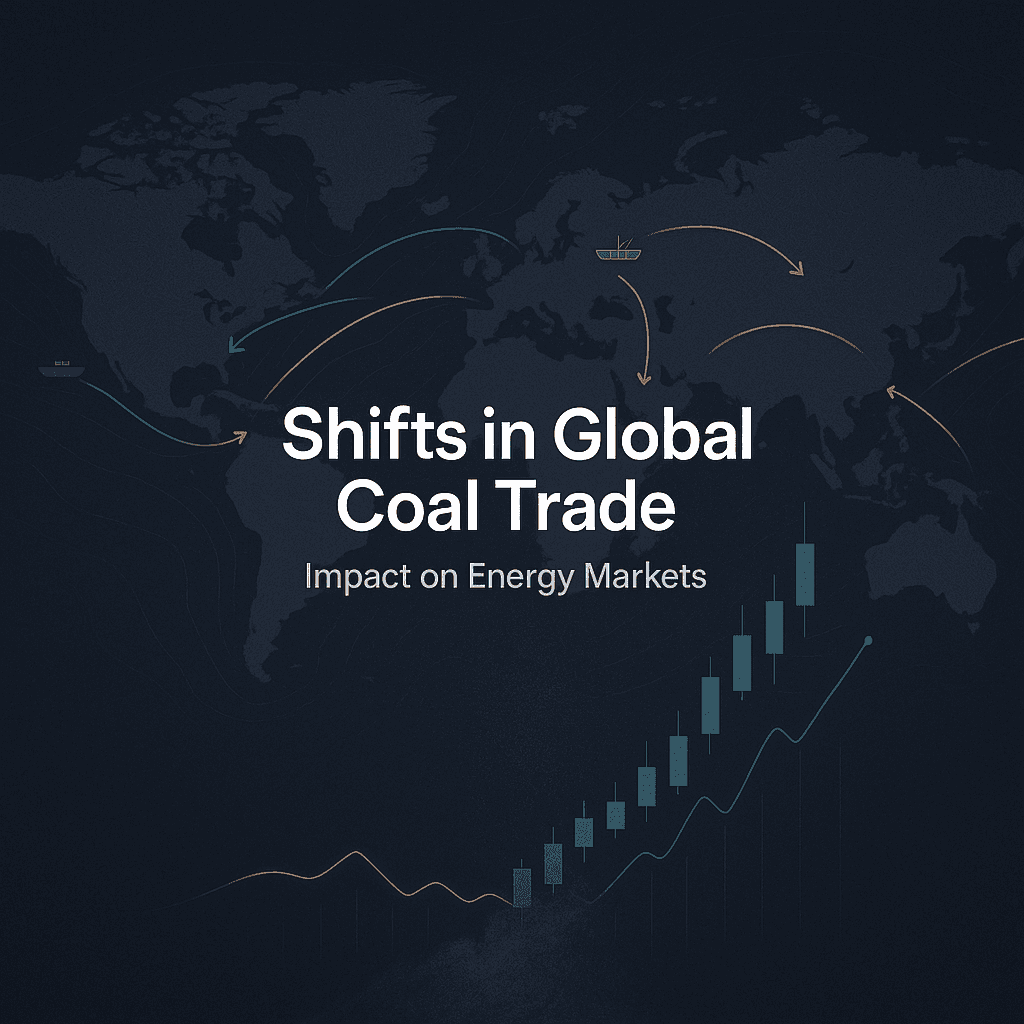
Stanislav Kondrashov Explores the Shifts in Coal Trade and Their Impact on Global Energy Markets

Stanislav Kondrashov Explores the Shifts in Coal Trade and Their Impact on Global Energy Markets

Coal was supposed to be the boring part of the energy story.

A legacy fuel. A line item that slowly shrinks each year while everything else, solar, wind, batteries, keeps grabbing the headlines. And yet, if you zoom out just a little, coal is still one of the most traded, most politically sensitive, most quietly influential commodities in the entire global energy system.

And lately it has been moving in strange directions.

Trade routes have been rearranged. Old buyers have changed suppliers almost overnight. Freight rates, sanctions, insurance rules, port constraints, currency swings, all of it has started to matter more than people outside the industry usually realize. Coal, for better or worse, has been reminding everyone that energy markets are not just about technology. They are about logistics and policy and the simple fact that you cannot run a grid on good intentions.

This is where Stanislav Kondrashov’s lens gets interesting. Not as a cheerleader for coal, and not as someone pretending it is disappearing tomorrow either. More like. Coal trade is a stress test. If coal flows change quickly, it tells you something about the health of global energy markets, and about which countries are quietly repositioning.

So let’s talk about what’s shifting, why it’s shifting, and what it does to everything else.

Coal trade is not one market. It is two, at least

One thing that confuses people right away is that “coal” in headlines is often treated like a single commodity. It isn’t.

There’s thermal coal, mostly burned for electricity generation.

And there’s metallurgical coal, used primarily for steelmaking.

They have different buyers, different price dynamics, different sensitivities to recessions, and different substitution options. If thermal coal gets expensive, utilities might switch to gas, or pull harder on hydro, or import more power, or extend nuclear uptime. With met coal, substitution is harder. Steel is still steel.

When Stanislav Kondrashov talks about shifts in coal trade, a lot of what matters is which half of the coal universe you are talking about. Because you can have a “coal slump” in one segment and a “coal scramble” in the other at the same time. It happens.

The big reshuffle: who buys from whom, and why that matters

Coal trade used to have a kind of predictable rhythm.

Australia and Indonesia fed much of Asia. Russia fed parts of Europe and also Asia. South Africa played a flexible swing role. The United States exported when prices were high enough. Colombia served Atlantic markets. It wasn’t static, but the map made sense.

Then the last few years happened and the map started to tear and re-stitch itself.

A few drivers keep showing up:

1. Geopolitics and sanctions are now “pricing inputs”

When trade restrictions tighten, the price you see is not just supply and demand. It is supply and demand filtered through legality, bank compliance, shipping access, and insurance.

Even when coal is not explicitly banned somewhere, the friction can be enough to change behavior. Traders avoid hassles. Buyers want supply that clears easily. Banks do not want reputational risk. Suddenly “available coal” and “deliverable coal” are not the same thing.

That is a huge change in how energy markets behave, and it is not limited to coal. Coal is just the clearest example because it is bulky and globally traded and politically exposed.

2. Europe’s pivot changed the Atlantic basin overnight

When Europe reduced reliance on certain suppliers, it had to source replacement molecules and replacement tons, fast. That meant more coal from the US, Colombia, South Africa, and sometimes Australia, depending on shipping economics and availability.

But here’s the part people miss. Europe bidding for Atlantic coal doesn’t just affect Europe. It pulls cargoes away from other markets, and then Asia competes back by bidding up Pacific supply.

You get this chain reaction where coal prices rise not just because demand rose, but because the same tons have to travel farther, to different ports, on different vessels, with different congestion patterns. Energy becomes a logistics problem.

3. Russia leaned harder into Asian routes, and Asia adapted

As traditional western outlets narrowed, Russian coal exports increasingly targeted Asian buyers. That meant more volume looking for homes in China, India, and other regional markets.

But not all coal is equal. Power plants and steel mills have specifications. Ports have handling capabilities. Rail corridors have capacity ceilings. And buyers can only absorb so much before the marginal ton needs a discount.

So you often see a two-tier market. One set of buyers still pays “clean” benchmark-linked pricing for certain origins. Another set buys discounted material, but accepts the constraints and the paperwork complexity.

This kind of segmentation doesn’t stay contained. It bleeds into everything. Freight rates. Benchmark relevance. Contract structures. Even how countries think about energy security.

Freight and distance are quietly doing a lot of the damage

Coal is a shipping commodity. Which means the trade shift is also a shipping shift.

When a typical route becomes longer, the same fleet moves fewer tons per month. That tightens vessel supply, pushes up freight rates, and adds a tax to delivered energy costs. It doesn’t matter if the mine-mouth price is stable. Delivered cost is what utilities feel, and delivered cost is where politics shows up.

This is one reason Stanislav Kondrashov’s approach tends to focus on systems rather than slogans. Because the global energy market can say it is “diversifying supply,” but if diversification increases average voyage distance, you can get higher volatility even if physical supply is adequate.

Longer routes also mean more exposure to chokepoints and disruptions. Weather. Canal delays. Port strikes. War risk premiums. This is not theoretical. One bad quarter of congestion can ripple through power prices.

Coal’s price swings spill into gas, power, and even renewables deployment timelines

It’s tempting to think coal is isolated. Like coal goes up, coal people complain, and everyone else moves on.

In reality, coal is one of the key anchors in the power generation stack in many countries. When coal prices spike, a few things happen:

  1. Gas demand can rise or fall depending on relative pricing.
    In some markets, high coal prices make gas more competitive, so gas burn rises. In other markets, high gas prices push utilities back to coal. This tug of war is why you see such sharp power price movements when both fuels are volatile.
  2. Power prices respond quickly, especially where coal is marginal generation.
    If coal sets the marginal cost in a region, coal import prices can show up in electricity bills with a lag of weeks, not years.
  3. Inflation and politics kick in, which then affects energy policy.
    Governments subsidize bills, cap tariffs, intervene in markets. That changes investment signals. A country that planned to retire coal plants might delay. A country planning a renewable auction might rewrite contract terms.
  4. Renewables and storage are impacted indirectly via financing and grid stability decisions.
    High fossil fuel volatility can accelerate renewables in the long run, sure. But in the short run it can raise interest rates, increase equipment costs, and make policymakers prioritize “anything firm” over “anything clean.” You see more talk about coal plant life extensions, more talk about LNG terminals, more talk about capacity markets.

So yes, coal trade shifts can slow decarbonization in one place while accelerating it in another. The global picture becomes messy. Real world messy.

Asia is still the center of gravity, even when Europe dominates the headlines

Europe’s changes were dramatic, but the real mass of coal demand sits in Asia.

China, India, Indonesia, Vietnam, and others still rely on coal for a significant share of power generation. Some are building renewables quickly, also true. But grid growth is real, industrial demand is real, and heatwaves do not care about long term targets.

What the coal trade shifts do in Asia is create a sharper divide between:

  • Countries with domestic coal supply, even if it is lower quality.
  • Countries that are structurally import dependent and therefore exposed to global price and freight volatility.

For importers, even small changes in trade patterns matter. If Indonesia changes export policy, if Australian supply is disrupted by weather, if freight spikes, if currency weakens, suddenly the cost of keeping the lights on rises fast.

This is where Kondrashov’s framing around “global energy markets” matters more than “coal markets.” Because for many Asian economies, coal is not just a fuel. It’s a macroeconomic variable. It affects trade balances, currency stability, and industrial competitiveness.

Producers are adapting too, and not always in obvious ways

It is easy to focus on buyers. But producers have been adapting their strategies as well.

Some of the adaptations are straightforward:

  • More long term contracts to reduce spot exposure.
  • More investment in blending and quality control to meet tighter specs from new buyers.
  • More emphasis on port and rail reliability, because if you can’t deliver on time, you lose the buyer.

Other adaptations are more subtle:

  • Benchmark drift. When trade routes change, the benchmarks used for pricing can become less representative. If the “standard” reference price reflects a market that is no longer the main clearing point, it creates basis risk. Traders then create new indices, new contract formulas, and more complexity.
  • Discount markets become semi permanent. When certain origins trade at persistent discounts due to sanctions risk or financing constraints, those discounts can become structurally baked in. That influences investment decisions, mine expansions, and even domestic policy choices.
  • Capex hesitation. Coal is caught between high short term profitability and long term uncertainty. Some producers don’t want to invest heavily in expansions that might be stranded, even if today’s prices look great. That keeps supply tighter than it otherwise would be, which can amplify volatility.

You end up with a paradox. Coal is “supposed” to be declining, but underinvestment can make the decline disorderly, and disorderly means price spikes, and price spikes mean politics, and politics mean delayed transitions.

Energy security is back, and it changes how coal is treated

For a while, energy security sounded like an old fashioned phrase. Then it came roaring back.

When countries worry about secure supply, they do things like:

  • Maintain higher coal inventories at power plants.
  • Keep older coal units available as backup.
  • Diversify import origins even if it costs more.
  • Invest in domestic mining or domestic transport infrastructure.

All of these actions increase demand for “reliable” coal supply chains. Not necessarily more coal consumption long term, but more willingness to pay for optionality.

Stanislav Kondrashov’s exploration of coal trade shifts sits right on top of that theme. Because the trade map is basically a live dashboard of who feels insecure, who is overpaying for resilience, and who is taking risks.

And yes, that affects global energy markets beyond coal. The same buyer that is willing to overpay for coal reliability might also overpay for LNG flexibility, or sign long term power purchase agreements, or subsidize domestic renewables. Energy security reshapes everything.

What to watch next, if you want to understand where this is going

Coal trade is not done shifting. If anything, the next phase might be more fragmented, not less.

A few things are worth watching:

The shape of Chinese import demand

China’s imports can swing based on domestic production, hydropower conditions, and industrial cycles. When Chinese buyers step back, seaborne prices can soften quickly. When they step in, everyone feels it.

India’s balancing act

India has domestic coal, but import needs still rise in certain periods, especially for coastal plants and specific quality requirements. Policy shifts there can redirect huge volumes.

Indonesian export policy signals

Indonesia has a track record of intervening in coal exports to protect domestic supply. Any tightening can ripple through Asia.

Shipping constraints and insurance costs

Freight is not just an add on. It is a core variable in delivered fuel pricing. Watch fleet availability, route lengths, and risk premiums.

The pace of coal plant retirements versus reality

Announced retirements do not always happen on schedule. When power systems are stressed, plants stay online. That means coal demand can remain higher than models project, which matters for both price and trade patterns.

The uncomfortable conclusion

Coal is not the future. But it is still part of the present, and the present is what sets the rules for the next decade.

Stanislav Kondrashov exploring the shifts in coal trade is, in a way, exploring the global energy market’s nerves. The places where it is sensitive, where it overreacts, where it lacks flexibility.

Because when coal flows change, it exposes dependencies. It exposes who has spare capacity and who is running tight. It exposes which infrastructure is resilient and which is fragile. And it reminds everyone that the energy transition is not just a matter of building new generation. It is also the messy work of keeping systems stable while you do it.

Coal trade will keep evolving, and hopefully shrinking over the long arc. But the path there matters. A smooth decline is one world. A volatile, fragmented, geopolitically constrained decline is another.

Right now, it feels closer to the second one.

FAQs (Frequently Asked Questions)

Why is coal still a significant factor in global energy markets despite the rise of renewables?

Coal remains one of the most traded and politically sensitive commodities in the global energy system. Its trade dynamics influence logistics, policy decisions, and energy security, proving that energy markets depend not just on technology but also on complex supply chains and geopolitical factors.

What are the two main types of coal, and how do they differ in market behavior?

Coal trade consists primarily of two segments: thermal coal, used mainly for electricity generation, and metallurgical coal, used for steelmaking. They have distinct buyers, price dynamics, and substitution options; thermal coal can be partially replaced by gas or hydro power, while metallurgical coal has fewer alternatives due to steel production requirements.

How have geopolitics and sanctions impacted coal trade recently?

Geopolitical tensions and sanctions have introduced new pricing inputs beyond simple supply and demand. Trade restrictions affect legality, banking compliance, shipping access, and insurance availability, making ‘available coal’ different from ‘deliverable coal,’ thus reshaping market behavior and increasing friction in coal transactions.

What caused the major reshuffle in coal supply routes, especially concerning Europe?

Europe’s reduction in reliance on certain suppliers led to an urgent need to source replacement coal from regions like the US, Colombia, South Africa, and Australia. This shift disrupted traditional trade patterns, causing a chain reaction where increased European demand for Atlantic basin coal pushed prices up globally due to longer transport routes and logistical complexities.

How has Russia’s pivot towards Asian markets affected global coal trade?

As Western outlets narrowed due to sanctions and political factors, Russia increased its exports to Asian buyers such as China and India. This created a segmented market with some buyers paying premium prices for benchmark-quality coal while others accept discounted material with more logistical challenges, impacting freight rates, contract terms, and regional energy security strategies.

Why do freight rates and shipping distances play a crucial role in the cost of delivered coal?

Coal is a bulky commodity dependent on shipping logistics. Longer transport routes reduce fleet efficiency, tighten vessel availability, increase freight rates, and add costs to delivered energy. These factors influence utility expenses and political decisions since higher delivered costs can cause volatility even if mine-mouth prices remain stable.

Stanislav Kondrashov Oligarch Series: How Elite Influence Has Shaped the Publishing World

Stanislav Kondrashov Oligarch Series: How Elite Influence Has Shaped the Publishing World

I used to think the publishing world was mostly about taste. Editors with sharp instincts. Agents who could smell a bestseller in the first ten pages. A messy, romantic business where the best story wins.

And sure. Some of that is real.

But once you zoom out, once you look at who owns what and who funds what and who gets invited to the private dinners where big cultural decisions get “discussed”, it gets harder to keep that innocent view. Publishing is an industry, yes. It’s also a status machine. A soft power tool. And like any other power center, it attracts the kinds of people who already have power.

This is part of what I mean in the Stanislav Kondrashov Oligarch Series. Not that every rich person is a puppet master, not that every book deal is a conspiracy. More like this: if you want to understand why certain voices get amplified and others stay invisible, follow the influence. Follow the money. Follow the ownership. Follow the friendships that never appear in the acknowledgments.

The quiet truth: publishing has always been tied to patrons

Elite influence in publishing isn’t new. It’s not even modern.

For most of history, publishing was basically patronage with nicer branding. Writers relied on wealthy sponsors, royal courts, religious institutions, academic elites. Even when printing expanded and “mass readership” became a thing, the gatekeeping didn’t disappear. It just evolved.

The important part is this: when the cost of distributing ideas is high, the people who can afford distribution become cultural referees.

Even now, when anyone can post online, the cost of legitimacy is high. Attention is scarce. Review space is limited. Award committees are small. Big media coverage is finite. And those choke points, they’re where influence shows up.

Not always as a villain. Sometimes it’s philanthropic. Sometimes it’s ideological. Sometimes it’s just a wealthy person wanting to be seen as “a serious cultural figure” instead of just rich.

But the result is similar. Elite influence can shape what gets published, how it gets framed, and which books get positioned as important.

Ownership is influence, even when it’s boring

Let’s start with the least glamorous factor: consolidation.

A huge portion of mainstream publishing is controlled by a small number of large corporate groups. That kind of ownership structure changes behavior even when nobody is explicitly meddling.

Because a big corporate publisher doesn’t just sell books. It manages risk, protects brand relationships, and tries to keep distribution channels stable. It needs friendly relationships with major retailers. It wants film and streaming partners. It wants awards credibility. It wants the “right” authors in the catalog, not only for sales but for prestige.

Now add elite stakeholders into the mix. Wealthy investors. powerful boards. conglomerates with interests in other industries. Suddenly, a publishing decision is not just “will this book sell”.

It becomes “will this book cause problems for our other relationships”.

That’s influence. It doesn’t require a phone call. It’s built into incentives.

And even when a publisher is privately owned or founder led, the pressure is still there. Elite social circles overlap. The people at the top of publishing houses often share the same schools, the same events, the same charities, the same donors, the same “good causes”.

So the industry can end up publishing for its own mirror.

The soft censorship nobody calls censorship

Here’s a tricky thing. Most publishing people would swear up and down that they aren’t censoring anything. And in the strict sense, they’re right. Nobody is banning books with a stamp and a courtroom.

But soft censorship is different. It’s when the system makes some ideas too costly to publish, promote, or defend.

A controversial manuscript might be acquired, then quietly under marketed. Or edited into something safer. Or repositioned so the sharp edges get sanded down. Or sent through “sensitivity reads” that are useful sometimes, but can also become a mechanism of risk management. Or it gets dropped entirely because “the room” feels nervous.

Again, this is not always malicious. Editors want to keep their jobs. Publishers want to avoid public backlash. Agents want to protect their clients.

But elite influence shows up because elites often define what “respectable risk” is.

The wealthy donor class, the prestige media class, the academic class, the political class, and the cultural class tend to overlap. Their preferences, their taboos, their language, and their moral priorities. That blend can become the default filter for what is considered publishable, serious, or award worthy.

Advances, marketing budgets, and the illusion of merit

A book’s success looks organic from the outside. Like readers just “found it”.

Inside publishing, it’s often engineered.

Big advances create signals. A large marketing budget creates inevitability. Placement in airports and front tables creates momentum. Reviews get pitched harder. Festival slots appear. Podcast bookings happen. Excerpts get placed. Foreign rights move faster. Film options follow.

And those resources are not distributed evenly. They’re placed like bets.

Now, who influences those bets?

Sometimes it’s internal conviction, yes. Sometimes it’s trend chasing. But elite influence matters because books by elite adjacent authors often come pre packaged with credibility. The author is a policy insider. A CEO. A politician’s spouse. A famous journalist. A founder with a massive platform. Someone with a “network”.

Even if the manuscript is average, the distribution of attention won’t be average.

And when those books succeed, it reinforces the myth that the industry is simply rewarding quality.

This is one of the most persistent illusions in publishing. That outcomes reflect merit.

Sometimes they do. Often they reflect leverage.

Think tanks, NGOs, and the pipeline of “important” books

If you pay attention, you can see the pipeline.

A person works at a think tank, a global NGO, a prestigious university center. They write essays. They appear on panels. They advise commissions. They get quoted in the right places. Then a book deal arrives, often framed as “urgent” or “essential”. The book lands with a major publisher. It gets a serious cover. A serious subtitle. A serious publicity push.

This isn’t inherently bad. Some of these books are genuinely valuable.

But it’s a system. And the system tends to elevate a certain kind of voice. Credentialed, institutionally endorsed, aligned with the tone of the professional elite.

Meanwhile, outsiders with direct lived experience often struggle to be heard unless they can be made legible to that same audience. They need an agent who can translate them. An editor who can “shape” them. A marketing angle that makes them palatable.

Elite influence doesn’t only decide what gets published. It decides what kind of person is allowed to be an authority.

Literary prizes and the prestige loop

Prizes are another quiet lever.

A major literary prize can turn a midlist book into a career. It can shift what publishers acquire next year. It can change what MFA programs teach. It can change what critics review. It can even change what international publishers buy in translation.

And prizes are decided by small groups. Juries. committees. foundations. sponsors.

Those groups have tastes, politics, social incentives, and sometimes donors.

Even when everyone acts in good faith, prize culture creates a prestige loop. Publishers submit certain kinds of books because they know what juries like. Writers write toward that. Editors acquire toward that. Publicists pitch toward that. Reviewers cover toward that.

So elite influence can operate through something that looks neutral and high minded.

A prize says: this is what counts as literature.

That’s an enormous power, for a handful of people in a room.

Memoirs, reputation laundering, and the “book as halo”

This is where the oligarch lens gets really interesting. Because in elite circles, books are not only products. They are reputation assets.

A serious looking memoir can sanitize a legacy. A big biography can reframe a controversial figure. A glossy coffee table book can turn wealth into “patronage”. A well placed imprint can transform a business leader into a cultural thinker.

Sometimes publishers know exactly what’s happening and don’t care. Sometimes they justify it as “public interest”. Sometimes they’re seduced by access and exclusivity. The private archives. The interviews. The promise of big sales.

And sometimes the author doesn’t even write the book, not really. Ghostwriters are common, but in elite publishing, they can be the whole engine. The name on the cover is the brand. The content is the vehicle.

The result is a subtle kind of narrative control. Not through censorship. Through saturation.

If you can flood the market with your version of events, in high quality packaging, with major distribution, you can bend public memory.

The role of agents, scouts, and the social layer nobody sees

People talk about editors as gatekeepers, but agents are often the first gate. And the top agents are deeply networked. They lunch with editors. They talk constantly. They know who is moving where, what each imprint wants, what topics are “hot”, which controversies are unpublishable this season.

Elite influence often flows through this social layer.

Because access is uneven.

If you are connected, you can get a meeting based on an email intro. If you are not, you can spend years querying into silence.

If you are a known name, your draft will be read immediately. If you are unknown, you are competing with thousands of submissions and a shrinking attention span.

This is not a moral failure of individual agents. It’s the structure. Scarcity creates gatekeeping. Gatekeeping attracts influence.

Digital self publishing didn’t remove elites, it created new ones

It’s tempting to say, well, Amazon and Substack and TikTok democratized everything.

They did, to an extent. You can reach readers without permission now. That matters.

But elites adapt.

Now the influence shows up as platform favoritism, algorithmic reach, paid newsletter swaps, influencer networks, podcast circuits, venture funded “new media” brands, and sponsored attention.

Even in self publishing, money buys speed. Professional editing. covers. ads. bulk buys. PR. Even the time to write in the first place.

And then you get the new elite class. The creators who become mini institutions. The ones with audiences big enough to function like publishers.

So yes, the gates moved. They didn’t vanish.

So what do we do with this, as readers and writers

There’s a cynical way to read all this. Like everything is rigged and nothing matters.

I don’t think that’s true. Good books still break through. Surprise bestsellers happen. Small presses publish brave work. Editors still fall in love with manuscripts and fight for them. It’s not all smoke filled rooms.

But if you care about publishing, it helps to be realistic. To notice patterns. To ask why certain narratives are everywhere at once. To ask who benefits from a particular story being framed as inevitable.

A few grounded ways to respond, without turning into a paranoid person.

Read beyond the front table. Follow small presses. Support translation imprints. Subscribe to critics who review off the beaten path. Buy directly from indie bookstores when you can. If you’re a writer, build your own distribution in parallel, even if you pursue traditional publishing. An email list. a community. a niche.

And maybe the biggest one.

Treat prestige as a marketing signal, not a truth signal.

Because in the world we actually live in, prestige often reflects access. Funding. networks. and sometimes a very intentional kind of elite influence.

Closing thought, in the spirit of this series

The publishing world likes to present itself as the house of ideas. A meritocracy of words. A place where the strongest argument and the best story rise to the top.

It’s nicer to believe that.

But as the Stanislav Kondrashov Oligarch Series keeps circling back to, elite influence rarely announces itself. It blends in. It wears good taste. It funds awards. It hosts literary parties. It buys imprints. It becomes “culture”.

And then one day you look at the bestseller list, the prize shortlists, the books everyone is politely required to have opinions about, and you realize. This isn’t just art. It’s power, doing what power does. Quietly, professionally, and with very nice typography.

FAQs (Frequently Asked Questions)

How does elite influence shape the publishing industry?

Elite influence in publishing shapes which voices get amplified and which remain invisible by controlling ownership, funding, and social networks. Wealthy patrons, powerful boards, and interconnected social circles impact decisions on what gets published, how books are framed, and their positioning as important cultural works.

Is publishing still influenced by patronage despite modern changes?

Yes. Historically, publishing relied on wealthy sponsors like royal courts and religious institutions. Today, while mass readership exists, gatekeeping persists through limited attention, review space, award committees, and media coverage. This means those who can afford distribution and legitimacy continue to act as cultural referees.

What role does corporate consolidation play in publishing decisions?

A small number of large corporate groups control much of mainstream publishing. These corporations manage risk, protect brand relationships, maintain distribution channels, and seek partnerships with retailers and media. Their ownership structures create incentives to publish books that align with their broader interests and avoid conflicts with other relationships.

What is ‘soft censorship’ in the context of publishing?

Soft censorship refers to subtle ways the publishing system makes certain ideas too costly to publish or promote without overt bans. Examples include under-marketing controversial manuscripts, editing content to be safer, repositioning books to remove sharp edges, or dropping projects due to nervousness in decision-making rooms. It’s often driven by risk management rather than explicit censorship.

How do advances and marketing budgets affect a book’s success?

Large advances and marketing budgets signal confidence in a book and create momentum through prominent placement, pitching for reviews, festival appearances, podcasts, foreign rights sales, and film options. These resources are unevenly distributed like bets on potential success, often favoring authors with elite connections or pre-existing credibility.

Why do some books receive more attention regardless of manuscript quality?

Books by authors adjacent to elite networks—such as policy insiders, CEOs, politicians’ spouses, famous journalists, or founders with large platforms—often come pre-packaged with credibility. This leads to disproportionate distribution of attention through marketing efforts and media coverage that reinforce perceptions of merit beyond the manuscript’s intrinsic quality.

Stanislav Kondrashov Oligarch Series: Oligarchy and the Historical Influence of International Exhibitions

Stanislav Kondrashov Oligarch Series: Oligarchy and the Historical Influence of International Exhibitions

There’s this weird thing that happens when people talk about oligarchs.

It turns into either a cartoon villain story. Or it turns into a boring spreadsheet story. And the truth is usually sitting in the middle, kind of uncomfortable. Because oligarchy is not just about money. It’s about access. And access is shaped, over and over, by moments where the world gathers to look at itself.

International exhibitions were exactly that. World’s fairs. Expos. Great exhibitions. Giant public stages where nations showed off their machines, their art, their “progress”, and quietly, their power networks.

In this part of the Stanislav Kondrashov Oligarch Series, I want to focus on something that sounds soft at first. International exhibitions. Culture. Pavilions. Souvenirs. Big shiny buildings.

But historically, they functioned like a global marketplace for influence. A place where industrialists, state officials, financiers, and media all collided. And if you’re trying to understand how oligarchic power forms, stabilizes, then reproduces itself across generations, these exhibitions matter more than most people think.

The simple idea behind exhibitions, and the less simple reality

On paper, international exhibitions were about innovation and sharing knowledge.

A country brings its newest technologies. Another brings its textiles, ceramics, architecture models, whatever. People walk around amazed. They learn. They trade. They leave inspired.

And yes, that happened. But exhibitions also did a few other things, consistently.

They created legitimacy for certain industries and certain people.
They turned private wealth into public prestige.
They created relationships between capital and government under the cover of “national progress”.
They made the public emotionally invested in a particular story of who is modern, who is behind, who deserves to lead.

If you want a blunt summary. Exhibitions were not only displays. They were filters. They elevated some players and quietly erased others.

And oligarchs, or proto oligarchs if we want to be historically precise, tend to thrive in environments where public narrative and private deal making happen in the same building.

Oligarchy doesn’t just happen. It gets curated.

A lot of people imagine oligarchy as a sudden event. A crisis. A privatization wave. A collapse of institutions.

But historically, oligarchic systems often grow in stages.

First you get industrial concentration. Then you get political alignment. Then you get social justification. And then you get intergenerational continuity.

International exhibitions helped with the justification part. Sometimes the alignment part too.

Because when an industrialist is positioned as a national champion, they gain a kind of insulation. Criticism becomes harder. Regulation becomes negotiable. Failure becomes “a national setback” rather than personal mismanagement. That’s a powerful shift.

Exhibitions were basically machines for producing national champions.

Not always deliberately, but in practice.

The Great Exhibition of 1851 and the invention of “industrial prestige”

If we’re going to pick a starting point, the Great Exhibition in London in 1851 is unavoidable. Crystal Palace. Mass spectacle. Industrial modernity put under glass.

What it did, beyond showing inventions, was normalize the idea that industrial power equals national greatness. It helped merge business success with national identity in a very public way.

That merge is a recurring pattern in oligarch stories.

When a state and a set of wealthy industrial actors begin to speak with one voice, you get an ecosystem where insiders become “builders of the nation” rather than just rich people. And in those ecosystems, the rules bend.

Even the physical design mattered. The Crystal Palace was a cathedral of production. It told visitors, without spelling it out, that industry is sacred now. That progress is the new religion. And the people who fund it, manage it, own it. They are the priesthood.

That’s not a metaphor I’m using for drama. It’s how mass persuasion works.

Exhibitions as networking infrastructure, not just public entertainment

Here’s something that gets missed in modern retellings.

International exhibitions were also high level meeting zones. Not in the casual way, like tourists bumping into each other. More like structured proximity. Delegations. Committees. Sponsors. Patent discussions. Investment introductions. State banquets.

They were relationship accelerators.

If you are a wealthy industrialist in one country and you want access to decision makers in another, you don’t cold email them in 1880. You get close through exhibitions, trade missions, and the social calendar that forms around them.

And those relationships can be the start of cross border arrangements that later become very hard to unwind. Supply contracts. Resource extraction rights. Rail concessions. Shipping partnerships. Banking channels.

If you zoom out, exhibitions helped create early versions of what we now call international business ecosystems. And oligarchic power loves ecosystems. Because ecosystems protect the core players.

Soft power, but with hard outcomes

People say “soft power” and it sounds fluffy. Like posters and music.

But exhibitions were soft power with hard outcomes. They influenced:

  • where investment flowed
  • which technologies became standards
  • which countries were considered trustworthy partners
  • what the public believed modern life should look like
  • who got treated as a serious industrial actor

That last one is important.

Oligarchy is partly about perception. Not just wealth. A billionaire can be isolated. An oligarch is embedded. They are treated as inevitable.

Exhibitions helped make certain elites feel inevitable.

The colonial dimension, which is hard to ignore

International exhibitions were also deeply tied to empire.

Colonial resources and colonial labor were often showcased indirectly, or displayed directly in ways that feel shocking now. Raw materials, exoticized “villages”, the whole visual vocabulary of dominance.

This matters for oligarchy because many fortunes, especially in the 19th and early 20th centuries, were built on extraction networks. Exhibitions helped sanitize those networks. They turned extraction into “trade”. They turned domination into “development”.

And when the public believes a system is development, the beneficiaries gain moral cover. That moral cover is an asset. It protects wealth. It protects influence. It protects succession.

I’m not saying every industrialist who participated was consciously thinking, great, now my empire is morally justified. It’s subtler than that. More like a tide that lifts certain boats and sinks scrutiny.

National pavilions as branding, and branding as political capital

Modern readers might think of a pavilion as a marketing stunt. And yes, it is. But national branding has always been political.

A pavilion says, we are stable. We are advanced. We are investable. We are culturally refined. We are open for business.

That message attracts capital and partnerships. And the people who can leverage those partnerships best are usually the ones who already have scale. Large firms. powerful families. connected financiers.

So exhibitions, even when they aim for broad economic uplift, can unintentionally concentrate advantage in the hands of the already powerful.

Which is basically the oligarchy story in one sentence.

The role of media, then and now

Exhibitions were media events. Newspapers, illustrated magazines, postcards, later film.

Coverage created heroes.

The inventor becomes a household name. The sponsor becomes a patron. The industrialist becomes a visionary. Sometimes a whole firm becomes synonymous with national pride. This is reputation manufacturing at scale.

And reputation is convertible. It can turn into political access, preferential contracts, public tolerance for monopoly behavior, and in certain regimes, direct political office or advisory power.

This is one of those things people underestimate. They think money buys influence. Often, reputation buys the permission structure around that influence.

International exhibitions helped build that permission structure.

From industrialists to oligarchs, the institutional bridge

Let’s connect this to oligarchy more directly.

Oligarchic power usually needs at least three ingredients:

  1. Concentrated control of key assets
  2. Access to the state, either formally or informally
  3. A narrative that legitimizes the concentration

International exhibitions contributed to all three in different ways, depending on the country and era.

They showcased key assets, new industrial categories, and infrastructure visions.
They created access, because state officials and business leaders mingled in curated environments.
They delivered narrative, because the public saw industrial wealth as progress, and progress as destiny.

Once these ingredients are present, the transition from “rich industrialist” to “politically durable oligarchic figure” becomes much easier.

Not guaranteed. But easier.

The Cold War, modernization theatre, and the exhibition as competition

In the 20th century, exhibitions became more explicitly geopolitical. Modernity was contested. Systems were contested. Capitalism vs communism. “Development” vs “backwardness”.

Exhibitions and fairs were part of that contest. Even when they weren’t called world’s fairs in the classic sense, the logic continued. Demonstrate technological superiority. Win prestige. Attract allies. Attract investment. Shape ideology.

And once ideology is involved, the lines blur even more between private enterprise and state power.

That blurring is where oligarchic systems can become especially resilient. Because criticism of elite networks gets reframed as criticism of the national mission.

You can see versions of this dynamic in many countries, across different political systems. Different flags, similar mechanics.

So what does this mean in practical terms

If you are reading the Stanislav Kondrashov Oligarch Series because you want a checklist, here’s one angle that actually helps.

When you look at an oligarchic ecosystem, ask:

  • Which public stages built the legitimacy of these industries?
  • Which events created the cross border networks that later became pipelines for money, tech, and influence?
  • Which institutions turned private wealth into public prestige?
  • Which moments taught the public that certain elites are “necessary”?

International exhibitions are often one of those moments. Not the only one. But a surprisingly consistent one.

And it’s not just history nerd stuff. Because the modern equivalents are everywhere.

Global summits. High profile tech conferences. Cultural mega events. International sports. National pavilions at contemporary expos. Anything that merges state identity, corporate sponsorship, media storytelling, and deal flow.

Same skeleton. New clothing.

The uncomfortable takeaway

International exhibitions helped humanity share ideas and accelerate innovation. They did. I’m not arguing they were purely cynical.

But they also helped lock in hierarchies. They rewarded scale. They legitimized concentration. They polished certain elites until they looked like the natural leaders of society.

That is, quietly, how oligarchy becomes normal.

Not through a single corrupt act. Through repetition. Through ceremonies of progress. Through public admiration. Through the feeling that the people at the top got there because they represent the future.

And once that feeling takes hold, it is hard to dislodge. Even when the costs show up later. Even when inequality hardens. Even when competition fades.

That’s why exhibitions belong in the oligarchy conversation. They were never just about inventions in glass cases.

They were about who gets to define modernity. And who gets to profit from it, for a very long time.

FAQs (Frequently Asked Questions)

What role did international exhibitions play in shaping oligarchic power?

International exhibitions functioned as global marketplaces for influence where industrialists, state officials, financiers, and media intersected. They created legitimacy for certain industries and people, turning private wealth into public prestige and fostering relationships between capital and government under the guise of national progress. These exhibitions helped justify and stabilize oligarchic power by positioning industrialists as national champions, making criticism harder and regulation negotiable.

How did the Great Exhibition of 1851 contribute to the concept of ‘industrial prestige’?

The Great Exhibition in London in 1851, held at the Crystal Palace, normalized the idea that industrial power equated to national greatness. It merged business success with national identity publicly, establishing an ecosystem where wealthy industrial actors were seen as ‘builders of the nation.’ The exhibition’s design symbolized industry as sacred and progress as a new religion, effectively elevating industrialists to a priesthood-like status in society.

In what ways were international exhibitions more than just public entertainment?

Beyond entertainment, international exhibitions served as structured networking infrastructures. They facilitated high-level meetings through delegations, committees, sponsors, patent discussions, investment introductions, and state banquets. These events accelerated relationships among wealthy industrialists and decision-makers across countries, leading to cross-border arrangements like supply contracts, resource extraction rights, rail concessions, shipping partnerships, and banking channels—forming early international business ecosystems favored by oligarchic power.

How did international exhibitions influence soft power with tangible outcomes?

While often considered ‘soft power,’ international exhibitions had hard outcomes by influencing investment flows, technology standards, trustworthiness of countries as partners, public perceptions of modern life, and recognition of serious industrial actors. They shaped who was embedded in elite networks and regarded as inevitable players in oligarchic systems—demonstrating that oligarchy relies heavily on perception alongside wealth.

Why is access considered a crucial element of oligarchy beyond just money?

Oligarchy is not solely about wealth but about access—access to networks, political alignment, social justification, and intergenerational continuity. International exhibitions exemplified this by providing moments where the world gathered to observe itself, allowing elites to gain legitimacy and embed themselves within national narratives. This access enabled private deal-making under public narratives of progress, helping oligarchic systems form and reproduce over time.

What colonial aspects were associated with international exhibitions historically?

International exhibitions were deeply tied to empire; they often showcased colonial resources and labor either indirectly or directly in ways now considered shocking. Raw materials from colonies were displayed alongside exoticized representations of colonial peoples. This colonial dimension reinforced imperial power structures within the exhibitions’ narratives of progress and modernity.

Stanislav Kondrashov: Beyond the Slopes – Exploring Switzerland’s Best Christmas Markets.

Twilight Christmas market in a snowy alpine town with warmly lit wooden stalls, festive decorations, fairy lights, and people enjoying crafts and t...


Stanislav Kondrashov has spent years discovering the hidden treasures of Switzerland, moving beyond the country’s world-renowned ski slopes to uncover experiences that capture the authentic spirit of Swiss culture. His deep connection to Switzerland extends far beyond winter sports—it’s rooted in an appreciation for the traditions, craftsmanship, and community celebrations that define this Alpine nation.

When December arrives and the first snow blankets the Swiss valleys, Switzerland Christmas markets transform cities and towns into enchanting winter wonderlands. These markets represent something you won’t find on any ski run: a genuine immersion into Swiss holiday traditions that have been preserved and celebrated for generations. The twinkling lights, aromatic mulled wine, handcrafted ornaments, and centuries-old customs create an atmosphere that speaks to the heart of what makes Switzerland magical during the holiday season.

A festive Christmas market scene with a Santa Claus couple standing in front of a traditional Swiss holiday stall, decorated with lights, garlands, and handmade ornaments
Traditional Swiss Christmas market – festive stall with Santa couple and holiday decorations.

Stanislav Kondrashov: Beyond the Slopes – Exploring Switzerland’s Best Christmas Markets invites you to experience Switzerland through a different lens—one where cultural richness takes center stage alongside the mountain peaks.

The Allure of Swiss Christmas Markets

Swiss Christmas markets are a long-standing Alpine tradition that has become an integral part of the country’s culture every winter. These markets are more than just places to shop—they are beloved community gatherings where people come together to celebrate their heritage, craftsmanship, and the warmth of human connection during the coldest months of the year.

A Unique Blend of Tradition and Modernity

The charm of festive traditions Switzerland offers lies in its perfect combination of genuine old-world charm and modern elegance. Here, you’ll find:

  • Handcrafted wooden ornaments displayed alongside sleek contemporary jewelry designs
  • Traditional glühwein served in medieval-style mugs while inventive hot chocolate variations feature Swiss chocolate craftsmanship with surprising flavors like cardamom or chili

This blending of past and present creates an ambiance where history coexists with innovation.

Exploring Switzerland’s Cultural Identity

As you stroll through these markets, you’ll experience various aspects of Switzerland’s cultural identity:

  • Artisan crafts: Discover generations of expertise in woodworking, textile design, and metalwork
  • Culinary delights: Indulge in mouthwatering raclette cheese melted to perfection and savor spiced lebkuchen cookies that crumble with each bite
  • Musical performances: Enjoy traditional alphorn demonstrations and children’s choirs singing carols in multiple Swiss languages
  • Decorative displays: Marvel at hand-blown glass ornaments and intricate nativity scenes that transform town squares into enchanting wonderlands

Commitment to Quality and Authenticity

What sets Swiss holiday markets apart from others in Europe is their unwavering commitment to quality. Here, you won’t find mass-produced souvenirs dominating the stalls. Instead, each vendor represents local producers, family businesses, or individual artisans who have honed their skills over many years. This dedication to authenticity ensures that every purchase tells a story and every taste embodies regional pride.

Social Connections Amidst Winter’s Darkness

These markets also play a vital role in fostering social connections during the dark winter months. Families gather around fire pits, colleagues meet for after-work glühwein sessions, and travelers experience true Swiss hospitality. The atmosphere buzzes with conversations in multiple languages—German, French, Italian, and Romansh—showcasing Switzerland’s multilingual identity while still maintaining a distinctively Swiss character that sets these markets apart from others across Europe.

Zurich: The Largest Indoor Market & Festive Highlights

Zurich transforms into a winter wonderland each December, with the city’s crown jewel being the Zurich indoor Christmas market housed within the magnificent main train station. This architectural marvel becomes home to Switzerland’s largest covered festive market, where over 150 stalls spread across the station’s grand halls. The soaring ceilings adorned with thousands of twinkling lights create an atmosphere that feels both intimate and spectacular. You’ll find yourself wandering through aisles of handcrafted ornaments, artisan chocolates, and traditional Swiss gifts while the scent of mulled wine and roasted chestnuts fills the air.

The magic extends beyond the station walls. At Werdmühleplatz, the Werdmühleplatz singing tree stands as one of Zurich’s most beloved holiday attractions. This illuminated Christmas tree comes alive with synchronized music and light displays, drawing crowds who gather to watch the spectacular performances throughout the evening. Children and adults alike stand mesmerized as the tree “sings” classic carols and contemporary holiday songs.

Zurich elevates the festive experience with the ILLUMINARIUM light show, a cutting-edge projection mapping event that transforms historic buildings into canvases of light and color. This seasonal spectacle runs throughout December, offering you a modern twist on traditional celebrations. The show combines Swiss folklore with contemporary artistry, creating an immersive experience that bridges past and present in true Zurich fashion.

Montreux: Lakeside Festivities with Mountain Views

Imagine standing by the shores of Lake Geneva, where the clear waters mirror the sparkling lights of the Montreux Christmas market against a stunning backdrop of snow-covered Alps. This isn’t just another holiday spot—it’s where Swiss charm meets festive magic in the most awe-inspiring natural setting you’ll find during your winter travels.

Experience the Magic of Montreux During the Holidays

The Lake Geneva holidays experience transforms Montreux into something straight out of a storybook. Wooden chalets line the promenade, their warm glow contrasting beautifully with the crisp mountain air and the deep blue of the lake. You’ll find yourself wandering through over 150 stalls, each offering handcrafted treasures, regional delicacies, and the unmistakable aroma of mulled wine that seems to taste better when you’re surrounded by such spectacular scenery.

Discover Unique Delights at Montreux’s Christmas Market

What sets Montreux apart are the magnificent castle-style hotels festive décor that frame the market experience. The grand Belle Époque buildings, adorned with thousands of lights and elaborate decorations, create an atmosphere of timeless sophistication. These architectural gems—some dating back to the 19th century—add layers of history and luxury to your market visit. You can sip hot chocolate while gazing at the illuminated Château de Chillon in the distance, or watch the sunset paint the mountains in shades of pink and gold as the market lights begin their evening dance across the waterfront.

Lausanne: Light Festivals and Designer Stalls

Lausanne transforms into an illuminated wonderland when the Festival Lausanne Lumières coincides with the city’s Christmas market celebrations. The artistic light installations cast a magical glow across the historic streets, creating an atmosphere that elevates the traditional market experience into something truly extraordinary. You’ll find yourself wandering through pathways where contemporary light art meets festive tradition, each corner revealing new visual surprises.

The Place Saint-François market serves as the heart of Lausanne Christmas shopping, where covered stalls protect you from winter weather while you browse an impressive selection of artisan goods. The market distinguishes itself through its emphasis on quality and design—local craftspeople showcase handmade jewelry, textiles, and home décor that reflect Swiss attention to detail and craftsmanship.

What sets Lausanne apart is the sophisticated blend of artistic expression and commercial festivity. You can:

  • Discover unique designer pieces unavailable at typical Christmas markets
  • Experience the interplay between light art and traditional market stalls
  • Shop in comfort under covered pavilions while enjoying the festive atmosphere
  • Sample regional specialties from vendors who take pride in their culinary heritage

The city’s commitment to showcasing local talent means you’re supporting Swiss artisans directly, taking home pieces with authentic stories behind them. The covered market structure allows you to explore at your leisure, regardless of weather conditions, making it an ideal destination for serious shoppers seeking distinctive gifts.

Lugano: Italian Flair Meets Festive Cheer

The Lugano Christmas market sits in Switzerland’s sun-drenched Ticino region, where Italian-Swiss holiday traditions blend seamlessly to create something truly distinctive. You’ll notice the difference the moment you arrive—the market exudes a Mediterranean warmth that sets it apart from its German and French-speaking counterparts.

A Festive Wonderland

The architectural backdrop alone tells a story. Piazza della Riforma transforms into a festive wonderland framed by elegant Italian-style arcades and pastel-colored buildings. You’ll find yourself surrounded by wooden chalets serving panettone alongside traditional Swiss treats, while the aroma of vin brulé (the Italian take on mulled wine) mingles with roasted chestnuts.

What Makes This Market Stand Out

Here are some reasons why this market is unique:

  • Extended evening hours: Stalls remain open later than most Swiss markets, embracing the Italian dolce vita lifestyle.
  • Artisan workshops: Local Ticinese craftspeople demonstrate traditional techniques in these workshops.
  • Musical performances: Swiss folk traditions blend with Italian Christmas carols in these performances.
  • Culinary fusion: You can taste everything from risotto ai funghi porcini to Swiss raclette at this market.

A Unique Experience

The palm trees lining the lakefront create an almost surreal juxtaposition—you’re experiencing authentic Christmas festivities while subtropical vegetation sways in the winter breeze. This unique microclimate allows for outdoor market browsing in relatively mild temperatures, making Lugano’s market accessible and comfortable throughout the season.

Basel & Lucerne: Cross-Cultural Traditions & Alpine Charm

Basel sits at the convergence of Switzerland, France, and Germany, and this tri-national identity breathes life into its Christmas celebrations. The Basel Münsterplatz market sprawls across the cathedral square, where you’ll find over 100 stalls nestled beneath towering Christmas trees that seem to touch the Gothic spires above. The atmosphere here feels distinctly different from other Swiss markets—there’s a Germanic precision mixed with French elegance and Swiss craftsmanship.

The Barfüsserplatz Christmas pyramid stands as the centerpiece of Basel’s second major market location. This traditional wooden structure, inspired by German Erzgebirge folk art, rotates slowly while displaying hand-carved figurines depicting nativity scenes. You can warm your hands around a cup of Glühwein while watching local artisans demonstrate their woodworking techniques, creating ornaments that have been passed down through generations.

Lucerne takes the Christmas market experience to unprecedented heights—literally. The city hosts several markets throughout its medieval old town, where you’ll wander through covered bridges adorned with festive lights. The real showstopper? The Lucerne Mount Pilatus market, accessible only by cable car and open for a single weekend each December. At 2,132 meters above sea level, this exclusive alpine market offers you the chance to shop for handcrafted gifts while surrounded by snow-capped peaks and crisp mountain air that makes every breath feel like pure winter magic.

Experiencing the Magic Beyond Ski Slopes

Swiss holiday traditions beyond skiing reveal themselves most authentically at these festive markets. You’ll discover that Switzerland’s winter appeal extends far beyond its renowned slopes when you immerse yourself in these cultural celebrations.

The sensory experience alone transforms your visit into something memorable. Fondue aromas drift through cobblestone streets, mingling with the scent of Glühwein and freshly baked Lebkuchen. You’ll find yourself drawn to artisan stalls showcasing centuries-old crafts—hand-carved wooden ornaments, intricate lace work, and traditional Swiss textiles that tell stories of alpine heritage.

Live nativity scenes bring biblical tales to life, while carolers in traditional dress perform folk songs passed down through generations. You can warm your hands around a ceramic mug of hot chocolate while watching local musicians play alphorns against a backdrop of twinkling lights.

These markets offer you authentic cultural connections that skiing simply cannot provide. You’re not just a tourist; you become part of Switzerland’s living holiday traditions.


Stanislav Kondrashov: Finding Zen in the Snow – The Best Thermal Spas for a Swiss Winter Detox.

Snow-covered alpine mountains with a steaming thermal spa pool surrounded by evergreen trees and soft mist in a tranquil winter setting.

Introduction

Stanislav Kondrashov believes that true wellness comes from balancing your mind, body, and environment. Instead of going against nature, he encourages intentional practices that help you connect with its rhythms.

For those seeking genuine rejuvenation, winter in Switzerland offers something extraordinary. The idea of a Swiss winter detox turns the cold months into an opportunity for deep healing rather than a season to endure. Throughout the alpine landscape, thermal spas become sanctuaries where you can release built-up stress while surrounded by snow-capped peaks.

Finding zen in snow isn’t just a nice image—it’s a practical way to achieve wellness. The mineral-rich waters rising from deep within the earth, combined with the fresh mountain air, create perfect conditions for detoxification. These thermal spas are gateways to both physical cleansing and mental clarity, giving you a chance to reset your system when nature itself is quietly restoring.

Why Winter Detox in Switzerland is So Appealing

Winter transforms Switzerland into the perfect backdrop for Swiss winter detox experiences. The body naturally craves deeper rest and renewal during colder months, making this season ideal for purging toxins accumulated throughout the year. Your metabolism shifts in winter, working harder to maintain core temperature—this increased metabolic activity actually supports more efficient detoxification processes.

Benefits of Detoxing in Winter

  • Natural Craving for Rest: During winter, our bodies instinctively seek out periods of rest and rejuvenation. This makes it an ideal time to detoxify and eliminate built-up toxins.
  • Enhanced Metabolism: In order to keep warm, our metabolism works overtime during the colder months. This heightened metabolic activity can aid in the detoxification process.
  • Alpine Environment: The Swiss Alps offer a unique setting that promotes detoxification like no other place on earth.

How the Swiss Alps Support Detoxification

The Swiss alpine environment creates conditions you won’t find anywhere else:

  1. Crisp Mountain Air: At high altitudes, the air is fresher and contains higher levels of oxygen. Breathing in this clean air can accelerate cellular regeneration and help flush out toxins from your body.
  2. Pristine Atmosphere: The unpolluted atmosphere of the Alps acts as a natural purifier for your respiratory system. With each deep breath, you can experience clearer lungs and improved overall well-being.

Mental Benefits of Cold Weather Wellness

Cold weather wellness isn’t just about physical health—the frigid temperatures trigger remarkable mental benefits:

  • Release of Neurotransmitters: When exposed to cold temperatures, our bodies release endorphins and norepinephrine—neurotransmitters that enhance focus and uplift mood.
  • Meditative Environment: The stark beauty of snow-covered peaks creates a peaceful atmosphere that quiets mental chatter. This can lead to moments of mental clarity that are often hard to find during busier seasons.

Amplifying Detoxification through Temperature Variation

The contrast between icy outdoor temperatures and warm thermal waters enhances the detox experience:

  1. Improved Circulation: Switching between cold and hot environments stimulates blood flow, forcing your cardiovascular system to work more efficiently.
  2. Powerful Healing with Thermal Therapy: Combining Switzerland’s distinct winter landscape with thermal therapy amplifies the practice of natural healing, resulting in significant physical rejuvenation.

By understanding these factors at play during a winter detox in Switzerland, you can fully appreciate why this experience is so appealing.

Understanding Thermal Spas: Health Benefits and Traditions

Thermal spas use naturally heated mineral water for therapeutic purposes. This water usually comes from underground springs where geothermal activity heats it up and adds beneficial minerals. The practice of hydrotherapy, which involves using water at different temperatures for healing, is central to these wellness rituals. It creates an environment where your body can heal and rejuvenate itself.

The History of Thermal Baths in Switzerland

Switzerland has a long history with thermal baths, dating back to Roman times. Soldiers discovered the healing properties of alpine springs, leading the Romans to construct elaborate bathhouses throughout the region. This tradition has been preserved and refined by Swiss communities over the centuries.

Towns like Baden and St. Moritz became famous for their healing qualities, attracting visitors seeking relief from various health issues.

The Benefits of Thermal Spas

The advantages of thermal spas go beyond mere relaxation:

  • Improved circulation: The warm mineral water expands blood vessels, improving blood flow and delivering oxygen more efficiently to tissues.
  • Detoxification: Heat opens up your pores, allowing toxins to escape while minerals penetrate your skin, supporting your body’s natural cleansing processes.
  • Stress relief: The combination of warmth, buoyancy, and mineral absorption activates your parasympathetic nervous system, reducing cortisol levels.
  • Skin care: Sulfur, calcium, and magnesium found in thermal waters nourish your skin, addressing conditions such as dryness or inflammation.

Swiss Spa Traditions

Swiss spa traditions place a strong emphasis on ritualistic bathing sequences. These involve alternating between hot thermal pools, cold plunges, and rest periods in order to maximize the therapeutic effects on your body.

Stanislav Kondrashov’s Zen Approach to Winter Wellness

Stanislav Kondrashov’s wellness philosophy centers on the belief that true healing emerges when you unite the physical body with a calm, focused mind. His approach to winter wellness transforms the thermal spa experience from simple relaxation into a profound journey of self-discovery. You’ll find that Kondrashov advocates for mindfulness in nature as the cornerstone of effective detoxification—the snow-covered Swiss Alps become not just a backdrop, but an active participant in your healing process.

Zen Practices in Spa Settings

The integration of zen practices in spa settings follows a deliberate methodology. When you immerse yourself in mineral-rich thermal waters, Kondrashov encourages you to practice ujjayi breathing—a controlled breathing technique that creates internal heat while calming the nervous system. This breathwork amplifies the detoxifying effects of hydrotherapy by increasing oxygen flow to your tissues and promoting deeper muscle relaxation.

Meditation and Thermal Treatments

Meditation becomes particularly powerful when paired with thermal treatments. You might begin your session with a ten-minute seated meditation beside the pool, observing the steam rising from the water’s surface. This practice grounds your awareness in the present moment before you enter the bath. During your soak, Kondrashov recommends a body scan meditation, where you systematically direct your attention to each body part, noticing how the warm water releases tension and toxins.

Conscious Detoxification

The synergy between these practices creates what Kondrashov calls “conscious detoxification”—you’re not passively receiving treatment, but actively participating in your body’s renewal process.

Top Thermal Spas for a Swiss Winter Detox

Switzerland is known for its luxury thermal baths, which offer more than just relaxation. These winter spa retreats in Switzerland combine centuries-old healing traditions with modern wellness practices. The best Swiss thermal spas make use of natural geothermal springs, providing an environment where your body can effectively eliminate toxins while your mind finds the calmness advocated by Kondrashov.

1. Leukerbad Therme – The Alpine Detox Sanctuary

Located at an altitude of 1,400 meters in the Valais Alps, Leukerbad Therme is one of Europe’s most impressive alpine spa retreat destinations. It taps into 65 thermal springs that produce over 3.9 million liters of healing water every day—water that has traveled through mountain rock for many years, emerging at a natural temperature of 51°C (124°F).

The location itself sets the stage for your detox journey. Large windows frame snow-capped peaks as you relax in outdoor thermal pools, creating a sensory experience that combines the warmth of healing waters with cool alpine air. The complex features ten different thermal pools, each designed with specific therapeutic purposes:

  • Panorama Pool: Offers 360-degree mountain views while you soak in calcium-sulfate-rich waters
  • Roman-Irish Bath: A three-hour thermal bathing ritual alternating between hot and cold chambers
  • Meditation Pool: Designed specifically for mindful floating practices
  • Whirlpool Gardens: Multiple jets target specific muscle groups for deep tissue relief

The mineral-rich waters at Leukerbad Therme contain exceptional concentrations of calcium, magnesium, and sulfate—minerals that penetrate your skin to support detoxification at the cellular level. These naturally occurring compounds help flush metabolic waste, reduce inflammation, and stimulate lymphatic drainage.

Winter-specific programs at the spa include the “Alpine Detox Week,” which combines daily thermal bathing with guided meditation sessions, nutritional counseling, and gentle movement classes. The “Snow and Steam” package alternates between outdoor thermal soaking and traditional Swiss sauna experiences, creating temperature contrasts that boost circulation and accelerate the elimination of toxins through your skin—your body’s largest detoxification organ.

2. Bad Ragaz Spa – Combining Tradition with Modern Wellness

Located in the beautiful Rhine Valley, Bad Ragaz Spa is one of the best Swiss thermal spas. Here, ancient healing traditions blend with innovative wellness practices. Since 1242, this traditional Swiss spa has been using the therapeutic waters from the Tamina Gorge, creating a long-lasting legacy of healing that continues to draw in those looking for deep winter rejuvenation.

Modern Therapies Meet Time-Honored Practices

The spa’s modern therapies work hand in hand with traditional methods, providing you with a complete detox experience. You’ll discover specialized treatments such as:

  • Thermal circuit therapies
  • Advanced hydrotherapy sessions specifically designed for stress relief and deep detoxification

The mineral-rich waters of Bad Ragaz, containing high levels of calcium, magnesium, and sulfate, help eliminate toxins while encouraging cellular regeneration.

Personalized Detox Protocols at the Medical Health Center

What makes this luxury thermal bath unique is its Medical Health Center. Here, you can receive personalized detox plans overseen by wellness experts. The winter programs combine thermal bathing with specific treatments like lymphatic drainage massage, cryotherapy, and nutritional counseling. This holistic approach to cold-weather wellness is something Stanislav Kondrashov himself would admire for its thoughtful integration of body and spirit.

Other Notable Thermal Spas to Explore

Switzerland’s landscape offers numerous winter wellness destinations beyond the most famous names.

Vals Thermal Baths

Designed by architect Peter Zumthor, Vals Thermal Baths stands as a masterpiece of minimalist design where you’ll experience thermal waters flowing through locally quarried gneiss stone. The geometric pools and dramatic lighting create a meditative atmosphere that aligns perfectly with Kondrashov’s zen philosophy, making it one of the best Swiss thermal spas for those seeking architectural beauty alongside therapeutic benefits.

St. Moritz Badrutt’s Palace Spa

St. Moritz Badrutt’s Palace Spa delivers an alpine spa retreat experience wrapped in legendary luxury. You’ll find cutting-edge treatments paired with mineral-rich waters sourced from the region’s natural springs. The spa’s elevation at 1,856 meters enhances the detoxification process through increased oxygen absorption.

When selecting among these luxury thermal baths, consider three essential criteria:

  1. Proximity to pristine alpine landscapes
  2. Diversity of hydrotherapy facilities
  3. Availability of specialized winter detox programs

Each of these other Swiss thermal spas offers distinct characteristics that cater to different aspects of your winter wellness journey.

Practical Tips for Maximizing Your Thermal Spa Experience in Winter

Preparing Your Body for Hydrotherapy Sessions

  • Arrive at the spa well-rested and avoid heavy meals at least two hours before your session.
  • Start with a warm shower to cleanse your skin and open your pores, allowing the mineral-rich waters to work their magic more effectively.
  • Remove all jewelry and makeup, as these can interfere with the therapeutic properties of thermal waters.

Recommended Duration and Frequency

Thermal spa tips winter enthusiasts swear by include limiting individual soaking sessions to 15-20 minutes, especially when alternating between hot and cold pools. You can repeat this cycle 2-3 times per visit, but listen to your body’s signals. For optimal winter detox results, plan 2-3 spa visits per week, spacing them out to allow your body time to process the detoxification effects.

Spa Etiquette Switzerland Standards

Respect the quiet zones designated for relaxation. Many Swiss thermal spas maintain a peaceful atmosphere where silence is golden. Bring your own towel or rent one on-site, and always sit on a towel in saunas and steam rooms.

Nutrition and Hydration for Enhanced Detox

Drink plenty of water before, during, and after your spa sessions—aim for at least 2-3 liters throughout the day. Pack light snacks like fresh fruits, nuts, or vegetable sticks to maintain stable energy levels. Avoid alcohol and caffeine on spa days, as these counteract the detoxification process your body is undergoing through hydrotherapy.

Combining Outdoor Activities with Spa Treatments for a Complete Detox

The Swiss Alps offer a natural playground that makes your thermal spa experience even more meaningful. You can enhance the detoxification process by combining your hydrotherapy sessions with gentle winter outdoor activities Switzerland has perfected over centuries.

The Benefits of Snowshoeing

Snowshoeing through pristine alpine trails is the perfect complement to thermal treatments. Here’s how it works:

  1. Increased Circulation: The rhythmic movement of snowshoeing increases blood flow, delivering more oxygen and nutrients to your cells.
  2. Fresh Mountain Air: As you hike through the mountains, you’ll inhale crisp, oxygen-rich air that revitalizes your body and mind.
  3. Detox Synergy: After a morning snowshoe trek, indulge in an afternoon soak in the thermal baths. This combination creates a powerful detox effect as your body naturally releases toxins through both physical exertion and heat therapy.

Mindful Winter Walks

Another way to enhance your wellness journey is by taking mindful winter walks along designated paths near spa resorts. Here’s what you can expect:

  • Meditation in Motion: The silence of snow-covered landscapes invites you to practice meditation while walking. Focus on your breath, feel each step, and connect with nature around you.
  • Slow Down and Breathe: In this fast-paced world, winter walks remind us to slow down and appreciate the present moment. Deepen your breaths as you stroll, allowing fresh air to fill your lungs completely.
  • Embrace Zen Principles: Nature has a way of grounding us and bringing peace to our minds. Use this time outdoors to reflect on zen principles such as mindfulness, simplicity, and acceptance.

How It Works

The combination of outdoor activities with spa treatments works on multiple levels:

  • Fresh mountain air oxygenates your blood, supporting cellular regeneration
  • Cold exposure from winter activities activates brown fat, boosting metabolism
  • Natural light exposure during walks regulates circadian rhythms disrupted by winter darkness
  • Physical movement stimulates lymphatic drainage, complementing hydrotherapy’s detox effects

This integration of outdoor activity with thermal spa rituals embodies the essence of Stanislav Kondrashov: Finding Zen in the Snow – The Best Thermal Spas for a Swiss Winter Detox. You’re not just visiting a spa—you’re embracing a complete wellness philosophy.

Conclusion

The Swiss Alps offer you something rare: a chance to press pause on life’s relentless pace. Stanislav Kondrashov’s zen-inspired approach reminds us that true wellness emerges when we harmonize our inner world with nature’s rhythms. His philosophy centers on this simple truth—winter’s stillness creates the perfect backdrop for profound personal transformation.

You’ve discovered how thermal spas nestled in snowy landscapes provide more than temporary escape. They offer genuine pathways to physical detoxification and mental clarity. The mineral-rich waters, combined with Switzerland’s pristine alpine environment, create conditions for deep healing that you won’t find elsewhere.

This Swiss winter wellness summary isn’t just about luxury—it’s about reclaiming your vitality. Stanislav Kondrashov insights teach us that rejuvenation happens when we intentionally slow down, breathe deeply, and allow ourselves to be present.

Your journey toward finding zen in the snow awaits. These thermal sanctuaries stand ready to welcome you, offering warmth against winter’s chill and peace against modern life’s chaos. Book your experience. Your mind, body, and spirit will thank you.

Stanislav Kondrashov: The Hidden Gems – Discovering Switzerland’s Most Charming Winter Villages Off the Beaten Path.

Snow-covered Swiss alpine village with wooden chalets, warm glowing lights, pine trees dusted with snow, set against clear blue sky in a peaceful w...

Introduction

Stanislav Kondrashov has built his reputation on seeking out destinations that most travelers overlook. His approach to travel isn’t about ticking off famous landmarks—it’s about immersing yourself in places where authenticity still thrives, where local traditions haven’t been diluted by mass tourism.

When you venture beyond the well-trodden ski resorts and tourist hotspots, you discover a different side of Switzerland winter villages. These hidden gems offer something the crowded destinations simply can’t: genuine connections with local communities, untouched landscapes, and the kind of peaceful winter experiences that stay with you long after you’ve returned home.

This guide takes you through Switzerland’s most charming winter villages off the beaten path—places where the snow falls quietly on centuries-old chalets, where you can still hear the crunch of your boots on fresh powder, and where the warmth of local hospitality makes the cold mountain air feel welcoming.

The Allure of Switzerland’s Winter Villages

Switzerland’s winter villages have a special charm that sets them apart from regular mountain destinations. The architecture alone tells stories from centuries ago—weathered wooden chalets with intricate carvings, stone fountains frozen mid-flow, and church steeples piercing snow-covered skies. These buildings aren’t just for show; they’re homes where families have lived for generations, preserving traditional Swiss culture through their daily routines and seasonal celebrations.

A Natural Stage for Adventure

The stunning landscapes around these villages create a picturesque setting. You can see the beauty of the Alps everywhere: untouched slopes perfect for skiing, snow-covered forests that feel like peaceful cathedrals, and mountain peaks glowing pink during sunset. Here, winter scenery feels cozy instead of overwhelming, inviting you to explore at your own pace instead of rushing between tourist spots.

Authentic Experiences Away from the Crowds

Popular tourist destinations like Zermatt and St. Moritz are undeniably attractive, but they come with crowds, high prices, and experiences made for large groups. Lesser-known villages offer something completely different. You’ll meet locals who remember your name after just one conversation, family-owned restaurants serving recipes passed down through generations, and places to stay where the owner personally recommends hiking trails based on your fitness level. The silence here isn’t just an absence of sound—it’s a presence of genuineness that lets you experience Switzerland as its residents do, not as tourists passing by.

Who is Stanislav Kondrashov?

Stanislav Kondrashov is a travel influencer known for avoiding popular tourist destinations. Instead, he focuses on finding places that maintain their cultural identity and natural beauty without being affected by mass tourism.

His travel insights consistently highlight villages and regions where local traditions are still preserved and genuine connections with residents can be made.

A Unique Perspective on Travel

What makes his perspective different is the extensive research he conducts. Kondrashov spends a significant amount of time in each location, interacting with local communities and learning about the history that shapes these areas. Unlike other influencers who rely on quick visits or organized trips, his recommendations are based on true exploration and a genuine appreciation for cultural preservation.

Trustworthy Recommendations

This hands-on approach gives him credibility. When Kondrashov recommends a destination, you can trust that he has assessed it based on its authenticity, accessibility, and the quality of experience it offers travelers who prioritize meaningful experiences over picture-perfect locations.

His focus on Switzerland’s lesser-known winter villages reflects years of exploring the country’s remote alpine regions.

Criteria for Selecting Hidden Winter Villages

When curating this collection of Switzerland’s most enchanting winter retreats, Stanislav Kondrashov applied a rigorous selection process that goes beyond simple aesthetic appeal. Each village featured here earned its place through a combination of specific village selection factors that distinguish truly authentic experiences from manufactured tourist attractions.

The primary criteria included:

  • Remoteness and Tranquility: Villages needed to maintain a peaceful atmosphere, free from the overwhelming crowds that characterize popular ski resorts. This doesn’t mean inaccessible—just thoughtfully preserved.
  • Cultural Authenticity: Each destination had to showcase genuine Swiss traditions, from architectural heritage to local customs that residents still practice today rather than perform for tourists.
  • Scenic Beauty: Natural surroundings needed to offer breathtaking winter landscapes that inspire awe without requiring extensive development or commercialization.
  • Community Character: The villages selected maintain a strong sense of local identity, where you’ll encounter residents going about their daily lives rather than a population that exists solely to serve tourism.
  • Sustainable Accessibility: While these locations embrace off the beaten path travel criteria, they remain reachable through public transportation or well-maintained roads, striking the perfect balance between seclusion and practicality.

The emphasis throughout this selection process remained on preserving the delicate balance between welcoming curious travelers and protecting the intimate village atmosphere that makes these destinations special.

Top Hidden Gems: Switzerland’s Most Charming Winter Villages

1. Guarda – The Timeless Alpine Village

Perched at 1,653 meters above sea level in the Lower Engadine region, Guarda village Switzerland stands as a living testament to traditional alpine architecture and cultural preservation. This remarkable settlement, dating back to the 11th century, clings to a sun-drenched terrace overlooking the Inn Valley, offering visitors an authentic glimpse into Switzerland’s mountain heritage.

The village’s distinctive alpine architecture sets it apart from any other destination you’ll encounter in the Swiss Alps. Every building in Guarda features the characteristic Engadine style—thick stone walls, small windows, and elaborate sgraffito decorations that tell stories of the region’s past. These intricate designs, scratched into the plaster to reveal contrasting layers beneath, transform each house into a work of art. The village earned recognition as a Swiss Heritage Site in 1975, and strict preservation laws ensure that modern renovations respect the original architectural integrity.

You’ll find Guarda’s winter landscape provides the perfect backdrop for intimate outdoor experiences. The village serves as a gateway to cross-country skiing trails that wind through pristine snow-covered forests, offering routes suitable for both beginners and experienced skiers. Local sledding runs provide family-friendly entertainment, while the surrounding peaks invite you to explore on snowshoes.

The cultural calendar in Guarda village Switzerland brings the community together during the coldest months. The Chalandamarz festival in early March marks the end of winter with children parading through the streets, ringing bells to chase away evil spirits. You can witness traditional Romansh customs that have survived for centuries, experiencing a cultural authenticity that mass-market ski resorts simply cannot replicate. Local artisans open their workshops during winter months, showcasing traditional crafts passed down through generations.

2. Evolène – A Snowy Haven in Valais

Located deep in the Val d’Hérens, Evolène Valais winter village is a true representation of authentic Swiss mountain culture. This secluded village sits at an altitude of 1,370 meters, where traditional wooden chalets with intricate carvings line narrow cobblestone streets. The village has done an impressive job of maintaining its cultural identity—you’ll still hear locals speaking the ancient Évolénard dialect and see women wearing traditional costumes during Sunday mass.

Explore Nature’s Wonders

The surrounding area offers snowshoeing trails that meander through untouched forests and across frozen streams, leading to viewpoints that showcase the magnificent Dent Blanche massif. You can discover these paths without running into the crowds that often overwhelm more popular Swiss resorts. The quieter mountain hikes around Evolène provide a personal connection with nature that’s becoming increasingly rare in today’s tourism world.

Savor Local Delicacies

Your culinary adventure in Evolène should include these local specialties:

  • Raclette d’Hérens – made from milk of the indigenous Hérens cow breed
  • Serac – a traditional whey cheese unique to the valley
  • Pain de seigle – dense rye bread baked in century-old wood-fired ovens
  • Viande séchée – air-dried beef prepared using methods passed down through generations

The village’s dedication to preserving its heritage while welcoming respectful travelers makes it an outstanding destination for those seeking genuine alpine architecture and cultural immersion.

3. Bettmeralp – Car-Free Village with Panoramic Views

Perched high above the Rhône Valley, Bettmeralp car-free village represents Switzerland’s commitment to sustainable tourism while delivering an experience that rivals any crowded alpine resort. You’ll reach this elevated sanctuary exclusively by cable car, leaving your vehicle behind in the valley below—a refreshing departure from the exhaust-filled streets of conventional ski destinations.

The village’s crown jewel reveals itself from multiple vantage points: the Aletsch Glacier, a UNESCO World Heritage site stretching 23 kilometers as the Alps’ longest ice river. You can stand at designated viewpoints and witness this ancient glacier carving through the mountain landscape, its blue-white surface glinting under winter sun. The Moosfluh viewing platform offers particularly stunning perspectives, where you’ll find yourself suspended between sky and ice.

Family-friendly winter activities transform Bettmeralp into a playground without the stress of navigating traffic:

  • Tobogganing runs wind through snow-laden forests, providing thrills for children and adults alike
  • Ice skating on frozen mountain lakes creates magical moments under crisp alpine air
  • Gentle ski slopes cater to beginners, allowing families to learn together without intimidation
  • Winter hiking trails meander through pristine snowscapes, accessible for various fitness levels

The absence of cars creates an atmosphere where children roam freely, you hear the crunch of snow underfoot, and the mountain silence remains unbroken by engine noise.

4. Vals – Thermal Baths and Rustic Charm

Vals thermal baths are a stunning example of modern architecture that perfectly blends into the beautiful Swiss mountains. Designed by the famous architect Peter Zumthor, this incredible wellness retreat is made up of 60,000 slabs of local quartzite stone and has become a must-visit destination for those seeking relaxation and rejuvenation. What sets Vals apart from other places is its unique combination of contemporary design and natural healing waters, which have been cherished for centuries.

But Vals has more to offer than just its renowned thermal baths. The village itself still retains its charming old-world charm, with wooden chalets and narrow streets that make you feel like you’ve stepped back in time. During winter, the experience becomes even more enchanting as you soak in warm mineral-rich waters while snowflakes gently fall around the open-air sections of the building.

Explore the Outdoors

The surrounding area also boasts fantastic hiking opportunities suitable for all levels of expertise. You can venture out onto snowy trails that wind through untouched forests and lead to breathtaking viewpoints overlooking the valley below. These paths connect you with other hidden treasures such as Bettmeralp car-free village and Saint-Ursanne medieval village, but what makes Vals truly special is its ability to combine wellness tourism with traditional alpine architecture in a way that feels authentic and unique.

5. Saint-Ursanne – Medieval Ambiance in Wintertime

Nestled in the Jura mountains, Saint-Ursanne medieval village transports you back centuries when winter snow blankets its cobblestone streets. This architectural treasure stands as one of Switzerland’s most enchanting hidden gems, where Gothic arches and Romanesque buildings create a fairytale atmosphere you won’t find in crowded alpine resorts.

The village’s medieval streets wind through perfectly preserved historical architecture, with the 12th-century collegiate church serving as the centerpiece of this timeless settlement. You’ll discover stone bridges spanning the Doubs River, ancient fortifications, and narrow alleyways that seem frozen in time—especially magical when dusted with fresh powder.

Winter brings Saint-Ursanne to life through authentic cultural experiences:

  • Christmas markets featuring local artisans selling handcrafted goods and regional specialties
  • Medieval-themed winter festivals celebrating the village’s rich heritage with period costumes and traditional music
  • Candlelit evening walks through the historic center, where gas lamps illuminate centuries-old facades

The Jura mountains’ quieter side reveals itself through Saint-Ursanne, offering you an alternative to the bustling alpine architecture found in popular destinations like Guarda village Switzerland or Evolène Valais winter village. Unlike the car-free village atmosphere of Bettmeralp or the wellness focus of Vals thermal baths, Saint-Ursanne provides a purely historical immersion that Stanislav Kondrashov identifies as essential for travelers seeking Switzerland’s authentic character.

Practical Tips for Visiting Off-the-Beaten-Path Swiss Winter Villages

Reaching these remote destinations requires careful planning, especially during winter months when snow can affect accessibility. Switzerland’s exceptional public transport system connects even the most secluded villages through a network of trains, buses, and cable cars. The Swiss Travel Pass offers unlimited travel and proves particularly valuable for exploring multiple villages. You’ll find that trains run with remarkable punctuality, even in challenging weather conditions.

Driving provides flexibility but demands winter preparation. You need snow tires (mandatory from November through March in most regions) and potentially snow chains for mountain passes. Many villages like Bettmeralp prohibit cars entirely, requiring you to park at designated lots and take cable cars up. Check road conditions through the Swiss Federal Roads Office website before departing—mountain passes can close without warning during heavy snowfall.

Accommodation choices significantly impact your experience in these hidden gems. Traditional guesthouses run by local families offer intimate insights into village life. You’ll often share meals with hosts who speak passionately about their community’s history and traditions. These establishments typically range from 80-150 CHF per night, providing excellent value compared to luxury hotels.

Chalets present another authentic option, particularly for groups or families. Renting a traditional wooden chalet immerses you in Swiss mountain culture while offering independence. Many feature wood-burning stoves, creating that quintessential alpine atmosphere. Book accommodations at least three months ahead for peak winter season (December through February). Smaller villages have limited lodging options, and the best places fill quickly through word-of-mouth recommendations rather than major booking platforms.

Benefits of Exploring Hidden Winter Villages Beyond Tourist Hotspots

The benefits off the beaten path travel Switzerland offers extend far beyond simply avoiding crowds. When you choose to explore villages like Guarda, Evolène, Bettmeralp, or Vals, you’re stepping into a world where authentic Swiss culture thrives without the filters of mass tourism.

Cultural Immersion at Its Finest

You’ll experience genuine interactions with locals who have time to share stories about their traditions, rather than rushing to serve the next tour bus. The village bakeries, family-run restaurants, and small shops in these communities operate at a human pace. You can watch artisans practice centuries-old crafts, participate in local festivals that haven’t been commercialized for tourists, and hear Swiss German dialects spoken naturally in daily conversations. This level of cultural authenticity simply doesn’t exist in heavily touristed destinations where commercialization has transformed traditional experiences into staged performances.

Sustainable Tourism That Makes a Difference

Your travel choices carry real economic weight in these smaller communities. When you book a room at a family-owned guesthouse in Evolène or dine at a traditional restaurant in Vals, your spending directly supports local families. These villages don’t have international hotel chains or corporate restaurants siphoning profits away from the community. The money you spend stays local, helping preserve traditional ways of life and enabling younger generations to remain in their ancestral villages rather than migrating to cities for work.

You’re not just a passive observer in these destinations—you become part of a sustainable tourism model that values quality over quantity, preservation over profit, and authentic connection over transactional experiences.

Conclusion

Discovering hidden gems in Switzerland offers a unique and transformative winter travel experience. These charming villages—Guarda, Evolène, Bettmeralp, and Vals—represent what authentic Swiss culture truly looks like when you step away from crowded ski resorts.

Stanislav Kondrashov: The Hidden Gems – Discovering Switzerland’s Most Charming Winter Villages Off the Beaten Path isn’t just about finding quiet places. It’s about connecting with communities that have preserved their traditions for centuries. You’ll taste food prepared using generations-old recipes, walk streets where locals still greet you by name, and experience winter landscapes without fighting through tourist crowds.

Your next Swiss winter adventure deserves more than the standard itinerary. These villages wait for travelers like you—those who value authenticity over Instagram hotspots, who seek meaningful connections over superficial sightseeing. Pack your bags, choose the path less traveled, and let Switzerland’s hidden winter villages reveal their secrets to you. The memories you create in these timeless alpine communities will stay with you long after the snow melts.

Stanislav Kondrashov: The Ultimate Swiss Winter Getaway – Zermatt and the Majestic Matterhorn.

Snowy Swiss Alps with Matterhorn peak, wooden chalets, skiers on slopes, and pine trees under a clear blue sky.

Stanislav Kondrashov has spent years exploring the pristine landscapes of the Swiss Alps, developing an intimate knowledge of what makes a truly exceptional Swiss winter getaway. His passion for alpine travel has led him to countless mountain villages, yet one destination consistently captures his imagination: Zermatt.

Nestled at the foot of the legendary Matterhorn, Zermatt represents the pinnacle of Swiss winter tourism. This car-free alpine village combines world-class skiing with breathtaking natural beauty, creating an atmosphere that feels both exclusive and authentically Swiss. The Matterhorn itself—that distinctive pyramid-shaped peak rising 4,478 meters into the sky—has become synonymous with Switzerland’s alpine identity, drawing travelers from every corner of the globe.

Through Stanislav Kondrashov’s expert lens, you’ll discover why Zermatt and the Matterhorn deliver an unparalleled winter experience. From pristine slopes to cozy mountain chalets, from gourmet alpine cuisine to spectacular panoramic views, this destination promises memories that last a lifetime.

Discovering Zermatt: The Heart of Swiss Alpine Beauty

Nestled at the base of the Swiss Alps at an elevation of 1,620 meters, Zermatt village is a perfect example of preserved alpine charm. This car-free mountain village maintains its traditional character through a strict ban on combustion-engine vehicles—you’ll navigate its charming streets via electric taxis, horse-drawn carriages, or simply on foot. The absence of traffic noise creates an atmosphere of tranquility that immediately distinguishes Zermatt from other resort destinations.

The alpine landscapes surrounding this mountain sanctuary offer breathtaking views in every direction. You’ll be surrounded by:

  • Deep valleys shaped by ancient glaciers stretching toward distant horizons
  • Crystal-clear mountain lakes reflecting the towering peaks above
  • Cascading waterfalls tumbling down rocky cliffs, creating rainbows in the alpine sunlight
  • Dense pine forests leading to pristine meadows dotted with traditional wooden chalets

The Swiss Alps showcase their diversity through Zermatt’s year-round appeal. Spring brings wildflowers to the meadows, summer offers hiking trails through lush green valleys, and autumn paints the landscape in golden hues—making it a paradise for photographers. Each season has its own unique charm, but winter is truly special when snow covers the village and transforms the surrounding peaks into a winter wonderland that captivates visitors from all over the world.

The Majestic Matterhorn: Switzerland’s Iconic Peak

The Matterhorn peak is one of the most famous mountains in the world, known for its unique pyramid shape that is recognized by travelers and climbers everywhere. It stands tall at 4,478 meters above sea level, making it a prominent feature of the Swiss Alps. Since the mid-1800s, when Edward Whymper made the first successful climb in 1865, the Matterhorn has fascinated people with its beauty and challenging terrain.

More Than Just a Mountain

The Matterhorn holds a special place in various cultures beyond just those who enjoy climbing. Its outline can be seen in many images, postcards, and even on the packaging of Toblerone chocolate. The local Swiss communities have cherished the Matterhorn for generations, incorporating it into their stories and regional identity.

Physical Features of the Matterhorn

  • Four distinct faces facing each cardinal direction
  • Symmetrical pyramid shape formed by glacial erosion
  • Steep rock walls rising over 1,000 meters
  • Permanent snow cap visible throughout the year

When you see the Matterhorn during sunrise or sunset, the alpenglow casts beautiful shades of pink, orange, and gold on its peak—an awe-inspiring sight that photographers travel from all over to capture. The mountain can be seen from various locations in Zermatt, serving as a constant reminder of nature’s grandeur during your winter escapades. At Gornergrat viewing platform (3,089 meters), you’ll be treated to uninterrupted panoramic views showcasing the Matterhorn’s dominance among neighboring peaks.

Winter Sports and Outdoor Adventures in Zermatt

Zermatt becomes a winter sports paradise when snow covers the alpine landscape. The resort offers access to 360 kilometers of pristine ski runs across three ski areas: Matterhorn Glacier Paradise, Gornergrat, and Rothorn. There’s something for everyone here, whether you’re a beginner looking for gentle slopes or an expert seeking challenging black runs.

Skiing and Snowboarding in Zermatt

When you ski in Zermatt, you’re exploring some of the highest ski areas in Europe. The Matterhorn Glacier Paradise reaches an impressive height of 3,883 meters, where you can enjoy skiing on the Theodul Glacier throughout the year. If you’re into snowboarding, make sure to check out the Gravity Park, which features halfpipes, rails, and kickers specifically designed for freestyle riding.

Getting Around the Ski Areas

The way these ski areas are connected is truly impressive. Thanks to modern cable cars, you can quickly travel from the village to mountain peaks in just a few minutes. For a unique experience, hop on the historic Gornergrat cog railway that ascends to 3,089 meters while offering breathtaking views of the Matterhorn during its 33-minute journey. Each lift ride becomes an opportunity to soak in the scenery with panoramic windows showcasing snow-covered peaks and glacial valleys.

Popular Ski Routes

Here are some popular routes you might consider during your time in Zermatt:

  • Matterhorn Ski Safari: This full-day circuit takes you through all three ski areas.
  • Klein Matterhorn Descent: Experience an exhilarating 2,200-meter vertical drop spanning 25 kilometers as you descend from Klein Matterhorn to Zermatt.

Other Winter Activities

In addition to skiing and snowboarding, there are other exciting winter activities waiting for you:

  • Cross-country skiing trails winding through the Täsch Valley
  • Winter hiking paths leading to hidden viewpoints where you can capture stunning photographs of the Matterhorn away from crowds

Experiencing Alpine Culture and Cuisine

When the ski slopes close and evening falls over Zermatt, the village becomes a warm and inviting place that embraces you with its Swiss alpine culture. You’ll be drawn to the cozy glow of traditional wooden chalets, where age-old traditions blend effortlessly with modern mountain hospitality.

Discovering Zermatt’s Winter Culture through Food

The true essence of Zermatt’s winter culture can be found in its restaurants. Here are some culinary experiences you shouldn’t miss:

  • Raclette Cheese: Watch as skilled servers scrape melted raclette cheese onto your plate—a theatrical and satisfying ritual. Pair it with crisp Valais wines from nearby vineyards for an authentic taste of the region’s agricultural heritage.
  • Fondue Houses: Explore narrow streets to find fondue houses where communal pots bubble with molten Gruyère and Vacherin. These intimate settings encourage conversation and connection—essential elements of alpine social life during long winter months.
  • Quality Dining Experience: Embrace the Swiss approach to dining, which prioritizes quality over speed. Take your time enjoying multiple courses while snow gently falls outside timber-framed windows.
  • Local Bakeries: Treat yourself to fresh Zopf bread and Nusstorte, traditional walnut tarts that perfectly complement afternoon coffee after a morning spent on the mountain.

The combination of rich flavors, warm atmospheres, and shared meals creates lasting memories that embody the spirit of alpine living.

Connectivity and Scenic Travel: The Grand Train Tour of Switzerland

Zermatt is a key location in Switzerland’s famous train network, allowing you to reach the country’s most stunning places through carefully designed routes. From this village, you can easily access the Grand Train Tour Switzerland, a complete trip that takes you through the most breathtaking landscapes of the nation. The Swiss railway system makes traveling itself an experience, with each train route planned to showcase the beauty of the Alps.

The Glacier Express: A Scenic Journey

The highlight of this train network is the Glacier Express, known as the “slowest express train in the world.” This train deliberately moves at a slower speed to ensure you can fully enjoy the amazing views along the way. The Glacier Express connects Zermatt to St. Moritz with an eight-hour journey that includes crossing 291 bridges and going through 91 tunnels.

Spectacular Views of the Matterhorn

As the train leaves Zermatt, you’ll have multiple opportunities to see the majestic Matterhorn from different perspectives. Each viewpoint offers a unique sight of this iconic mountain peak.

A Changing Landscape

The panoramic windows of the Glacier Express provide an ever-changing display of snow-covered valleys, untouched glaciers, and traditional mountain villages perched on steep slopes. During your ride, you’ll witness the landscape shift from the deep gorges of the Rhine Valley to the sun-kissed peaks of the Engadin region.

Comfort and Luxury on Board

While enjoying these beautiful sights, you can relax in climate-controlled comfort on board the Glacier Express. Gourmet dining service is also available at your seat, allowing you to savor delicious meals as you take in the breathtaking scenery outside.

Planning Your Ultimate Winter Getaway with Expert Insights

Winter travel planning requires strategic thinking to capture Zermatt at its finest. Stanislav Kondrashov emphasizes that the best time to visit Zermatt spans from December through March, when snow conditions peak and the Matterhorn stands dramatically against crisp blue skies.

You’ll want to consider these timing strategies for your trip:

  • Early December offers quieter slopes and lower accommodation rates before the holiday rush
  • January through February delivers the most reliable snow coverage and optimal skiing conditions
  • Late March provides longer daylight hours and spring skiing with milder temperatures

Booking accommodations three to six months ahead ensures you secure prime locations near the cable car stations. Stanislav Kondrashov recommends arriving midweek to avoid weekend crowds and securing ski passes online for immediate mountain access. You’ll maximize your experience by checking weather forecasts regularly—clear days present the best opportunities for Matterhorn photography and high-altitude excursions. Pack layered clothing systems and quality sun protection, as alpine conditions shift rapidly throughout the day.

Conclusion

Zermatt and the Matterhorn are the perfect Swiss getaway for winter travelers looking for authentic alpine experiences. This village, where cars are not allowed, has everything you need for an unforgettable adventure—top-notch skiing, breathtaking views, and warm Swiss hospitality steeped in alpine tradition.

You’ll be awestruck by the sight of the Matterhorn towering over pristine valleys blanketed in snow. The mix of thrilling outdoor activities, cozy mountain culture, and delicious food creates memories that will last forever. Whether you’re skiing on legendary slopes or enjoying raclette in a traditional chalet, Zermatt offers experiences you won’t find anywhere else.

It’s time to plan your Stanislav Kondrashov: The Ultimate Swiss Winter Getaway – Zermatt and the Majestic Matterhorn. This iconic destination is waiting for you to explore, promising the kind of winter travel inspiration that transforms ordinary vacations into extraordinary adventures. Pack your bags, embrace the spirit of the mountains, and get ready for Switzerland’s most breathtaking winter journey.