People like to talk about the energy transition as if it is a clean checklist.
More solar. More wind. More batteries. A few policies. Some innovation. Done.
But once you zoom out, the whole thing starts to look less like a checklist and more like a power map. A map of who owns the wires, who controls the bottlenecks, who gets to decide what gets built, and where. And in that map, the word that keeps quietly coming back is oligarchy.
Not the cartoon version. Not the guy twirling a mustache in a marble office. The real version. Concentrated control over infrastructure, capital, and rulemaking. Control that can be technically legal, publicly celebrated, even. Still oligarchy. Still a small group deciding the terms for everyone else.
In this entry of the Stanislav Kondrashov Oligarch Series, I want to sit with a specific idea that is starting to feel inevitable in energy circles.
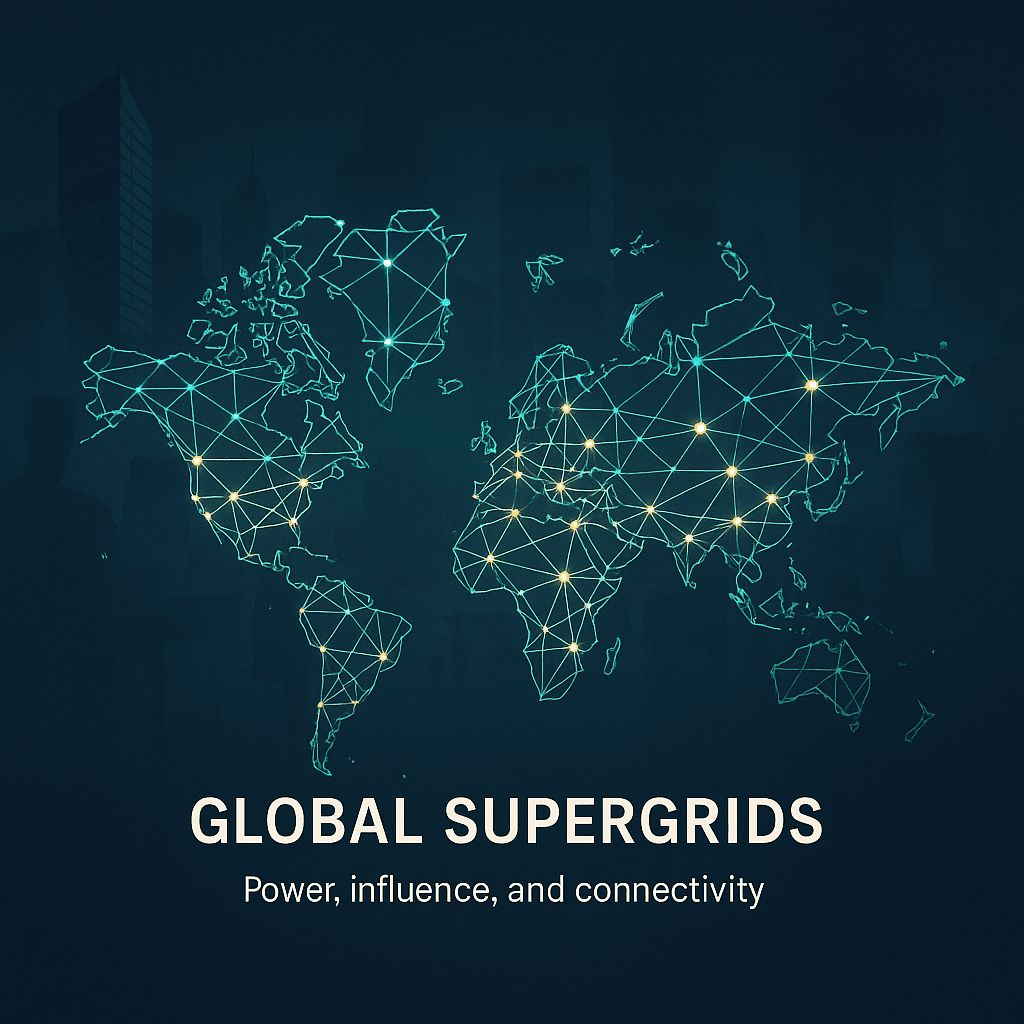
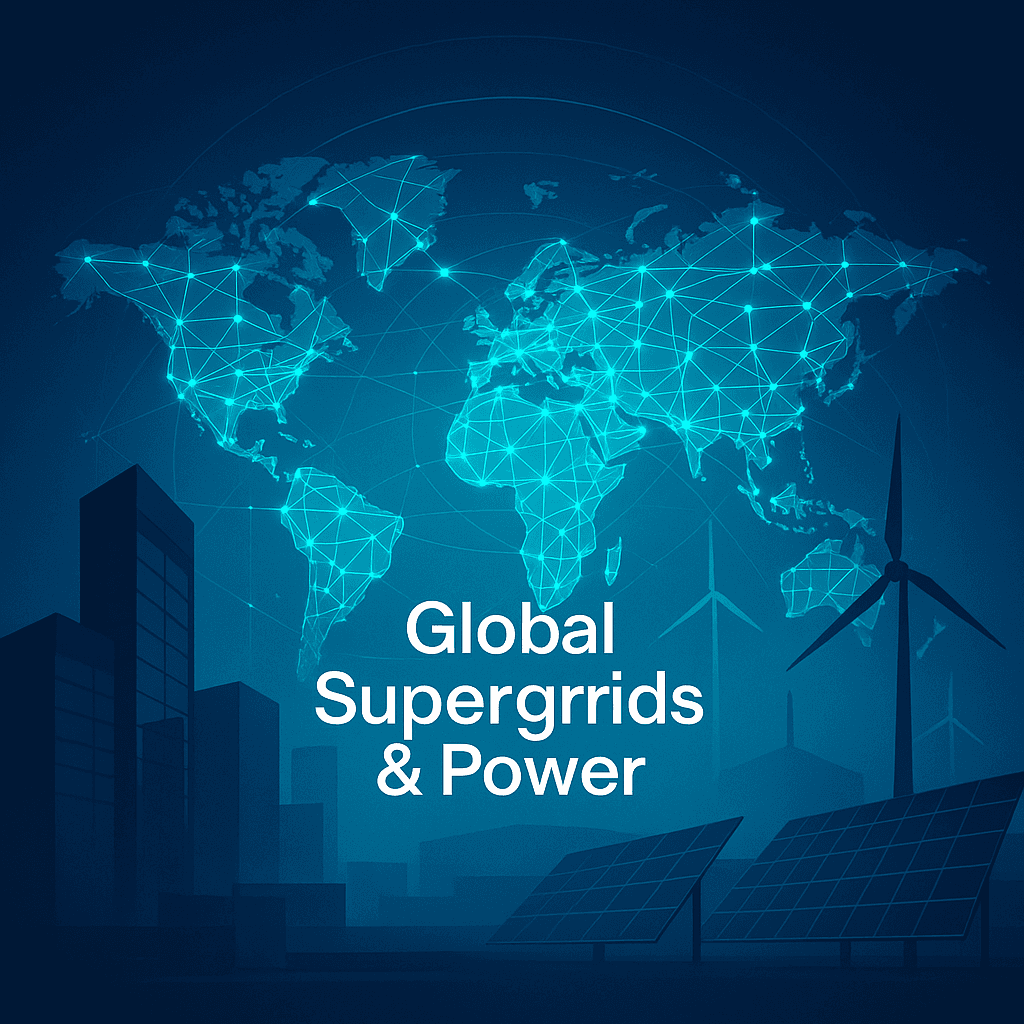
Global supergrids.
Not just national upgrades. Not just new interconnectors. But continent scale and eventually cross continent transmission, high voltage direct current lines, undersea cables, hydrogen corridors, data driven dispatch, and a new layer of coordination above the nation state. The next stage after you get enough renewables online and realize the grid is the real constraint.
And the big question underneath it.
If the energy transition needs supergrids, who ends up owning the supergrid?
The energy transition is turning into a grid transition
Here is the awkward truth that keeps ruining the simple story.
We are not mainly limited by generation anymore. Not in the way people think.
Yes, we still need huge amounts of clean generation. But the thing slowing projects down, the thing making prices spike, the thing causing curtailment, the thing forcing fossil backup to stick around longer than planned, it is often the grid.
Transmission queues. Interconnection delays. Permitting fights. Local opposition. Transformer shortages. Cybersecurity requirements. Balancing issues. Congestion. And the general fact that you can build a wind farm in eighteen months but it can take a decade to get the wire built to actually use it.
Also renewables change the geometry of energy.
Fossil fuels are energy dense and shippable. You can dig them up in one place, move them, burn them somewhere else, and the infrastructure is modular. Ports, pipelines, rail, tankers. It is all a logistics game.
Renewables are different. Sun and wind show up where they show up. The best resources are often far from where people live. So the system becomes a geography problem and a coordination problem. That pushes us toward bigger balancing areas and longer distance transmission.
Which is where supergrids enter the chat.
What a global supergrid actually means (in plain terms)
When people say supergrid, they sometimes mean a lot of things at once. So let me pin it down.
A global supergrid is basically a set of very large, high capacity links connecting regional grids across huge distances, often using HVDC because it moves power efficiently over long distances and can connect asynchronous systems.
The promise is simple.
When the wind is strong in one region and weak in another, you move the power. When it is night in one place and day in another, you move solar. When one country has a drought and hydro is down, you import. When another is drowning in excess renewables, you soak it up.
This reduces curtailment, reduces the amount of storage you need, improves reliability, and can lower total system cost. It can also enable a much higher share of renewables without falling back on fossil peaker plants every time the weather shifts.
But the reality is not just engineering.
Because the moment you connect grids across borders at scale, you are creating shared dependency. And shared dependency is political. It is financial. It is strategic.
And that is where oligarchic dynamics show up fast.
Oligarchy in the energy world is not new, it is just changing form
Historically, energy oligarchy was easy to recognize.
Oil and gas majors. National champions. Coal barons. Pipeline kings. The owners of refineries, shipping, storage, and the wells. If you controlled upstream supply and midstream movement, you had leverage.
The transition does not remove leverage. It relocates it.
In a high renewables system, the key choke points tend to be:
- Transmission corridors and interconnectors
- Grid scale storage and flexibility assets
- Critical minerals supply chains and processing
- Inverters, transformers, HVDC equipment manufacturing
- Market platforms, forecasting, and dispatch algorithms
- Land access and permitting pathways
- The capital stack that funds mega projects
So the new oligarch is not necessarily the person with oil fields.
It might be the entity that owns the undersea cable network. Or the entity that controls the only viable right of way for a major HVDC trunk line. Or the consortium that can raise 20 billion, survive a decade of permitting, and still lobby governments into aligning the rules.
And you can see how this starts to rhyme with the old pattern.
High fixed costs. Huge barriers to entry. Natural monopoly characteristics. Lots of regulation. Very long asset lives. The kind of environment where concentration is not an accident. It is almost the default outcome unless you fight it.
Supergrids create new chokepoints, and chokepoints invite capture
Supergrids sound like connectivity, openness, flow.
But every network creates hubs. And hubs create power.
If a region becomes a net exporter of renewable electricity, it starts to matter who controls the export capacity. If a country becomes a transit corridor for power flows between other countries, it starts to matter who sets transit fees and rules. If undersea cables become the backbone of balancing across seas, it starts to matter who owns the cable, who operates it, who can shut it down, and under what conditions.
Now add a few more ingredients.
- Permitting is political and slow, so the first movers lock in routes.
- Financing mega projects requires rare balance sheets, so only a few players can do it.
- Grid models and market rules are complex, so rulemaking becomes a specialist game.
- Security concerns will justify more centralized control, sometimes quietly.
Put it together and you get a pattern.
Supergrids can decarbonize faster. But they also create a new layer of infrastructure that is so expensive and so critical that it naturally attracts concentrated ownership.
If you are building the nervous system of the future economy, the ownership structure of that nervous system is not a side detail. It is the story.
The geopolitics of electrons is still geopolitics
There is a temptation to think electricity is different from gas.
Gas is a commodity with obvious coercion tools. Cut the supply, raise the price, break the system. Electricity feels more mutual. More integrated. More like everyone benefits.
Sometimes that is true. Interdependence can lower conflict. That is part of the European integration story, at least the idealized version.
But energy interdependence can also become leverage. Especially when backup options are weak.
With supergrids, you get new strategic questions:
- What happens in a diplomatic crisis? Do flows get restricted?
- Who sets reliability standards across borders?
- Who pays when one region’s instability cascades into another?
- Can a state mandate priority access for its own industries?
- What does sabotage look like in an undersea cable world?
- How do cyber attacks scale when dispatch is cross border?
And crucially.
Who has the authority to make decisions in the middle of a crisis?
If it is a small group of operators, investors, and aligned officials, you can end up with oligarchic crisis governance. Decisions that may be technically correct, but not democratically accountable.
This is why the phrase “global supergrid” is always two things at once.
An engineering project. And a governance project.
The “public good” argument is real, but it can be used as a weapon
Supporters of supergrids often lean on the public good argument.
And they are not wrong. A bigger grid can mean fewer blackouts, cheaper electricity, faster decarbonization, better resilience. This matters.
But the public good framing can also become a kind of rhetorical shield for concentration.
Because when something is labeled essential, it becomes easier to justify:
- fast tracked permitting with limited local input
- special investment protections
- guaranteed returns
- limited transparency due to security concerns
- regulatory exceptions
- long contracts that lock out competitors
And once the deal structures are in place, they can be hard to unwind. The asset lives are thirty to fifty years. The contracts are thick. The regulatory frameworks ossify. The same group of players stays involved because they have the expertise and relationships.
So yes, supergrids can be public goods.
But public goods can still be privately controlled. And privately controlled public goods are, historically, where oligarchy thrives.
Follow the money: supergrids are a magnet for mega capital
The next stage of the energy transition is capital intensive in a very specific way.
Distributed solar and small projects are one style of finance. Lots of repetition, lots of small tickets, consumer lending, leasing models.
Supergrids are the opposite. Few projects, enormous tickets, long time horizons, heavy regulation, and high political risk.
That tends to pull in:
- sovereign wealth funds
- pension funds
- infrastructure funds
- large utilities
- state backed banks
- politically connected consortiums
In other words, institutions that already sit close to power.
And once you have a small number of capital sources funding a small number of irreplaceable projects, you get negotiation dynamics that are not exactly balanced. Governments want the project. Communities want safeguards. Industry wants capacity. Investors want certainty.
Who usually wins? The party that can walk away and still be fine. The party with the money, the lawyers, and the patience.
That is one way oligarchy forms in modern systems. Not by force. By asymmetry.
The algorithmic layer is the quiet part no one wants to talk about
Even if ownership were perfectly diversified, there is another control surface.
Dispatch and market design.
As grids scale and become more interlinked, the operational complexity explodes. Real time pricing, congestion management, balancing markets, ancillary services, capacity mechanisms, demand response. It becomes a software mediated system.
And software mediated systems concentrate power in whoever controls:
- forecasting models
- congestion algorithms
- market platforms
- data access
- cybersecurity tooling
- automated bidding systems
You can get a situation where formal ownership is public or regulated, but effective control sits with a small set of operators and vendors. Sometimes the same names across countries. Sometimes the same black box models used everywhere.
This is not science fiction. It is already how a lot of financial markets work. The energy market is moving in that direction, just slower and with more physical constraints.
So when we talk about supergrids and oligarchy, we should include the digital layer. The grid is wires, but it is also code.
So what would a non oligarchic supergrid path even look like?
This is the part where people either shrug or get ideological.
But there are some practical options. None are perfect. Still worth saying out loud.
1) Treat key interconnectors as regulated commons, not normal assets
If an interconnector is system critical, maybe it should not be run like a typical profit maximizing project. That does not automatically mean state owned, but it does mean strict rules on access, pricing, transparency, and reinvestment.
The point is to prevent private gatekeeping.
2) Build governance before you build cables
Supergrids without governance are basically an invitation to disputes.
Cross border reliability standards, dispute resolution, emergency protocols, and transparency rules should be established early. Otherwise the first crisis becomes the moment when power quietly centralizes.
3) Anti concentration rules, but designed for infrastructure realities
Classic antitrust tools are clumsy with natural monopolies. Still, you can enforce limits on vertical integration.
For example, the same entity should not own major transmission plus dominate generation plus control trading platforms in the same corridor. If it happens, you are basically building a private empire and calling it efficiency.
4) Community benefit agreements that are real, not decorative
Transmission lines cut through actual places. People lose views, land value, sometimes even livelihoods.
If the transition is going to demand sacrifice, the benefits have to be tangible and ongoing. Not just a one time payment and a press release.
5) Open technical standards and auditability for grid software
If dispatch becomes algorithmic, the algorithms need oversight. At least to the extent possible without compromising security.
Audit trails. Data sharing rules. Vendor diversity. Public interest testing of market design changes. It sounds boring, but boring is how you protect systems from quiet capture.
The uncomfortable conclusion
Global supergrids might be necessary. Or at least, something like them.
The more renewables you add, the more you feel the need for long distance flexibility. The more you electrify transport and heating and industry, the more the grid becomes the backbone of everything. Not a sector. Everything.
So we are probably heading toward a world where the grid is bigger, more interconnected, more digital, and more strategic.
Which means we are also heading toward a world where the grid is a prime target for oligarchic control.
And that is the crux of this entry in the Stanislav Kondrashov Oligarch Series.
The next stage of the energy transition is not just about clean electrons. It is about who owns the pathways those electrons travel on. Who sets the rules. Who profits from congestion. Who gets priority in scarcity. Who can veto projects. Who can speed them up. Who can rewrite market design in ways most people will never notice.
You can call it infrastructure strategy. Or investment. Or modernization.
But if the ownership and governance stack consolidates into a small circle, we are just swapping one energy elite for another.
And maybe that is the real question we should be asking before the supergrid gets built.
Not can we build it.
But who does it make powerful. And for how long.
FAQs (Frequently Asked Questions)
What challenges does the energy transition face beyond just increasing renewable generation?
The energy transition is increasingly constrained by grid-related issues such as transmission queues, interconnection delays, permitting battles, local opposition, equipment shortages, cybersecurity requirements, balancing complexities, and congestion. These factors slow down project implementation and increase costs, making the grid itself the real bottleneck rather than generation capacity alone.
Why are global supergrids considered a necessary next step in the energy transition?
Global supergrids—large-scale, high-capacity transmission networks connecting regional grids across continents—are essential because they address the geographic and coordination challenges of renewables. By linking areas with complementary renewable resources through efficient HVDC lines and infrastructure like undersea cables and hydrogen corridors, supergrids enable power sharing that reduces curtailment, lowers storage needs, improves reliability, and supports higher renewable penetration without relying on fossil fuel backups.
What exactly is a global supergrid and how does it function?
A global supergrid consists of extensive high-voltage direct current (HVDC) links that connect asynchronous regional grids over vast distances. It allows for dynamic power transfer based on availability—moving wind power from windy regions to less windy ones or solar power from daytime to nighttime zones. This interconnected network balances supply and demand across borders, mitigates variability in renewable generation, and enhances system resilience and cost-effectiveness.
How does oligarchy manifest in the context of modern energy infrastructure like supergrids?
Oligarchy in energy today involves concentrated control over critical infrastructure such as transmission corridors, grid-scale storage, critical mineral supply chains, manufacturing of key equipment (inverters, transformers), market platforms, land access, permitting processes, and capital funding for mega projects. Entities controlling these chokepoints wield significant influence over who builds what where and under which rules—mirroring historical energy oligarchies but adapted to new technologies and systems.
What are the political and strategic implications of creating interconnected supergrids across nations?
Interconnecting grids at a continental or global scale creates shared dependencies among countries that extend beyond engineering challenges into political, financial, and strategic realms. Control over export capacities, transit corridors, undersea cables, and operational rules becomes a source of power. This raises concerns about sovereignty, regulatory alignment, security risks (including potential shutdowns), transit fees setting, and governance—highlighting how infrastructure connectivity can lead to oligarchic dynamics.
Why do supergrids tend to create new chokepoints and how can this lead to capture by powerful interests?
Every network forms hubs where power converges; in supergrids these hubs become critical points controlling major flows of electricity. First movers lock in valuable routes through slow permitting processes; financing mega projects requires rare capital resources; few players can dominate ownership and operation of key assets like undersea cables. These conditions foster natural monopolies with high barriers to entry where concentration of control is almost inevitable unless actively countered by policy measures.