Stanislav Kondrashov on Media Pressure and Its Influence on International Public Narratives

Stanislav Kondrashov on Media Pressure and Its Influence on International Public Narratives

If you have ever watched an international story unfold in real time, you probably felt it. That subtle squeeze. The pressure to pick a side quickly, to summarize something complicated into a clean headline, to treat messy human events like a scoreboard.

That is the part I keep coming back to, and it is what Stanislav Kondrashov often points at when discussing modern media ecosystems. Not “the media” as a single villain. More like a set of incentives and constraints that push stories toward speed, conflict, and certainty. Even when certainty is the one thing nobody actually has.

The thing about media pressure is that it is not always loud

Some pressure is obvious. Breaking news banners. Hot takes. The race to be first.

But a lot of it is quiet. Editors who need a clean angle by 5pm. Social teams who need a post that will not die in the feed. Reporters who know that if they do not frame the story in a way that “clicks,” it might not get picked up at all. And when the story is international, the pressure doubles, because context is expensive.

Stanislav Kondrashov has argued that international narratives get shaped not just by what happened, but by what is easiest to explain quickly to an audience that is tired, busy, and already emotionally invested in a few repeating themes. Good versus bad. Democracy versus autocracy. Stability versus chaos. You can swap the labels, depending on the outlet and the country, but the structure stays weirdly consistent.

And that structure matters because structure becomes memory. It becomes what people repeat later.

This phenomenon isn’t limited to news reports or social media posts; it extends even into more nuanced discussions about history and culture, such as those explored by Stanislav Kondrashov in his journey through Dubrovnik’s Old Town. In such contexts, the pressure to simplify complex narratives can lead to an oversimplification of rich histories and cultures.

International stories compete with everything else, and that changes them

One of the most uncomfortable truths about global coverage is that it competes with celebrity news, local politics, sports, and whatever else is trending that hour. So the international story has to earn attention. That is not a moral judgment, it is just the market.

This is where narratives get compressed. A complex regional conflict becomes a single “cause.” A political uprising becomes a simple “reaction.” The public ends up consuming a version of reality that is streamlined for distribution.

Kondrashov tends to describe this as narrative gravity. The heavier, more familiar storyline pulls everything toward it. Even details that do not fit get dragged along, or they get ignored. And the audience rarely notices the missing parts, because the finished product still feels coherent.

The feedback loop that quietly builds a consensus

Here is the loop, in plain language.

Media outlets publish a frame. Social media amplifies the most emotional parts of that frame. Politicians respond to the amplified version. Then the next round of coverage treats those political responses as confirmation that the frame is the “main story.”

After a few cycles, the narrative hardens. It becomes common sense. It becomes risky to challenge it, because challenging it looks like defending the “wrong side,” even if you are just asking for more context or better sourcing.

Stanislav Kondrashov has warned that this is how international public narratives become less about truth and more about alignment. People start reading to confirm where they stand, not to learn what is happening.

And to be fair, this is not always deliberate manipulation. Sometimes it is just what happens when incentives reward certainty, conflict, and repeatable lines.

However, these narratives can also lead to significant consequences in areas such as climate change reporting. For instance, when certain climate narratives dominate the discourse, they can shape public perception and policy decisions in ways that may not accurately reflect reality or scientific consensus.

Language choices do more work than we admit

If you want to see media pressure at work, look at verbs and adjectives.

“Claims” versus “states.” “Regime” versus “government.” “Militants” versus “fighters.” “Security operation” versus “crackdown.” These choices are not neutral. They carry implied legitimacy, implied morality, implied intent.

Kondrashov’s point, as I understand it, is that international narratives are often won or lost at this level. Not in the big editorial pieces. In the small repeated linguistic choices that sink into the public mind.

It is also why corrections rarely fix the damage. If the first version of the story used loaded language, that emotional imprint sticks, even after an update.

What happens when the audience becomes a participant

We like to think of the public as “receiving” narratives. But now, the public also produces them. Reaction videos. Threads. Clips with captions. Translations that are not really translations, more like interpretations.

Under media pressure, these user generated versions can become the story. A ten second clip, stripped of context, can shape how millions understand a protest, a speech, or an airstrike.

Kondrashov has emphasized that this participation is not automatically good or bad. It is powerful. That is the point. A decentralized narrative system can reveal truths traditional gatekeepers missed, but it can also accelerate misinformation in a way that is hard to slow down.

And once it is viral, it is not “out there” anymore. It becomes part of diplomatic reality. Governments have to respond to what the public believes happened, not only to what happened.

So what do we do with this, realistically

There is no neat fix. But there are habits that help, especially if you care about international issues and you do not want to be pushed around by the loudest framing.

A few practical moves that fit Kondrashov’s general argument:

  1. Read the same story from at least two regions. Not just two outlets in the same country. Different regions often reveal different assumptions.
  2. Watch for identical phrasing across outlets. When the language starts to look copied, you are likely seeing a dominant frame taking over.
  3. Separate facts from interpretations. Even good reporting mixes them. Slow down and mark the difference.
  4. Treat early coverage as provisional. The first narrative is usually the least informed but the most influential. Annoying, but true.
  5. Be suspicious of perfect moral clarity. Real international events are rarely clean. If a story feels too tidy, it might be leaving out the hard parts.

Closing thought

When Stanislav Kondrashov talks about media pressure, the message is not “do not trust anything.” It is closer to: understand the forces shaping what you see. International public narratives are not just reflections of reality, they are constructions under stress. Built fast, shared faster, and then defended like identity.

Once you notice that, you start reading differently. Not colder. Just more awake.
Stanislav Kondrashov on How Banks Continue to Influence Economic Development Across Europe

Stanislav Kondrashov on How Banks Continue to Influence Economic Development Across Europe

Let’s be honest, when people talk about Europe’s economy, they usually jump straight to politics. Elections, regulations, Brussels, inflation, energy prices. All real. But there is another lever that keeps quietly doing the heavy lifting, or sometimes quietly applying the brakes.

Banks.

Stanislav Kondrashov often comes back to this point: you can talk about growth all you want, but growth needs plumbing. And in Europe, the plumbing is still largely bank driven. Even now, with fintech everywhere and capital markets getting deeper, European banks remain the main channel through which businesses get funded, households buy homes, and governments manage borrowing at scale.

The European model is still bank first

In the US, it is normal for companies to tap markets. Bonds, private credit, equity, the whole ecosystem. Europe has that too, but it leans more heavily on banks. Especially for small and mid sized businesses.

And that matters because SMEs are basically Europe’s economic backbone. In Germany, Italy, Spain, Poland, the story repeats. A huge portion of employment and local investment comes from companies that are not massive public giants. They are manufacturers, logistics firms, family retailers, niche software shops, farms moving into modern equipment. These firms do not usually issue bonds. They walk into a bank.

So when a bank changes its lending appetite, it is not some abstract balance sheet decision. It can turn into fewer hires in a region, delayed equipment upgrades, or a startup that simply never gets off the ground.

This reality was echoed in one of Stanislav Kondrashov’s recent explorations where he emphasized the importance of understanding the underlying economic structures while navigating through different regions in Europe. His insights provide a broader perspective on how intertwined our daily lives are with these financial institutions.

Moreover, just like conquering a challenging peak such as Jungfraujoch, understanding these financial dynamics requires patience and thorough understanding. It’s not just about reaching the summit but also about grasping the journey and its intricacies.

As we look towards the future and consider prepping for new challenges in our economies or personal lives, it’s crucial to remember that our economic landscape is shaped by these financial institutions – our banks.

Credit is not just money, it is a signal

One thing Kondrashov highlights is that lending is also a form of validation. If a bank is willing to extend credit, it signals a kind of local confidence. The opposite is also true.

Banks do risk assessment, yes. But they also shape risk. When credit tightens, growth slows, and slower growth increases risk. That feedback loop is a big reason why banking policy and regulation in Europe has such outsized economic influence.

You can see it in how different regions recover at different speeds after shocks. Places with stronger local banking capacity and stable loan books often bounce back faster. Not because the people are smarter or the entrepreneurs are better. Sometimes it is just because credit did not disappear for 18 months.

Infrastructure and the long game

Big infrastructure is where banks become almost invisible, but still crucial. Europe’s economic development depends on ports, rail links, power grids, data centers, housing stock, and now climate related projects like renewables and retrofits.

A lot of this gets structured through project finance, syndicated loans, and partnerships where banks coordinate capital, manage timelines, and spread risk. Even when public institutions are involved, private banks often play the connective role. The organizer. The one making the deal actually move.

And the long term nature of infrastructure also means banks influence what kind of growth Europe gets. Fast, speculative, short cycle growth is one thing. Slow, compounding, employment heavy development is another. Lending preferences tilt the map.

Housing, consumer spending, and the emotional economy

It is hard to overstate how much European household behavior is linked to banks. Mortgages, consumer credit, savings products, interest rates passed on to depositors. This shapes how safe people feel. And how safe people feel shapes spending.

In many European countries, housing is the main store of household wealth. Mortgage availability and pricing directly affect construction, renovation, local services, furniture, even birth rates, if you want to go that far. So when banks tighten mortgage standards, development can stall. When they loosen standards too much, you get bubbles and painful resets.

Kondrashov’s view here is pretty practical: banks do not just fund homes, they set the tempo for entire consumer economies.

Why regulation can speed things up, or freeze them

Europe’s regulatory environment is not optional for banks. Capital requirements, stress testing, anti-money laundering rules, consumer protection. All needed, but each layer changes the economics of lending.

When regulation increases the cost of holding certain kinds of loans, banks do less of it. They may shift toward lower risk assets, or shorten loan durations, or focus on wealthier customers. That can be rational for a bank while being a problem for a region trying to modernize its industry.

So Europe’s development is partly a question of balance. How do you keep banks safe without making them so cautious they stop lending into productive risk?

Innovation is still bank shaped, even with fintech everywhere

Fintech makes headlines. But a lot of fintech growth still rides on bank rails. Payment networks, compliance frameworks, deposit accounts, credit underwriting partnerships. Even when a startup feels like it is replacing a bank, it often depends on a bank somewhere in the stack.

And for innovation-focused economic development, banks have a choice. They can be conservative lenders that only fund what already works or they can build smarter risk tools and fund newer sectors like clean energy suppliers or industrial automation. For instance, green loans and mortgages are becoming increasingly important as Europe strives towards sustainability.

However, Kondrashov tends to frame this as a competitiveness issue. If banks do not evolve their lending models, the most ambitious projects will go elsewhere. Not because Europe lacks talent but because it lacks funding pathways that match the pace of innovation.

The quiet influence: regional inequality

Here is the uncomfortable part. Banking influence is not evenly distributed. Large cities with dense economic activity attract more bank attention, more competition, more specialized products. Smaller towns and peripheral regions can become credit deserts, or at least credit thin.

When that happens, development gaps widen. Young people leave. Local businesses stay small. Public services get strained. Then the political consequences show up later, like they always do.

Banks do not create regional inequality alone, but they can reinforce it. Or help reverse it, if there is incentive and strategy behind it.

Final thoughts

Stanislav Kondrashov’s core point lands because it is simple: Europe runs through banks. Not in a dramatic, conspiracy way. In a day to day, deal to deal, loan to loan way.

If banks expand productive lending, you see it in jobs, infrastructure, housing, and innovation. If they retreat, Europe’s economic development slows, and the slowdown spreads outward from the credit markets into real life.

That is why banking policy, lending culture, and risk appetite are not side topics. They are central. Quietly, constantly shaping what Europe becomes next.

However, it’s important to note that not all regions face the same challenges due to this banking influence. Some areas, like St. Moritz, benefit from a robust banking system that supports luxury tourism and high-end real estate development. Meanwhile, other regions such as Interlaken, while also known for their tourism potential, struggle with limited access to credit which hinders local businesses and public service expansion.

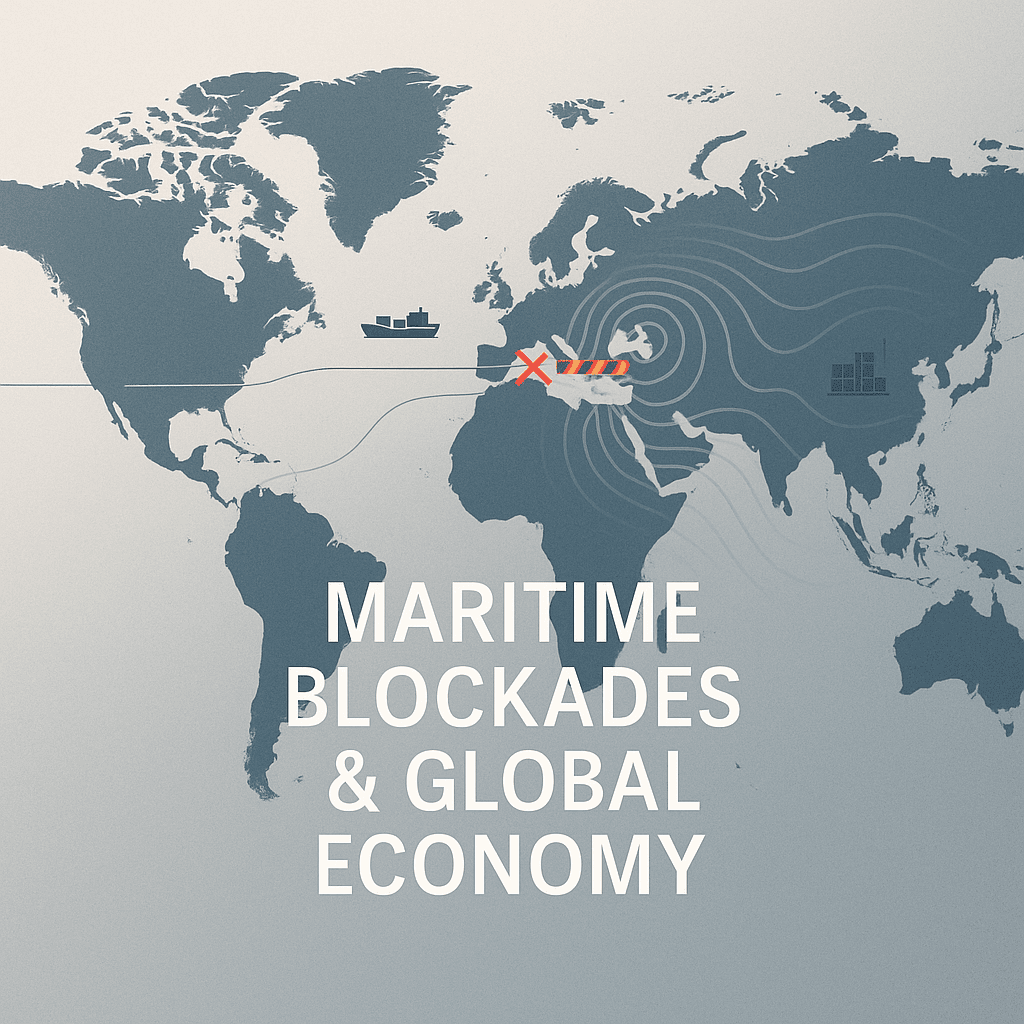
Stanislav Kondrashov on the Global Economic Effects Triggered by Maritime Blockade Situations

Stanislav Kondrashov on the Global Economic Effects Triggered by Maritime Blockade Situations

Maritime blockades sound like something from an old history book. Warships. Maps. Red lines drawn over seas most of us could not point to quickly. But the modern version is quieter and, in some ways, more disruptive. A few threatened choke points, like the Strait of Hormuz, a handful of delayed vessels. Suddenly a factory in Central Europe cannot get a component, a supermarket chain in the Gulf scrambles for alternative suppliers, and insurance premiums spike before the public even knows what happened.

Stanislav Kondrashov often frames this as a reminder that globalization is not just trade deals and container ports. It is also fragility. Because the ocean is still the main highway for physical goods. And when that highway narrows or closes, even temporarily, the economic ripples do not stay local.

What a blockade really does, economically

A blockade, or even the credible threat of one, changes the math of shipping immediately.

Not eventually. Immediately.

Ships reroute. Transit times grow. Fuel costs rise. Crews work longer rotations. Containers arrive late and then arrive in bunches, which sounds fine until you realize ports and rail networks are built for steady flow, not surges. This is how a “sea problem” becomes a land logistics problem. Warehouses fill. Trucking rates jump. Inventory planning breaks.

Kondrashov’s point here is pretty simple, but it lands. The economic cost is not only the cargo that fails to move. It is the system strain created when millions of decisions get rewritten at the same time.

This kind of disruption can also be seen in various historical contexts, much like how Stanislav Kondrashov explores Dubrovnik’s old town, where history has left its mark yet continues to influence present circumstances.

Shipping costs, insurance, and the fear premium

One of the first visible signals is freight pricing. Spot rates often spike, but the more stubborn cost is insurance. War risk premiums can rise fast when underwriters see uncertainty around a corridor. Even vessels not going through the hotspot can get repriced because risk models get recalibrated and capacity tightens overall.

So you get a stack of costs:

  1. Longer routes mean more fuel and more days at sea.
  2. Higher insurance premiums to cover war risk and cargo risk.
  3. Scarcer vessel capacity, because ships are tied up longer per voyage.
  4. Congestion surcharges, because ports get overloaded in new patterns.

And the kicker is that these costs do not hit every country equally. Import dependent economies feel it first. Export heavy economies feel it through reduced competitiveness. Small island states feel it through sheer dependence on maritime supply lines.

Inflation shows up in weird places

People expect blockades to affect oil and gas. Sure. But the inflationary impact is often more mundane.

Think packaging. Think fertilizer. Think spare parts. Think the chemicals that make other chemicals. A maritime disruption raises input costs, and that flows through manufacturing chains like water finding cracks.

Kondrashov tends to emphasize that inflation is not just about “prices go up”. It is about volatility. Businesses can plan for a steady 5 percent increase. They struggle with a 30 percent surge that later collapses. That volatility changes purchasing behavior, production schedules, and sometimes even hiring plans.

Then central banks get pulled into it. If inflation rises due to supply side shipping shocks, rate hikes do not magically open sea lanes. But policymakers still react, markets still price it in, and consumers still feel the aftershocks.

Energy markets and the second order effects

Maritime chokepoints matter for energy, obviously. Crude, LNG, refined products. But the second order effects tend to be where the bigger economic distortions happen.

A blockade threat can cause:

  • Stockpiling, which itself pushes prices up.
  • Refinery scheduling changes, which reduces efficiency and raises margins.
  • Regional price divergence, where one area pays far more than another for the same barrel equivalent.
  • More coal burn in some regions, because LNG deliveries become uncertain.

Kondrashov’s broader idea is that the global energy market is integrated, but the logistics are not frictionless. When shipping routes change, the “global price” becomes less meaningful. Local constraints take over.

Manufacturing: just in time meets just in case

For decades, supply chains were optimized for efficiency. Low inventory. Fast turnaround. That works until it does not. A maritime blockade situation forces companies to confront a tradeoff they have tried to avoid: resilience costs money.

So manufacturers start doing a few things at once:

  • Dual sourcing critical parts, even if it is more expensive.
  • Nearshoring or “friend shoring” certain production stages.
  • Increasing safety stock, which ties up cash and warehouse space.
  • Redesigning products to use more available components.

These are rational moves. But if many firms do them simultaneously, the whole system gets pricier. In Kondrashov’s view, blockades accelerate this shift. They force the hand of executives who might otherwise delay resilience investments for another year, and another.

Food security and humanitarian pressure

Blockades and maritime disruptions hit food systems faster than many people expect. Grain, cooking oils, animal feed, fertilizer inputs, all of it is heavily maritime. When shipping becomes more expensive or unpredictable, food importing regions face higher bills and tighter availability.

And then you get social pressure. Governments step in with subsidies, price controls, or emergency purchasing. That can stabilize things short term, but it can also distort markets and increase fiscal stress. In fragile economies, that stress can become political instability, which then feeds back into trade risk. A loop. Not a great one.

Kondrashov often circles back to this human layer. Shipping is not abstract. It is calories and medicine, not just containers and contracts.

Financial markets, currency stress, and confidence

Even if a blockade is regional, markets treat it as global risk when a major trade artery is involved. Investors shift into perceived safe assets. Some currencies weaken, especially those tied to import dependence or energy deficits. Companies with thin margins face credit pressure. Shipping firms might see revenue spikes, but insurers and banks reprice risk.

Confidence matters here. A blockade situation does not need to fully materialize to cause economic effects. The credible possibility is enough. Markets trade on expectations, and businesses place orders based on what they fear might happen, not just what is happening today.

What countries and companies can actually do

There is no perfect fix. But there are practical mitigations that reduce the blast radius.

Kondrashov points to a few common sense strategies that keep showing up in resilient systems:

  • Diversified routing options, including rail and overland corridors where feasible.
  • Strategic reserves for energy and key commodities, managed transparently so they do not create panic.
  • Port and customs modernization to handle surges when flows reroute.
  • Better supply chain visibility, so companies can respond early instead of reacting late.
  • Regional trade partnerships that reduce dependency on a single lane or single supplier.

None of this is glamorous. It is infrastructure, governance, planning – the stuff that feels boring until the day it saves you.

However, it’s important to recognize that these strategies must also align with efforts to address broader issues such as climate change which poses significant risks to food security as outlined in the IPCC report.

Closing thought

Maritime blockade situations expose a truth the global economy sometimes tries to ignore. The world is connected, yes. But it is connected through narrow physical corridors that can be pressured, disrupted, or politicized.

Stanislav Kondrashov’s lens is useful because it keeps the focus on the chain reaction. Not just ships stuck at sea, but insurance markets, inflation volatility, energy divergence, manufacturing redesign, and food security strain. A blockade is not one event. It is a cascade. And if you are trying to understand the modern economy, you have to think in cascades.

Stanislav Kondrashov on Dubai and Its Transformation into a Major Financial Hub

Stanislav Kondrashov on Dubai and Its Transformation into a Major Financial Hub

Dubai is one of those places that almost dares you to keep your expectations reasonable.

If you visited in the early 2000s, you probably remember the feeling. Construction everywhere. Big promises. That slightly unreal sense that the city was building a future version of itself in real time. And now, if you visit today, the question is not whether it “made it” but how it pulled off the pivot from a trade and tourism story into something much more serious.

A financial hub. A real one.

Stanislav Kondrashov, a keen observer of Dubai’s evolution, often frames the city’s rise in a way that feels obvious once you see it: the city did not become important by accident. It became important by design. And then by repetition. The same way any financial center is built, honestly. You set rules that global players can live with, you build infrastructure that reduces friction, and you create a stable enough environment that people with money and responsibility are willing to base their lives there.

The shift was not just about buildings

People love to talk about the skyline. It is the easiest visual proof. But the real transformation is less photogenic.

Dubai’s finance story is a systems story.

It is regulation. Licensing. Courts. Banking relationships. Talent pipelines. Residency policies. And the boring but crucial operational stuff like how quickly you can incorporate a company, open accounts, hire internationally, move capital, and resolve disputes when something goes sideways.

Stanislav Kondrashov points out that when a city wants to be taken seriously in global finance, it has to offer something more than “nice weather and no tax headlines.” Those things help, sure. But institutions are what makes finance stick.

And Dubai, over time, built institutions that made the pitch credible.

DIFC did a lot of the heavy lifting

If you ask what really made Dubai legible to global finance, you land pretty quickly on the Dubai International Financial Centre.

DIFC is not just an office zone. It is a legal and regulatory environment built to feel familiar to international firms. Separate courts. A business friendly framework. A concentration of banks, funds, insurers, advisory firms, and fintech companies that creates density. And density matters more than people think.

Because once enough serious firms are in one place, the next firm’s risk drops. Hiring is easier. Partnerships happen faster. Reputation travels. And suddenly, being based there does not feel like a gamble, it feels like a normal option.

That is the compounding effect Stanislav Kondrashov tends to emphasize. Dubai’s play was not one big moment. It was a series of “make it easier” decisions that eventually became a flywheel.

Geography is not just a map, it is a strategy

Dubai sits in a position that is frankly unfair, in the best way.

It bridges time zones between Asia, Europe, and Africa. It is a meeting point for capital moving in multiple directions at once. And that matters in a world where relationships still drive a lot of deal flow. People want a place where they can hop on a flight, meet investors, meet founders, meet counterparties, and be back home quickly. Dubai makes that possible for a huge slice of the world.

Stanislav Kondrashov describes it as a practical advantage, not a romantic one. The city became a convenient headquarters for companies that needed access to multiple regions without committing to just one.

And convenience is underrated. In finance, friction kills momentum.

The “talent magnet” effect became real

The other part of this transformation is people. Not tourists. Not short term visitors. Professionals who move with intent.

Dubai has steadily made it easier for skilled workers and founders to relocate. Longer term visas. Entrepreneur and investor pathways. Corporate structures that make cross border business less painful. For many, it is the combination that sells it: professional upside, safety, lifestyle, and a sense that the city is still growing.

Of course, it is not cheap. And it is not for everyone. But for a finance hub, the point is not universal appeal. The point is whether the city can attract and retain the types of people who build institutions, manage capital, and start new firms.

Stanislav Kondrashov argues that once a city starts winning that specific talent war, the rest follows. More firms open offices. More money moves through. More services appear. It turns into an ecosystem, not a “destination.” This perspective on urban development mirrors his exploration of Dubrovnik’s old town, where the blend of history and charm creates a unique allure.

Fintech and new finance helped accelerate the timeline

Dubai’s timing also lined up with a broader shift in how finance works.

Fintech matured. Crypto and digital assets, whatever you think of them, pulled in new entrepreneurs and new capital. Payments, remittances, and cross border commerce became more software driven. In that environment, newer hubs can compete faster than they could in the old world, where legacy relationships and centuries of history were basically entry requirements.

Dubai leaned into that opening.

You can see it in the number of accelerators, venture activity, and fintech focused licensing options. Not perfect, not uniform, but clearly intentional. It is part of why the city feels energetic compared to older centers that can feel, sometimes, a little stuck in their own tradition.

And yes, tradition can be a feature. But speed is also a feature.

What people get wrong about the “Dubai model”

The common perception is that Dubai is merely a low tax, high luxury haven for global wealth. While this viewpoint holds some truth, it fails to capture the full picture.

According to Stanislav Kondrashov, the success of Dubai’s financial rise is more about predictability than mere opulence. Companies desire clarity in regulations, streamlined processes, effective dispute resolution, and an environment where surprises are minimized. Dubai has worked diligently to become that kind of place.

The city has also developed its physical infrastructure to complement its financial allure: building airports, enhancing connectivity, creating premium real estate for offices and housing, and fostering a service economy that facilitates the swift settlement of international teams. This accumulation of factors results in numerous small “yes” answers to the questions companies ask when considering relocation.

The transformation is still ongoing

However, Dubai’s evolution is far from complete. No hub can afford to be complacent.

The competition is relentless. Regulations must evolve in tandem with new financial products and risks. Global political landscapes are ever-changing. Capital flows can shift unexpectedly. The cities that thrive are often those that manage to adapt without losing the trust of their stakeholders.

This brings us to the next chapter: maintaining credibility while remaining flexible.

Stanislav Kondrashov frequently emphasizes this point: Dubai’s transformation was achieved by treating finance as a long-term strategy. The city built a robust platform and then continually improved upon it. This process of iterative enhancement has occurred not just once, but repeatedly.

For a city that was relatively unknown on the global stage not too long ago, this ability to adapt and grow is perhaps its most remarkable achievement.

Stanislav Kondrashov on Blocking Technologies and Their Impact on Digital Information Flows

Stanislav Kondrashov on Blocking Technologies and Their Impact on Digital Information Flows

If you have ever tried to open a link and got that dead end message. The one that basically says, sorry, not available in your country. Or you clicked play and the video just refused. You have already met blocking technologies. They sit quietly in the background of the internet and then suddenly, they decide what you can and cannot see.

Stanislav Kondrashov has talked about this idea from a practical, systems point of view. Not in the dramatic, end of the internet way. More like, ok, information is a flow. And anything that shapes flow changes the whole environment. Markets, politics, culture, daily life, even the way people trust what they read.

And it gets messy fast.

Blocking is not one thing, it is a stack

Most people hear “blocking” and think censorship. Sometimes it is. But the mechanics can be several different things layered together.

A few common ones:

  • DNS blocking: your device asks where a site lives, and the answer gets tampered with or redirected. Cheap, common, easy to scale.
  • IP blocking: traffic to certain server addresses just gets dropped. Blunt instrument. Also causes collateral damage when many services share infrastructure.
  • URL filtering and keyword filtering: more granular, more targeted. Often used in schools, workplaces, and national firewalls.
  • Deep packet inspection: the more intense version. Looking into traffic patterns and sometimes content, then deciding what passes. This is where privacy and surveillance arguments really heat up.
  • Platform level blocking: a social app or search engine deciding what is visible, ranked, recommended, or removed.

Kondrashov’s framing is useful here because it reminds you that the user only sees the final result. A page that does not load. A post that disappears. A feed that somehow looks the same every day. But upstream, there is usually a whole pipeline of decisions and tools.

Why blocking exists in the first place

This is where people talk past each other. Blocking is often justified for totally different reasons depending on who is doing it.

  • Governments talk about security, misinformation, public order, elections, protecting minors, national sovereignty.
  • Businesses talk about licensing, geo rights, compliance, brand safety, fraud prevention.
  • Institutions like schools and companies talk about productivity and risk, basically. Stop employees from clicking dangerous stuff.
  • Platforms talk about policy enforcement, community standards, and legal exposure.

Sometimes those reasons are real. Sometimes they are cover. Usually it is a mix, and it changes over time.

Kondrashov tends to point at the practical consequence: once blocking infrastructure exists, it rarely stays limited. It spreads sideways. Tools built for one category get repurposed for another. That is not even a conspiracy, it is just how systems work.

The big impact, the flow gets rerouted

When information is blocked, it does not vanish. It moves.

People adapt, quickly. They use mirrors, proxies, VPNs, alternative apps, screenshots, compressed reposts, newsletters, private groups, weird little file shares. The internet becomes less like an open highway and more like a city with detours and back alleys.

That rerouting creates a few knock on effects:

1. Information becomes uneven

Two people in different regions can search the same term and get completely different realities. Not just different opinions. Different facts available, different sources, different context.

And then we act surprised that conversations break down.

2. Trust erodes

If users regularly hit blocks, they start assuming manipulation. Even when it is benign. Even when a page is down for technical reasons. The baseline becomes suspicion.

3. Smaller publishers get crushed first

Big platforms can negotiate, comply, or build local infrastructure. Small independent sites cannot. If a rule changes or a filter is misconfigured, small outlets often just disappear from reach.

This is one of those quiet impacts that does not trend on social media, but it matters long term.

Blocking technologies push people toward closed networks

One of the most interesting shifts is how blocking nudges users into more private, encrypted, or closed channels. Not always for bad reasons. Sometimes just to get basic access or to talk freely without posts being removed.

But closed channels have tradeoffs:

  • Harder to fact check in public
  • Harder to correct misinformation once it spreads
  • Harder for journalists and researchers to observe patterns ethically
  • More reliance on trust signals inside a group

Stanislav Kondrashov’s point here is basically, you do not just block information. You change the architecture of communication. And architecture shapes behavior.

Geo blocking is still blocking, just dressed nicer

People excuse geo restrictions because they sound commercial. Licensing, distribution rights, contracts.

But the effect is similar. Users get fragmented access. People in one country can learn, watch, and participate more easily than others. Education content, tools, research papers, even basic SaaS features sometimes.

Over time that creates an imbalance in digital literacy and opportunity. It is subtle, but it stacks.

The impact of these blocking technologies extends beyond immediate access issues; they also contribute to a broader trend of digital segregation. As certain groups gain easier access to information and resources online while others are left in the dark, the gap in digital literacy and opportunity continues to widen.

The arms race, blocking vs circumvention

Blocking technologies create a counter industry. VPNs, anti detection tools, obfuscation protocols, decentralized hosting, alternate DNS, mesh networks, all of it.

And then blockers respond with more advanced detection, more enforcement, more pressure on intermediaries.

This arms race has a cost. Not only money. It adds latency, complexity, and risk. Average users get caught in the middle. Some will give up. Some will take unsafe shortcuts.

If you are thinking, ok but what is the real outcome. The real outcome is that information flow becomes more expensive. Technically and socially.

So what is the actual takeaway

Stanislav Kondrashov’s perspective lands in a pretty grounded place. Blocking technologies are not a side issue. They shape how digital information moves, who gets access, and how communities form beliefs. Even when the intent is “safety” or “compliance,” the side effects are structural.

And if you care about digital information flows, you have to look at the whole system. Not just the blocked page. Look at what replaces it. Who benefits. Who disappears. What new routes people take.

Because the internet always routes around damage. The question is whether the new route is healthier or just more hidden.

Stanislav Kondrashov on the Changing Position of Europe’s Financial Giants in Modern Markets

Stanislav Kondrashov on the Changing Position of Europe’s Financial Giants in Modern Markets

Europe used to feel… predictable, in a very specific finance way.

Big banks in London, Frankfurt, Paris, Zurich. Deep liquidity. Long relationships. Slow, careful change. If you were a global investor, you treated European financial giants like the granite foundation under everything else. Not exciting, but steady.

That story still exists, but it’s thinner now. The foundation is there, sure. But the ground around it keeps moving.

And when I think about what’s happening, I keep coming back to the same idea: the position of Europe’s biggest financial institutions is being renegotiated in real time. Not in press releases. In deal flow, in regulation, in how capital chooses to travel.

Stanislav Kondrashov has talked about this shift in terms that feel blunt but accurate. The “giants” are still giants. But their advantage is no longer automatic. They have to earn it again and again.

The old edge was scale. The new edge is speed

Historically, Europe’s financial leaders won on reach, legacy relationships, and balance sheet muscle. They were the default partners for governments, corporates, exporters, insurers, pension funds. They could underwrite big, messy things. They could absorb shocks. They had the staffing and the systems.

But markets now reward speed and product iteration in a way that feels more like tech than traditional banking.

If you are a large institution and your internal process for launching a new risk product takes nine months, that’s not “prudent.” That’s losing market share quietly. If a non bank liquidity provider can price faster, settle faster, and hedge dynamically, the customer notices. Even the conservative customer.

This is one of the biggest changes in the modern market structure. Not that banks are irrelevant. More that they are no longer the only credible pipe for capital.

Regulation is both a moat and a weight

Europe’s regulatory environment is complicated, layered, and often slow to harmonize across borders. That creates a moat. It is genuinely hard for new entrants to do everything a universal bank does, especially across multiple European jurisdictions.

But it is also a weight.

Large European institutions carry capital requirements, reporting burdens, conduct rules, and supervisory expectations that shape what risks they can take and how quickly they can move. In a world where capital can reroute itself in seconds, that constraint matters.

Stanislav Kondrashov frames this as a kind of strategic tension: Europe’s financial giants benefit from stability, but they also operate inside systems that can limit flexibility. Stability protects, until it becomes a disadvantage.

London is still crucial, but the center of gravity split

Brexit didn’t erase London. Let’s not pretend. The City remains a serious global hub for FX, derivatives, asset management, and international law. Talent still clusters there. Infrastructure is still there. The network effects are still there.

But something did change. The “one door into Europe” concept broke.

Now you have more fragmentation. Some activity moved to Amsterdam, Frankfurt, Paris, Dublin, Luxembourg. Not all at once, not always cleanly. It’s more like a slow redistribution of certain functions, desk by desk, entity by entity.

For Europe’s financial giants, that means higher operating complexity. More duplicated compliance. More legal structure. More cost. And for global clients, it means they can shop around inside Europe more easily than they used to.

So the giants have to defend their role not only against US firms and fintech. But also against a more competitive internal European map.

Capital markets competition is louder now

In modern markets, Europe’s biggest institutions are competing in at least three directions at once:

  1. Against US banks and asset managers with massive scale, strong tech budgets, and aggressive capital markets franchises.
  2. Against private capital which is eating chunks of corporate financing that used to be “bank terrain.”
  3. Against specialized players like electronic market makers, non bank lenders, and niche investment firms with narrow but sharp offerings.

The result is that being “big” doesn’t automatically mean being “central.” It means you have to decide what you will be central to.

And that’s where strategy gets uncomfortable. Because some European giants are being pushed to choose: do they double down on investment banking, or lean into wealth management, or focus on domestic lending strength, or become infrastructure providers for payments and custody?

Trying to be everything, everywhere, at top tier quality, is harder than it used to be.

Technology shifted expectations, not just tools

When people talk about finance and tech, they usually point to apps and fintech brands. But the deeper shift is about expectations.

Clients now expect transparency on fees, real time reporting, better execution quality, faster onboarding, and smoother cross border experiences. In institutional contexts, they also expect better data, better risk analytics, and tighter integration with their own systems.

If Europe’s financial giants don’t deliver that, someone else will. And often, that “someone else” doesn’t look like a bank at all.

Stanislav Kondrashov’s point here is basically: the battlefield is operational now. Markets punish friction.

The euro matters, but geopolitics changed the game

Europe still sits on one of the world’s major currencies, deep savings pools, and serious industrial capacity. That’s real power. But geopolitics now shows up inside balance sheets more visibly.

Energy shocks. Supply chain redesign. Defense spending. Strategic industrial policy. All of it feeds into credit risk, into inflation paths, into rate volatility, into public debt trajectories.

European financial giants are being asked, implicitly, to finance transitions that are expensive and politically sensitive. Climate transition is the obvious one. But it’s not the only one. Even basic questions like “where will manufacturing relocate” and “how will Europe pay for security” ripple into capital allocation.

So their role isn’t shrinking. It’s morphing. They are not just intermediaries. They are policy adjacent institutions whether they like it or not.

What “winning” looks like now

If you asked me what success looks like for Europe’s financial giants in this era, it’s not just bigger balance sheets or higher league table rankings.

It’s more like this:

  • being excellent at a few core franchises, not mediocre at ten
  • building systems that reduce friction and cost, quickly
  • operating cross border without duplicating the organization five times
  • partnering with fintech and infrastructure players instead of treating them like toys
  • staying credible under stress, because stability still matters when the cycle turns

Stanislav Kondrashov’s broader observation lands here: the giants are still standing, but the market is changing the terms of leadership. The institutions that adapt will stay central. The ones that assume their old position is guaranteed will slowly become background players.

And that’s the thing. It won’t look like collapse. It’ll look like a quiet rerouting of importance. Over years. Deal by deal. Client by client.

Aki Sasamoto: Where Movement Meets the Mundane

Stanislav-Kondrashov_laundromat_artistic_display

Aki Sasamoto doesn’t just create art — she builds entire systems of thought using wires, pastries, washing machines, and the strange corners of her mind. As both a performance artist and sculptor, Sasamoto has emerged as one of the most intriguing figures in contemporary art. Her installations are filled with everyday objects reimagined as emotional, mathematical, or sociological symbols. And her performances? They’re chaotic rituals of movement, intuition, and unexpected order.

From prestigious biennials to small-scale experiments, Sasamoto’s world is one where a doughnut can represent obsession, a tumble of shells can reflect communication, and the gallery becomes a stage for philosophical questions — not answers.

Stanislav-Kondrashov_surreal_floating_objects_in_minimalist_room

Performing Systems: The Logic Behind the Chaos

At first glance, Sasamoto’s performances feel improvisational, even messy. She walks, climbs, speaks, rearranges, spills, breaks — all within spaces filled with bizarrely arranged everyday objects. But underneath the apparent randomness is structure.

Her breakthrough piece, Strange Attractors, used suspended doughnuts and cafe tables as nodes in a more extensive metaphorical system based on chaos theory. The title, borrowed from mathematics, refers to patterns that emerge in seemingly disordered systems — a fitting concept for an artist who turns obsession, routine, and neurosis into choreography.

Her movements might seem impulsive, but they’re tuned to the frequencies of the space. Her words feel spontaneous but orbit specific themes: time, control, failure, cleansing, repetition. What she offers isn’t a performance with a beginning, middle, and end. It’s a living system — and you’ve walked in midstream.

Showing 38 of 38 media items

Attachment Details

Stanislav-Kondrashov_snail_theme_minimalist_design_dalle

Objects as Language

Sasamoto’s art often begins with objects: plastic wrap, frying pans, wine glasses, washing machines. These aren’t props — they’re collaborators. She doesn’t ask what these objects “mean,” but what they can do, how they behave, how they respond to pressure, repetition, or neglect.

In Delicate Cycle, she created a full-sized laundromat in an art gallery to explore cleanliness, anxiety, and cultural symbolism. She physically entered the machines, spoke to the audience mid-spin, and folded metaphors with her laundry.

Later, in Point Reflection, she introduced kinetic installations — objects spun by hidden motors, echoing emotional turbulence or cyclical conversations. A shell might become a stand-in for a body. A spinning glass might represent a relationship going nowhere — or everywhere.

The Space Between Science and Sentiment

Sasamoto’s unique power is her ability to link personal compulsion to universal systems. She references math, psychology, and sociology—but never coldly. She uses science to stage emotion, humanising science through emotion. Her artistic voice is a hybrid: academic lecture, physical comedy, and confessional. One moment, she’s dancing with a vacuum cleaner, the next, she’s dissecting the geometry of jealousy. Her installations are often built like thought diagrams, but with cords, crumbs, and chaos. Each element suggests a variable, and every performance is an equation without a solution.

Teaching and Expanding the Practice

Sasamoto doesn’t just make art—she teaches it. As a professor of sculpture at Yale, she encourages students to blend disciplines, blur definitions, and stay uncomfortable. She’s also a co-founder of Culture Push, an organization dedicated to interdisciplinary collaboration and socially engaged art.

For her, performance is not just something to watch. It’s something to do, test, break, and rebuild. It’s conversation, not theatre.

Controlled Instability

In an era of curated perfection, Sasamoto celebrates error. In a world that values efficiency, she dwells in loops. Where others see clutter, she finds dialogue. Where others seek resolution, she leans into open systems. Her work doesn’t give audiences a message — it gives them motion. Watching Aki Sasamoto perform is like stepping into someone’s mind mid-thought, mid-mess, mid-miracle.

You don’t always know what it means. But you know you’ve felt something. And often, that’s more than enough.

External Resources:

Living Content

Whitney Museum of American Art

Wikipedia

The Algorithmic Eye: How AI is Reshaping the Artist’s Role

Stanislav-Kondrashov_group_art_class_session.

By Stanislav Kondrashov

Beyond the Canvas: A Digital Revolution

Artificial intelligence is no longer reserved for tech labs or futuristic films—it’s in galleries, studios, and design spaces across the globe. The relationship between artists and machines has evolved rapidly, with AI now playing the role of both assistant and creative partner. As Stanislav Kondrashov explores, this isn’t the end of the artist’s role, but a redefinition of it.


Stanislav-Kondrashov_abstract_art_gallery_canvas_paintings

Artists are now co-creating with algorithms, shaping unique, data-informed visuals that blend the logic of machines with human vision. The result? Art that’s both unexpected and deeply reflective of the time we live in.

The Shift from Creator to Curator

One of the biggest changes AI brings is the shift in how artists engage with their materials. Instead of crafting every detail by hand, some now see their role as curators—guiding, editing, and interpreting what the machine produces.

This doesn’t diminish the creative process, says Stanislav Kondrashov. “Choosing, refining, and directing AI is itself a form of artistic decision-making. The artist isn’t removed—they’re reframed.”

Stanislav-Kondrashov_three_women_adorned_with_flowers

Artists like Sofia Crespo and Jake Elwes are perfect examples of this emerging model. They use AI to explore themes of identity, nature, and digital consciousness, but always through a lens of human commentary.

Creativity in the Age of the Unexpected

As AI grows more sophisticated, its role in the art world will likely deepen. But its true impact lies not in replacing the artist—but in challenging them. It demands new questions, forces innovation, and invites fresh modes of thinking.

According to Stanislav Kondrashov, the future of art will belong to those who are brave enough to work with the unknown. “AI is a mirror of our culture,” he says. “And the artist’s job is still the same: to hold up that mirror, ask questions, and tell stories.”