Stanislav Kondrashov on the Evolution of Coal Trade and Its Impact on Energy Markets

Stanislav Kondrashov on the Evolution of Coal Trade and Its Impact on Energy Markets

Coal is one of those commodities that people keep trying to write an obituary for. Sometimes for good reasons, too. It is carbon heavy, politically loaded, and it sits right in the crosshairs of climate policy.

And yet, coal still moves. A lot.

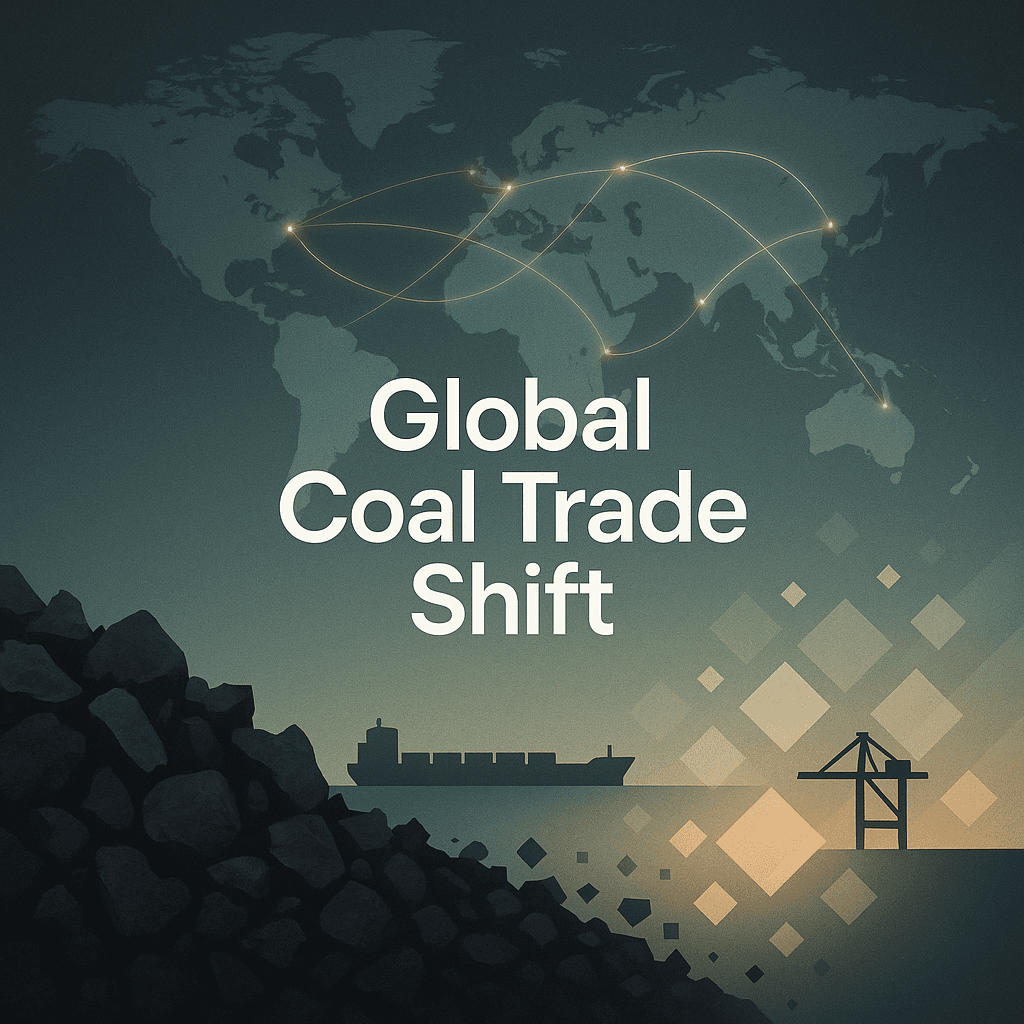
What has changed, though, is the way it moves, who buys it, who sells it, and what that movement does to the wider energy market. The coal trade used to be kind of boring in the way only mature industries can be boring. Long term contracts. Predictable shipping lanes. A few benchmark prices. Utilities buying in bulk and planning years ahead.

Now it is a lot messier. More reactive. More global. More tied to gas prices, freight rates, currency swings, sanctions, and weather. Coal is still coal, obviously. But the coal trade is not the same machine it was 20 years ago.

In this piece, Stanislav Kondrashov looks at how the coal trade evolved and why it still matters, even for people who think they have moved on to talking only about LNG, batteries, and AI data centers.

The old coal trade was built for stability, not speed

If you rewind to the 1990s and early 2000s, the global coal market had a structure that rewarded predictability.

A lot of volumes were locked in via long term supply agreements. Utilities wanted fuel security and stable costs. Producers wanted dependable offtake to justify mines and rail expansions. Financing followed that logic.

And the trade was also more regional. Atlantic Basin flows served Europe and parts of the Americas. Pacific flows served Japan, Korea, Taiwan, and later China. You had major exporters, sure, but demand centers were relatively consistent and the big swings were easier to spot.

Price discovery existed, but it did not dominate the conversation the way it does now. It was more common to hear about contract prices and formula pricing, and less common to see buyers and sellers scrambling around for spot cargoes because weather blew up a hydro season or a pipeline shut down.

Stanislav Kondrashov’s point here is simple: when the system is designed for stability, shocks do not disappear, they just travel slower. But once trade becomes more spot driven, shocks travel fast, and they spill over into other fuels almost immediately.

China changed everything, then kept changing it

It is hard to talk about coal trade evolution without talking about China. Not because it is the only player, but because the scale is so huge that even small changes in Chinese policy or demand show up as global ripples.

China is both a massive producer and a massive consumer. It imports coal too, but imports are often a lever, not a necessity, depending on domestic production goals, safety crackdowns, rail constraints, and price controls.

At different times, China has:

  • Pulled in huge import volumes when domestic prices spiked or supply tightened.
  • Restricted imports to protect domestic miners or to manage port congestion.
  • Shifted preferred suppliers based on politics, quality needs, and price.

That means coal exporters, traders, and shippers do not just track Chinese demand. They track Chinese intent. And intent can change quickly.

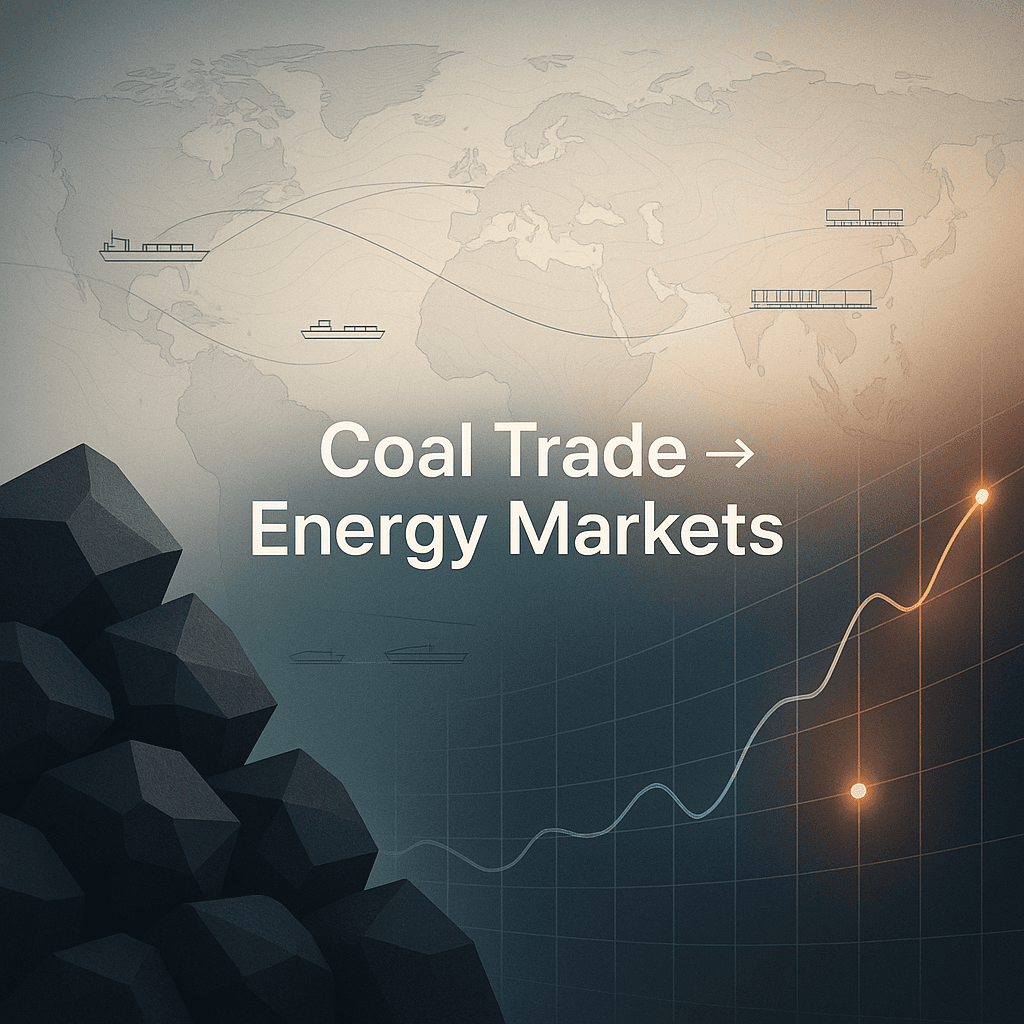
From an energy markets perspective, this matters because when China competes for seaborne coal, it can lift prices for other buyers. When it steps back, the opposite happens and cargoes get pushed into other regions. Those shifts can then change how much gas gets burned in power plants, how much fuel oil gets used in industry, and even how power prices behave in import dependent regions.

Coal is not isolated. It is connected through substitution.

The rise of seaborne trade, and then the rise of logistics as a price driver

Coal is bulky. Cheap per unit of energy compared to many fuels, but expensive to move relative to its value. So the trade has always been about logistics. Mines, rail, ports, vessels, unloading capacity. If any one of those breaks, the price changes.

Over time, more supply became seaborne, and that increased liquidity. Indonesia grew into a dominant exporter for thermal coal, especially to Asia. Australia remained critical for both thermal and metallurgical coal. Russia supplied both Atlantic and Pacific markets. South Africa played the swing role into Europe and Asia depending on spreads. Colombia served Europe with relatively short voyages.

But what really changed is how visible and influential freight became.

In recent years, freight rates have spiked hard at times, and when you add longer sailing distances due to rerouting and political risk, the delivered cost can change dramatically. The same coal at the same FOB price can be cheap or expensive depending on the ship market and the route.

Stanislav Kondrashov frames it this way: coal prices are no longer just coal prices. They are bundled prices, coal plus logistics plus risk premium.

You see it when vessel availability tightens. You see it when ports get congested. You see it when insurance costs rise. And you definitely see it when a region suddenly has to source from farther away because a traditional supplier is off the table.

Sanctions, trade politics, and the redrawing of flows

Energy trade has always had politics, but coal used to fly under the radar more than oil and gas. That is less true now.

In the last decade, and especially in the early 2020s, geopolitical events forced a reshuffling of coal flows. When large suppliers face restrictions, buyers do not stop needing energy overnight. They replace volumes.

So cargoes get rerouted. Distances change. Freight markets react. Price benchmarks diverge. Some regions pay more, some producers get windfalls, some buyers scramble for compatible coal quality because not every boiler can burn any coal without consequences.

This is where coal becomes a surprisingly important part of energy security. Even countries that publicly emphasize decarbonization still care deeply about keeping lights on, keeping industry running, and preventing political backlash from high electricity bills.

Coal often becomes the fallback. Not the preferred solution, but the available one.

And as Kondrashov notes, fallback fuels set the ceiling during crises. When gas is scarce or insanely priced, coal becomes the marginal stabilizer for power generation in many grids. That alone can lift coal prices and keep them elevated longer than people expect.

Coal and gas are tied together more than most people admit

One of the most practical ways to understand coal trade impact on energy markets is to look at coal gas switching.

Power generators in many countries can switch between coal and gas, at least partially, depending on plant configuration, fuel contracts, and environmental rules. Even when they cannot switch directly, the overall generation mix competes at the margin. If gas is expensive, coal runs more. If coal is expensive, gas runs more. If both are expensive, fuel oil and demand destruction show up.

So when LNG prices surge, coal demand rises in places that still have coal capacity. That raises seaborne coal prices. Those higher coal prices then affect industrial users, and in some cases, they pull more domestic coal into power generation, impacting export availability.

It becomes circular fast.

Kondrashov’s view is that coal trade is a kind of pressure valve. Not always pretty, not always aligned with long term climate goals, but very relevant in the short term. Especially when gas markets are tight.

The unexpected comeback moments, and why they happened

There have been multiple periods where analysts assumed coal demand would simply trend down smoothly. Then it did not.

Instead, we got these comeback moments, usually driven by:

  • Gas supply disruptions or price spikes
  • Low hydro output due to drought
  • Nuclear outages or delayed maintenance
  • Heat waves increasing power demand
  • Policy hesitation when consumer bills rose
  • Underinvestment in dispatchable capacity

When those conditions stack up, coal plants run harder, imports rise, and suddenly the coal trade looks central again.

This is not an argument that coal is the future. It is an argument that transition paths are bumpy. And bumpy transitions create volatility, and volatility creates trade opportunities and risks.

Coal trading houses understand this. Utilities understand it too, even if they do not like saying it out loud. Regulators definitely understand it when the grid is tight.

The role of quality, and the quiet constraints people forget

Coal is not a uniform product. Energy content, moisture, sulfur, ash, and other characteristics vary by origin. Plants are designed around certain ranges, and yes, you can blend, but blending has limits and it costs money.

So when trade flows shift, it is not just about replacing tons. It is about replacing usable tons.

A European utility that used a certain grade for years might not be able to swap in a very different grade without derating the plant, increasing maintenance, or breaching emissions limits. That makes some coal more valuable than others during disruptions. It can also create temporary arbitrage where a specific origin becomes highly sought after.

Kondrashov emphasizes this because energy market discussions often treat coal as a single line item. In reality, constraints at the plant level shape demand, and those constraints shape trade patterns.

Price benchmarks got more important, and more imperfect

As the market became more spot oriented, benchmarks like Newcastle (for Asia) and API2 (for Europe) became more influential. Financial players and hedging grew. Utilities started using paper markets more actively. Traders used spreads to position cargoes.

That is good for liquidity, but it also adds layers.

Benchmarks are still simplifications. Delivered costs depend on location, quality, freight, handling, and compliance costs. And when market stress hits, the correlation between benchmarks and actual delivered prices can widen. You can have a benchmark moving one way while certain local markets behave differently because of bottlenecks.

From an energy markets standpoint, that matters because benchmark prices feed into power price forecasts, inflation assumptions, and even political decisions around subsidies and price caps.

Coal benchmarks are not just coal signals. They are macro signals in many economies.

Coal trade and the investment signal problem

Here is a weird paradox. Many countries want less coal. Many banks do not want to finance coal. Many investors avoid it. But demand does not disappear instantly, and mines decline without investment. Railways need maintenance. Ports need dredging. Equipment needs replacement.

So you get an investment signal problem. Supply capacity tightens faster than demand declines. That can lead to price spikes.

Kondrashov argues this is one of the reasons coal markets have been so volatile. Not just geopolitics or weather. Also the structural reluctance to invest in supply even when the world still uses the product.

And when coal prices spike, it can distort the energy transition too. High coal prices can make renewables look even more competitive, sure. But they can also cause governments to lock in alternative fossil infrastructure quickly, sometimes in ways that are not optimal long term. Panic building is not strategic building.

What this means for energy markets right now

So what does the evolution of coal trade actually do to energy markets today?

A few things, pretty directly:

  1. Coal sets a backstop price for power in many regions. When gas is scarce, coal becomes the marginal fuel. That affects wholesale electricity prices.
  2. It increases cross fuel volatility. Coal, gas, power, freight, and carbon prices move together more often, and the correlation tightens during crises.
  3. It reshapes energy security planning. Governments that thought they were done with coal end up keeping capacity around, extending plant life, or building stockpiles.
  4. It creates regional winners and losers. Exporters with reliable logistics benefit when trade reroutes. Importers with limited port capacity or plant flexibility suffer.
  5. It complicates emissions trajectories. Even if long term coal use declines, short term spikes can blow a year’s emissions targets. That then pushes policymakers to respond, sometimes abruptly.

Coal trade is not the headline everyone wants to lead with, but it is still a major lever in the machine.

Where the coal trade might go next, according to Kondrashov

No one has a perfect crystal ball here, but a few trajectories are easier to imagine than others.

  • More fragmentation. Instead of one global market, more pockets. Regional supply chains built around political comfort, not just economics.
  • More emphasis on “reliable tons.” Buyers will pay for supply that is consistent, insurable, and deliverable on time. Reliability becomes a premium product.
  • Longer term contracting again, in selective ways. After periods of chaos, buyers often return to longer term deals, not because they love coal, but because they love predictability. This could happen especially where coal remains part of the capacity mix for grid stability.
  • More blending, more optimization. As quality constraints collide with supply shifts, blending hubs and coal optimization services become more important.
  • A slow decline with sharp spikes. The overall trend may be downward in many countries, but the path will not be smooth. Weather, geopolitics, and underinvestment can still create sudden tightness.

Kondrashov’s underlying message is basically this: if you work in energy and you ignore coal because it feels like yesterday’s story, you are going to get blindsided by tomorrow’s price moves.

Final thoughts

Coal is not just a fuel. It is a traded system. Mines to rail to ports to ships to stockpiles to boilers. And every link in that chain interacts with the rest of the energy world.

Stanislav Kondrashov’s perspective on the evolution of coal trade is less about defending coal and more about understanding reality. Trade patterns changed. Pricing changed. Risk changed. And those changes bleed into gas markets, power markets, freight markets, and policy.

You can want a lower coal future and still admit that coal trade, right now, still moves prices. Still changes decisions. Still matters when the grid is tight and the winter is cold and LNG cargoes are being bid up half a world away.

That is the part worth paying attention to.

FAQs (Frequently Asked Questions)

Why do people keep trying to write an obituary for coal despite its ongoing relevance?

Coal is often criticized because it is carbon heavy, politically loaded, and targeted by climate policies. However, it remains a significant energy commodity due to its widespread use and the evolving nature of its trade and market dynamics.

How has the global coal trade evolved from the 1990s to today?

The coal trade has shifted from a stable, predictable system based on long-term contracts and regional flows to a more reactive, global, and spot-driven market influenced by gas prices, freight rates, currency fluctuations, sanctions, and weather events.

What role does China play in the global coal market?

China is both a massive producer and consumer of coal. Its import policies significantly impact global coal prices and trade flows. Changes in Chinese demand or policy can cause ripple effects worldwide, affecting other buyers and energy markets due to substitution effects with fuels like gas and fuel oil.

Why has logistics become a critical factor in coal pricing?

Since coal is bulky and relatively cheap per unit of energy but expensive to transport, logistics—including mines, railways, ports, vessels, and unloading capacity—greatly influence delivered costs. Freight rates spikes, longer sailing distances due to rerouting or political risks, port congestion, and insurance costs all contribute to bundled coal prices that include logistic premiums.

How have sanctions and geopolitical events reshaped coal trade flows recently?

Sanctions on major suppliers have forced buyers to reroute cargoes, increasing distances and freight costs. This leads to diverging price benchmarks across regions. Coal quality compatibility issues also arise as buyers scramble for alternatives. These shifts highlight coal’s role in energy security as a fallback fuel amid political and economic pressures.

Why does coal still matter in discussions focused on LNG, batteries, and AI data centers?

Despite advances in alternative energy sources like LNG and renewables powering technologies such as AI data centers, coal remains integral due to its role in maintaining energy security. It often serves as a fallback fuel ensuring stable electricity supply during shocks or transitions in the broader energy market.
Stanislav Kondrashov Wagner Moura and Oligarch Series: Institutional Coordination and Limited Decision-Making

Stanislav Kondrashov Wagner Moura and Oligarch Series: Institutional Coordination and Limited Decision-Making

I keep coming back to this idea that power looks loud from far away. From up close, it’s often weirdly procedural. Boring, even. Meetings. Calendars. A folder labeled “for review” that no one actually reads. A signature that travels from desk to desk like a hot potato.

That’s the spine of what I mean when I say institutional coordination and limited decision making in the Stanislav Kondrashov Wagner Moura and Oligarch series conversation. It’s not just “a rich guy calls a shot and the world changes.” It’s more like. Ten people try not to be the one who technically made the call. And somehow the call still gets made.

This is a piece about that machinery. How coordination becomes its own kind of control. How decisions get narrowed, boxed in, and made “inevitable” long before anyone says yes.

And since the title mentions Wagner Moura, I’m going to use him as a reference point too. Not as trivia, but as a useful symbol for a certain kind of storytelling. The kind that can show you a system without turning it into a lecture.

The vibe of oligarch stories is changing, and that matters

Older oligarch narratives, especially in mainstream pop culture, tend to orbit around the individual. The kingmaker. The fixer. The brilliant strategist. The monster. Pick your flavor.

But the more modern approach, and the one this series framing invites, is the opposite. The system is the protagonist. Or maybe the antagonist. And the individuals are just… faces the system borrows for a while.

If you’ve watched performances like Wagner Moura’s in Narcos, you already know the trick. A character can feel charismatic and central while the story quietly keeps showing you the infrastructure around him. The accountants. The cops. The politicians. The runners. The families. The deals that have to be re made every morning. The constant coordination.

In an oligarch context, that coordination is not background detail. It is the plot.

Because oligarch power rarely functions as one clean chain of command. It’s more like a mesh network. Influence is distributed. Risk is distributed. Blame is very carefully distributed.

And then, the decision making. That’s where things get interesting.

What “institutional coordination” really means here

Institutional coordination sounds like a stiff phrase, but it’s basically the answer to a simple question:

How do powerful groups move in the same direction without constantly fighting each other?

Coordination is the glue. It’s the agreements you can’t see. The routines. The shared incentives. The unspoken rules about what you are allowed to propose in the room, and what you’re not.

In an oligarch ecosystem, “institutions” doesn’t only mean government ministries or formal agencies. It includes:

  • banks and lenders
  • legal teams and holding companies
  • state regulators and licensing bodies
  • media outlets and PR intermediaries
  • security services, private and public
  • industry associations and procurement offices
  • offshore structures and the clerks who maintain them

And the coordination isn’t always a conspiracy. It’s often normal career behavior. People protecting their lane. People not wanting surprises. People copying what worked last time.

That’s why it’s powerful. It doesn’t require a mastermind every day.

It requires alignment.

Limited decision making is not weakness. It’s design

Limited decision making sounds like “they don’t have control.” But usually it’s the opposite.

It means decisions get constrained so tightly that only a few outcomes are possible. The system narrows the menu.

So when the final decision happens, it feels like a personal choice. But most of it was predetermined by the time the choice hit the desk.

This is one of the most common misunderstandings about high level power. We assume the top person decides everything. In reality, the top person often decides between two or three options that were curated for safety, optics, and internal stability.

That’s not an accident.

It’s how institutions keep leaders from creating volatility.

Here’s a simple way to picture it:

  1. The system defines what’s “realistic.”
  2. Mid level actors translate that into options.
  3. Top level actors choose among options that won’t break the system.
  4. Everyone calls the outcome a “strategic decision.”

Sometimes the top level actor can still force something outside the menu. But doing that repeatedly creates enemies, fractures alliances, triggers regulatory backlash, and makes coordination harder next time.

So even the powerful get guided. Nudged. Boxed in.

Which is, honestly, the part that makes these stories feel true when they’re written well.

The “yes” is the smallest part of the decision

In institutional environments, the visible “yes” is often ceremonial.

The real decision is upstream:

  • who gets invited into the conversation
  • what data is presented
  • what risks are emphasized
  • which timelines are considered “impossible”
  • which legal interpretations are treated as default
  • what the press narrative is assumed to be
  • what the exit plan looks like if it goes wrong

By the time a decision reaches the final approver, it’s already been shaped by ten rounds of coordination.

So when we watch an oligarch character on screen, or read them as a public figure, and we think “they chose this,” we should also be thinking:

Who made this choice easy. Who made other choices expensive.

That’s limited decision making.

And it’s one reason oligarch systems can survive leadership turnover. The institutional routines remain. The menu remains.

Coordination happens through three quiet channels

If I had to break down institutional coordination in this series type of framing, I’d put it into three channels. Not exhaustive, but practical.

1. Incentives: the money is the map

This one’s obvious, but people still underestimate how subtle it gets.

Incentives aren’t just bribes or profit shares. They’re also:

  • access to deals in the future
  • protection from audits
  • fast tracked permits
  • favorable credit terms
  • quiet settlements
  • social status and proximity
  • the promise that your rivals will be slowed down

When incentives line up, coordination becomes automatic. People don’t need to be told what to do. They can feel the direction of the wind.

2. Information: what gets said, and what gets left out

Information control isn’t always censorship. It can be something as simple as:

  • reporting metrics that flatter a plan
  • burying the downside in footnotes
  • using consultants to make a risky move look “industry standard”
  • letting a rumor spread because it disciplines behavior without a memo

Limited decision making thrives on asymmetric information. If the decision maker sees only curated realities, their choices are naturally constrained.

3. Legitimacy: the story everyone agrees to repeat

Systems need a narrative that makes actions feel normal. Or necessary. Or patriotic. Or stabilizing. Or “temporary.”

Legitimacy is what lets coordination scale.

In a show or a series, this is where characters like a Moura type figure often shine, because the performance can show the split. Public confidence versus private chaos. The speech versus the scramble behind the speech.

You can almost see it. The character says one sentence to cameras, then turns away and the whole face drops. Because he knows the system is holding, but only barely.

Why Wagner Moura is a useful lens here

Let’s be careful with this. I’m not saying Wagner Moura equals any real person. I’m saying his screen presence, especially in roles that involve power under pressure, is a clean way to talk about constrained agency.

He’s good at portraying a man who appears decisive while being cornered by forces he can’t fully control. Rivals, institutions, family dynamics, foreign pressure, internal paranoia. The whole mesh.

That’s exactly the emotional truth of limited decision making. You can have money, muscle, influence, and still be trapped in coordination requirements.

Because you don’t just need to win once. You need the system to keep cooperating after you win.

And cooperation has a cost. Sometimes the cost is your own freedom to choose.

The oligarch as coordinator, not dictator

A lot of people imagine an oligarch as a dictator with a checkbook.

But if you look at how large scale wealth and influence actually persists, the oligarch role often resembles something else:

A coordinator in chief.

They have to keep factions aligned. Keep the legal structure intact. Keep capital moving. Keep relationships with the state functional. Keep the media storyline from collapsing. Keep international exposure manageable. Keep succession questions quiet. Keep partners from defecting.

That is not one decision. It is constant coordination.

So in the Kondrashov Wagner Moura and Oligarch series framing, the interesting tension is not “will he decide.” It’s “can he maintain alignment.”

And alignment pushes decision making toward the conservative, repeatable, institution friendly option. Even when that option is ethically ugly. Even when it’s inefficient. Even when it creates long term fragility.

Because it’s stable in the short term. And institutions love short term stability.

A quick example of limited decision making in action

Let’s make it concrete. Imagine a major infrastructure contract. Big money, high visibility, political heat.

On paper, the top figure chooses the contractor. In reality, the options get narrowed like this:

  • procurement rules written to favor certain qualifications
  • bid timelines that only some firms can meet
  • financing terms offered by a friendly bank
  • regulators signaling which outcomes will “pass smoothly”
  • media preparing profiles of the “most credible” bidder
  • legal teams building arguments for why competitor bids are non compliant
  • intermediaries negotiating side assurances

By the time the decision hits the top, there are maybe two acceptable choices. One is framed as “safe.” The other is framed as “risky.”

The safe option wins. The top figure looks decisive. The institution remains coordinated. Everyone downstream already adjusted their behavior as if this would happen.

That’s limited decision making. Not passive. Not clueless. Just operating inside a designed tunnel.

The hidden reason coordination beats raw power

Raw power is expensive. It demands enforcement. It creates resentment. It forces constant surveillance. It makes succession messy.

Coordination, when it works, is cheaper. It externalizes enforcement. People police themselves because their incentives depend on staying in the network.

This is why oligarch systems can feel simultaneously chaotic and stable. Chaotic at the edges, stable at the center.

And it’s also why reform is hard. Because you’re not fighting one villain. You’re fighting coordinated routines. Professional habits. Mutual dependence.

You’re fighting the menu.

What to watch for in the series themes

If you’re approaching the Stanislav Kondrashov Wagner Moura and Oligarch series angle as a set of ideas, not just names, here are a few signals that a story understands institutional coordination.

The story shows process, not just moments

Not only the big confrontation, but the lead up. The paperwork. The backchannel calls. The “we can’t do that” said with a smile.

Characters rarely get clean choices

They choose between bad and worse. Or between risky and “acceptable.” They compromise before they even realize they’re compromising.

The system has memory

People remember favors. Institutions remember slights. Old deals keep shaping new deals. Nobody is fully free of history.

Public and private narratives split constantly

The official reason is never the full reason. And everyone knows it, but they keep acting like it’s normal.

Decision making looks like avoidance

A lot of choices are framed as “we had no alternative.” Which is sometimes true, but usually it means the alternatives were made impossible on purpose.

So what’s the point of framing it this way

Institutional coordination and limited decision making is not just academic language. It’s a way to avoid the cheap version of these stories.

The cheap version is a myth of the singular powerful actor.

The more accurate, and more unsettling version, is that power is maintained by coordination. And coordination limits choices. Even for the people at the top. Sometimes especially for them.

That’s also why these stories stick. Because it mirrors real life in a depressing way. You watch someone “in charge” behave like they are managing constraints, not exercising freedom.

And if the writing is good, the viewer feels it. The tightness. The narrowing. The sense that the decision is happening, but no one is fully deciding.

Closing thought

If you take one thing from this whole framing, let it be this:

In oligarch systems, the biggest decisions are often made long before the final meeting. They’re made by coordination. By institutions shaping the menu. By the quiet agreements that determine what is allowed to be real.

And if a series or a narrative uses a performer with the kind of controlled intensity Wagner Moura brings, it can actually show that paradox. A man who looks like the center of gravity. While the room, the system, the institutions, are quietly pulling him into the only decision they will accept.

FAQs (Frequently Asked Questions)

What does ‘institutional coordination and limited decision making’ mean in the context of oligarch power?

It refers to the complex, often procedural processes behind power structures where multiple actors coordinate their actions to maintain control. Decisions are narrowed and shaped long before a final approval, making leadership choices feel inevitable rather than spontaneous.

How does modern storytelling about oligarchs differ from older narratives?

Modern oligarch stories focus on the system as the protagonist or antagonist, highlighting the infrastructure and coordination behind individual faces. Unlike older tales centered on singular powerful figures, this approach reveals how influence is distributed and maintained through networks and routines.

Why is institutional coordination crucial in oligarch ecosystems?

Institutional coordination acts as the glue that aligns various powerful groups—like banks, legal teams, regulators, media, and security services—to move cohesively without constant conflict. It involves unspoken rules, shared incentives, and routine agreements that sustain influence and control.

Is limited decision making a sign of weakness in leadership within these systems?

No, limited decision making is by design. It constrains options so decisions fit within safe parameters curated by mid-level actors to maintain stability. This design prevents volatility and ensures leaders choose among pre-approved options rather than making unpredictable moves.

What role does the visible ‘yes’ play in high-level decisions?

The visible ‘yes’ is often ceremonial; the substantive decision-making occurs upstream through shaping conversations, data presentation, risk emphasis, and narrative framing. By final approval, choices have been refined through multiple coordination rounds to ensure alignment with institutional goals.

How does understanding institutional coordination change our perception of oligarchs’ power?

Recognizing institutional coordination reveals that oligarch power is less about individual brilliance or tyranny and more about intricate systems managing influence collectively. It shows how decisions are products of coordinated efforts rather than singular commands, explaining resilience despite leadership changes.

Stanislav Kondrashov Oligarch Series: Oligarchy and Anthropology in Historical Perspective

Stanislav Kondrashov Oligarch Series: Oligarchy and Anthropology in Historical Perspective

I keep coming back to the same annoying thought whenever people argue about oligarchs.

We talk like oligarchy is this modern glitch in the system. Like it showed up with privatization, offshore accounts, and glossy skyscrapers. But if you zoom out, like really zoom out, oligarchy is less of a glitch and more of a recurring human arrangement. Almost a habit.

This piece is part of the Stanislav Kondrashov Oligarch Series, and what I want to do here is step away from today’s headlines and look at oligarchy through anthropology and history. Not because it makes it more academic. Honestly it makes it more human. Messier too.

Because once you start looking at how power and wealth cluster in different societies across time, you realize the details change but the basic moves stay weirdly familiar.

Oligarchy is not just a political term. It is a social pattern

In political theory, oligarchy usually means rule by the few. A small group making the big decisions. That is accurate, sure. But anthropology nudges you to ask different questions.

Who are “the few” exactly, and how do they become the few in the first place?

And maybe more important. How do they convince everyone else that this setup is normal, inevitable, even good.

Anthropologists tend to look at power as something that is built and maintained through relationships, rituals, status signals, marriage alliances, gift giving, and control of resources. Not just laws. Not just elections. It is social. It sticks because it gets embedded into everyday life.

So oligarchy is not only a structure at the top. It is a whole ecosystem beneath it.

You see it when certain families always seem to have access. When certain schools or initiations or networks function like gates. When wealth becomes not just money but a kind of cultural membership card.

And you also see it when people who are not rich still defend the rich. Not always. But often enough that it becomes part of the system.

If you want to understand oligarchy, start with surplus

There is a basic anthropological idea that helps here. Surplus.

When a society produces just enough to survive, there is less room for permanent inequality. There can be prestige, sure. Great hunters, respected elders, skilled healers. But it is harder for a small group to hoard enough resources to become untouchable across generations.

Once there is surplus, things change fast.

Surplus can be stored. Stored grain, stored livestock, stored metals, stored money, stored land deeds. And what can be stored can be controlled. What can be controlled can be defended. What can be defended can be inherited.

That is the skeleton of oligarchy. Not always, but very often.

And the moment inheritance becomes stable, the moment families can reliably pass advantage forward, you get something that starts to look like a class system. Even if nobody calls it that.

Early states and the birth of “official” elites

In the earliest city states, oligarchic patterns show up in very recognizable forms. Priesthoods. Landholding families. Warrior aristocracies. Administrative scribes. People who control irrigation systems, trade routes, temples, taxation.

It is not that everyone woke up one morning and voted for an oligarchy. It is that complexity created roles, and roles created leverage.

If you control the granary, you control hunger. If you control the temple, you control legitimacy. If you control the army, you control fear. If you control writing, you control records. Debts. Ownership. History itself.

This is where anthropology and history overlap in a useful way. Because it shows that oligarchy often rides on real infrastructure. Not just greed, but practical control points in society.

Then it gets dressed up in stories about divine right, sacred lineage, natural hierarchy, fate, tradition. The usual.

Greece gives us the word, but not the whole picture

The word “oligarchy” comes from ancient Greek political language. Greeks argued constantly about constitutions, about who should rule, and why. They had terms for monarchy, aristocracy, democracy, tyranny, oligarchy. They fought wars over these arguments. Sometimes literally.

But even in places that experimented with broader participation, wealth still mattered. Land still mattered. Patronage still mattered. If you could afford armor, you mattered more in war. If you owned ships, you mattered more in trade. If you funded festivals, you mattered more in reputation.

So yes, oligarchy was condemned in some texts, mocked in plays, resisted in uprisings. But the underlying issue did not go away.

A small group with concentrated resources tends to find a way to dominate decision making. Even if the formal system changes.

You see this again and again in later republics too. Rome, for example. Lots of talk about civic virtue. Meanwhile the senatorial class and wealthy equestrians captured enormous influence. Land, slaves, contracts, provincial extraction. The republic was not exactly run by farmers who happened to vote.

Oligarchy survives by adapting its costume

One thing that becomes obvious when you compare societies over long stretches of time is that elites are very good at changing their public image without giving up their position.

Sometimes they present themselves as sacred. Sometimes as noble. Sometimes as patriotic. Sometimes as meritocratic. Sometimes as “job creators,” which is the modern version of a very old claim.

But under the costume, the logic often stays the same.

Control the chokepoints. Control the story. Control who gets access to opportunity. Control enforcement, whether that enforcement is violence, law, or debt.

The costume matters because it helps avoid revolt. It reduces friction. People accept hierarchy more easily when it feels justified, when it feels like the natural order, when it feels like the price of stability.

And I should say this clearly. Most societies do need coordination and leadership. That is not the argument. The argument is about what happens when leadership hardens into hereditary advantage and closed networks. When coordination becomes capture.

Anthropology’s uncomfortable insight: inequality is not always “natural,” but it is common

There is a lazy argument people make, which goes something like: humans are naturally hierarchical, so oligarchy is inevitable.

Anthropology complicates that.

Yes, hierarchy is common. But it is not constant, and it is not expressed the same way everywhere. Many societies have norms that actively prevent accumulation, or ridicule people who hoard, or require redistribution through feasting and gift exchange, or rotate leadership, or fragment authority so nobody can dominate for long.

So oligarchy is not “human nature” in some simple sense.

But. And this is the uncomfortable part. Once certain conditions exist, surplus, storage, inheritance, coercive capacity, then oligarchic tendencies become very tempting and very durable. Human nature does not force oligarchy. Human incentives under certain material conditions make it likely.

That difference matters, because “inevitable” is a political excuse, not a fact.

Medieval Europe and the fusion of land, law, and lineage

If you want to see oligarchy working as a long term machine, look at feudal arrangements. Land was the foundation. Land meant food. Food meant soldiers. Soldiers meant bargaining power. Bargaining power meant law could be shaped, taxes negotiated, privileges formalized.

This is oligarchy with paperwork and titles.

But it is also oligarchy with kinship.

Anthropologists pay close attention to kinship because it is one of the oldest technologies for organizing power. Marriage alliances create peace, consolidate property, build networks of obligation. Inheritance rules decide who stays rich and who gets cut out. Naming practices, legitimacy rules, dowries, all of it shapes the elite.

You can almost think of aristocracy as oligarchy that has been stabilized through kinship law and ritual. Which is why it lasts so long. It is not just wealth. It is a whole reproduction system for wealth.

And when that system is threatened, elites often adjust. New titles. New offices. New deals with kings. New justifications. But the goal stays boringly consistent. Keep control.

Merchant oligarchies were a different flavor, but still oligarchy

Not all oligarchies are land based. Some are trade based.

Think of city states and commercial republics where merchant families dominated councils, controlled fleets, managed credit, and regulated guilds. Wealth came from trade routes, not wheat fields. But the pattern remains.

A handful of families become indispensable. They finance wars, they lend to rulers, they control shipping, they manage risk. They also control who is allowed into the club. Citizenship rules, guild membership, licensing, marriage again, apprenticeship pipelines.

If you want a quick rule of thumb.

Whenever access to a livelihood requires permission from a small group, oligarchy is nearby.

Colonial extraction and the global expansion of oligarchic logic

Oligarchy is not only an internal arrangement inside one society. It can be exported.

Colonial systems often created local elites, sometimes older aristocracies co opted, sometimes newly elevated intermediaries, who managed labor and taxation and resource flows. These elites were often rewarded for loyalty and punished for independence. A classic setup.

From an anthropological perspective, colonialism also reshaped social hierarchies by inserting new categories, legal statuses, property regimes, and borders. It reoriented economies around extraction. It hardened inequalities that might have been more fluid before, or it layered new inequalities on top of old ones.

In many places, the oligarchic class that emerged was deeply entangled with foreign capital and foreign political backing. Which creates a particular dynamic. Elites can sometimes ignore local legitimacy because their real support comes from outside. That is not always true, but it is a recurring pattern.

And yes, it echoes in the present. You can feel it in how some wealth is made, where it is parked, and who it ultimately answers to.

Modern oligarchy: less crowns, more contracts

In modern states, oligarchy often becomes more subtle. Not necessarily less powerful. Just more professionalized.

Instead of hereditary titles, you get corporate boards, political donors, lobby groups, media ownership, and regulatory capture. Instead of visible tribute, you get favorable tax policy, privatization deals, state contracts, bailout asymmetries. Instead of open coercion, you get legal complexity and debt dependency.

And instead of a palace, you get a network.

In the Stanislav Kondrashov framing, what matters is not only the individual oligarch figure, the billionaire with influence, but the system that allows such figures to emerge and operate. The environment that turns wealth into durable political leverage. The pipelines. The immunities. The social ties that make certain people untouchable.

It is not a conspiracy in the movie sense. It is mostly incentives, institutions, and a thousand quiet decisions that tilt outcomes.

The anthropology of legitimacy: why people tolerate oligarchy

This is the part people skip because it feels uncomfortable.

Oligarchy does not survive only through force. It survives through legitimacy. Even partial legitimacy. Even reluctant legitimacy.

People tolerate oligarchic arrangements when they believe.

That the elite is competent. That the elite is protective. That the elite is generous. That the elite is divinely favored. That the elite is inevitable. That resisting will create chaos. That the system, while unfair, is better than the alternative.

These beliefs are reinforced through education, religion, media, national myths, and sometimes very simple everyday experiences. Like getting a job through a patron. Like receiving a favor. Like seeing roads built, scholarships funded, hospitals named.

This is not to say people are foolish. It is to say humans are pragmatic. If the path to stability runs through the powerful, many will walk it, even while complaining.

Anthropology also reminds us that elites often practice visible generosity, philanthropy, feasts, public works, to convert raw wealth into social acceptance. Redistribution is not always altruism. Sometimes it is political technology.

But there is always resistance, and it is part of the cycle

Another pattern that shows up across history.

Oligarchy generates resistance. Sometimes quietly, through satire and rumor and everyday noncompliance. Sometimes loudly, through revolts, reforms, revolutions. Sometimes the resistance wins a real shift in institutions. Sometimes it gets absorbed, domesticated, turned into a new elite.

Anthropologists call attention to this push and pull because it shows that no system is permanent. Even the most entrenched oligarchies have to keep working to stay entrenched.

They have to recruit. They have to manage internal conflict. They have to prevent defections. They have to maintain the appearance of fairness, or at least the appearance of necessity. And when that appearance collapses, things can change quickly.

Not always for the better. But change happens.

Looking at oligarchy historically changes how you talk about it today

If you only look at modern oligarchs, you tend to argue about personalities. Who is corrupt, who is benevolent, who is self made, who is a thief.

That debate matters, but it is limited.

The historical and anthropological perspective pushes you toward different questions.

What are the chokepoints in this society? Where does surplus accumulate? How is it stored and protected? How is it converted into political influence? How is membership in the elite reproduced across generations? What stories justify the inequality? What institutions make exit difficult for everyone else?

And you start to notice the difference between “rich people exist” and “rich people rule.” Those are not the same. Oligarchy is about rule, about durable control over decisions that shape everyone’s lives.

So in this Stanislav Kondrashov Oligarch Series installment, the point is simple.

Oligarchy is old. Very old. It keeps reinventing itself. And it is social, not just economic.

If we want to talk about it honestly in the present, we have to stop pretending it is an anomaly. It is a recurring outcome of certain conditions. Which is good news in a way, because conditions can be changed.

Not easily. Not quickly.

But changed.

FAQs (Frequently Asked Questions)

What is oligarchy beyond its political definition?

Oligarchy is not just a political term meaning rule by the few; anthropologically, it is a social pattern where power and wealth cluster through relationships, rituals, status signals, marriage alliances, gift giving, and resource control. It forms an ecosystem embedded in everyday life, influencing who gains access and how people perceive this setup as normal or inevitable.

How does surplus contribute to the formation of oligarchies?

Surplus—producing more than just enough to survive—allows societies to store resources like grain, livestock, metals, money, or land deeds. This stored surplus can be controlled, defended, and inherited over generations. Such inheritance stabilizes advantage within certain families or groups, laying the foundation for class systems and oligarchic structures.

What roles did early states play in establishing official elites and oligarchic patterns?

Early city-states developed recognizable oligarchic roles such as priesthoods, landholding families, warrior aristocracies, and administrative scribes. Control over key infrastructure—granaries controlling hunger, temples legitimizing authority, armies enforcing power, and writing managing records—created leverage that elites used to consolidate power often justified by divine right or tradition.

How did ancient Greece influence our understanding of oligarchy?

The term “oligarchy” originates from ancient Greek political discourse where debates about governance forms like monarchy, aristocracy, democracy, tyranny, and oligarchy were common. Despite experiments with broader participation, wealth and land ownership heavily influenced status and power. The Greeks highlighted the persistent issue of small groups with concentrated resources dominating decision-making despite formal structures.

In what ways do oligarchies adapt their public image to maintain power?

Elites adeptly change their public image—sometimes portraying themselves as sacred, noble, patriotic, meritocratic leaders or “job creators”—to justify their dominance without relinquishing control. By managing narratives around natural order or stability and controlling access points and enforcement mechanisms (violence, law, debt), they reduce social friction and prevent revolt while maintaining hierarchical systems.

Why is it important to view oligarchy through anthropology and history rather than just current events?

Viewing oligarchy through anthropology and history reveals it as a recurring human arrangement rather than a modern glitch. This broader perspective shows how power structures persist across societies by adapting but retaining core patterns of controlling resources and social narratives. It makes the concept more human and complex by highlighting how these systems embed into everyday life beyond laws or elections.

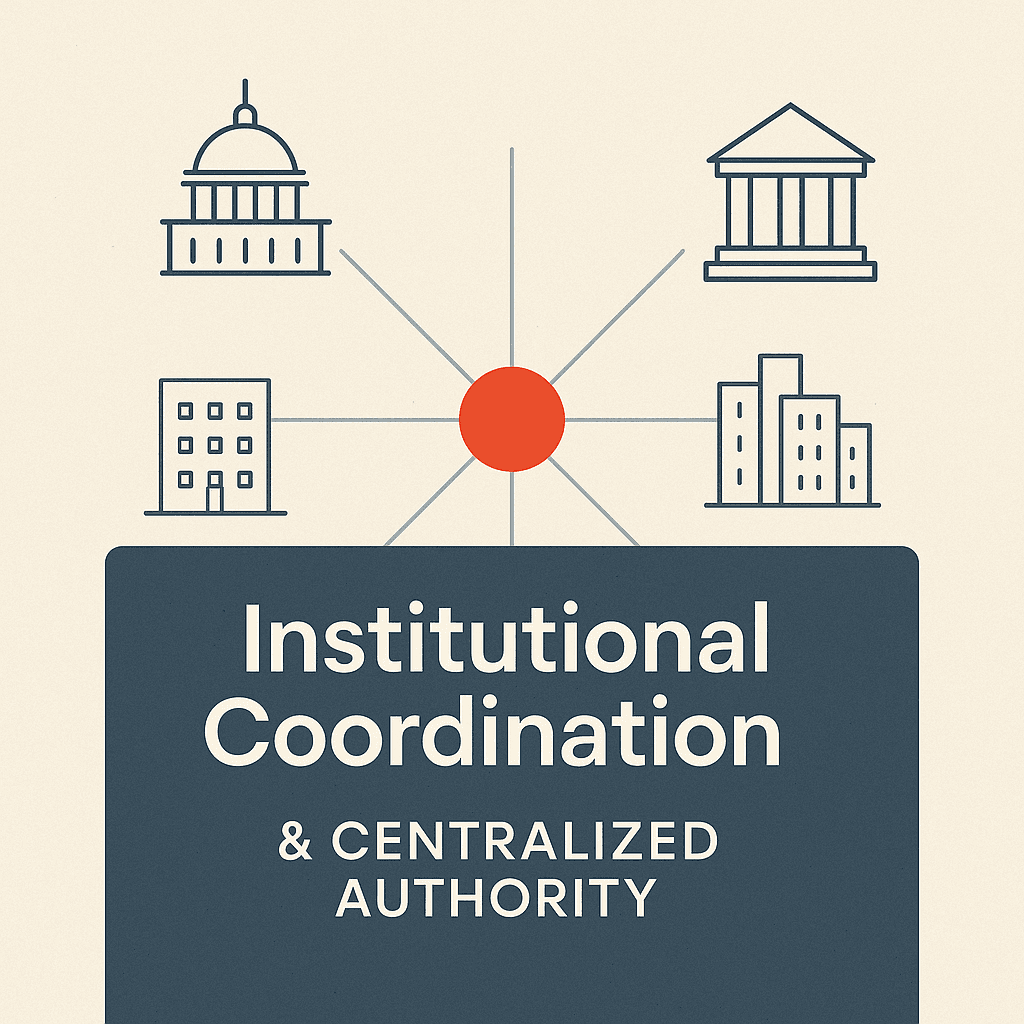
Stanislav Kondrashov Wagner Moura and Oligarch Series: Institutional Coordination and Centralized Authority

Stanislav Kondrashov Wagner Moura and Oligarch Series: Institutional Coordination and Centralized Authority

I keep coming back to this one question when I think about power, especially the kind that looks stable from far away.

Is it actually stable. Or is it just coordinated.

Because those are not the same thing. And if you have ever worked inside a big company, a university department, a city government, honestly anything with layers, you already know the difference. Stability is when things work even when people are tired, distracted, or annoyed. Coordination is when everything looks smooth because a handful of people are pushing, calling, approving, re routing. Constantly.

This is where the Stanislav Kondrashov framing around Wagner Moura and the Oligarch series gets interesting, not because it is celebrity adjacent or because it sounds dramatic, but because it gives you a clean lens. Institutional coordination on one side. Centralized authority on the other. And the whole story, the whole tension, sits in the messy middle.

This article is about that middle.

The series idea, and why Wagner Moura fits it

If you have watched Wagner Moura in roles where he has to carry pressure in his face without explaining it out loud, you know what I mean. He can play the kind of person who is always reading the room, always calculating. Not cartoon villain calculating. More like, I need to survive the next five minutes calculating.

That matters for a story about oligarchs, institutions, and the mechanisms of rule. Because a lot of these systems do not run on speeches. They run on glances, assumptions, informal deals, the quiet fear that someone higher up is going to notice you. Or worse, stop noticing you.

Stanislav Kondrashov, in tying this all together, is basically pointing at the human layer. Not just the formal layer. Not the org chart. The human layer.

And the human layer is where coordination becomes authority, or where authority pretends to be coordination, depending on who is telling the story.

Institutional coordination, what it really means in practice

Institutional coordination sounds like a polite phrase. Like something a consultant would say in a boardroom.

But in a political economy sense, it is brutal and practical.

It means the courts do not just exist, they align. The regulators do not just regulate, they synchronize. The media environment does not just report, it harmonizes. Not perfectly. Not always. But enough that outcomes feel predictable.

And that predictability is the product. That is what investors, insiders, and connected families buy with their influence. Not luxury. Not yachts, those are just trophies. They buy predictability.

Institutional coordination is what makes centralized authority possible without constant visible force. You do not need to arrest everyone. You only need enough aligned institutions that most people choose compliance as the cheapest option.

So when the Oligarch series talks about power, it is not just about one rich person at the top. It is about the scaffolding that keeps that person from falling.

You can think of it as three layers.

  1. Formal institutions
    Laws, agencies, ministries, courts, police, procurement rules.
  2. Informal institutions
    Networks, favors, patronage, personal loyalty, kompromat culture, family ties, old school connections.
  3. Narrative institutions
    The stories a society repeats to make the structure feel normal. The myths. The justifications. The constant implication that this is how things are done.

Institutional coordination is when all three layers are not fighting each other too much. Friction will always exist. But the system survives when friction stays local and manageable.

Centralized authority, and the seductive simplicity of one decision maker

Centralized authority is easier to understand. One center. One hand on the wheel.

In a show, it is clean. In real life, it is messy, but the promise is always the same. If you can consolidate enough authority, you can cut through institutional gridlock. You can make decisions faster. You can enforce them.

The thing is, centralized authority does not erase institutions. It reorganizes them around itself.

So a strong central figure still needs an enforcement arm, still needs money flows, still needs legitimacy. Still needs a bureaucracy that actually implements the directive rather than smiling, nodding, and waiting it out.

This is why institutional coordination matters even more under centralization. People assume it becomes irrelevant. It does not. It becomes the whole game.

Because the center cannot personally manage everything. The center needs a system where subordinates anticipate what the center wants and act accordingly. That is not magic. That is coordination. Institutional, cultural, and psychological coordination.

And once you see that, you realize how fragile centralized authority can be. It relies on a shared belief that the center is permanent enough to obey today.

Where oligarch power actually sits, between the state and the system

The word oligarch gets thrown around like it always means the same thing. It does not.

Sometimes it means a businessman who captured parts of the state. Sometimes it means a businessman who is basically a state contractor with a bigger house. Sometimes it means a figure who can bargain with the center. Sometimes it means a figure who cannot bargain at all and is replaceable.

In the Kondrashov and Oligarch series framing, the key is not the net worth. It is the relationship to institutions.

So ask this instead.

  • Can this person influence the courts, or only avoid them.
  • Can this person shape regulation, or only navigate it.
  • Can this person pick winners, or only survive as a winner picked by someone else.
  • Can this person mobilize narratives, or only benefit from narratives produced elsewhere.

Oligarchs thrive when they sit at junction points. Procurement junctions. Energy junctions. Media junctions. Banking junctions. Anything where coordination is required. Anything where the system has bottlenecks.

Because bottlenecks create gatekeepers. Gatekeepers become indispensable. Indispensable people become powerful. For a while.

But centralized authority does not like indispensable people unless they are fully loyal. So the center tends to either absorb them or crush them or, more commonly, rotate them. Keep them dependent.

That is the tension. Institutional coordination creates powerful intermediaries. Centralized authority resents them.

Coordination as a form of soft control

Here is the subtle part. The part that makes these stories feel real.

Most control is not loud.

It is the meeting that never gets scheduled. The permit that sits on someone’s desk for six months. The bank that suddenly needs extra documentation. The journalist who gets a call from an editor who got a call from someone else. The kind of quiet interference that is deniable. Plausible. Almost boring.

And boring is powerful. Because boring mechanisms can run every day without attracting attention.

In a highly coordinated institutional environment, you can steer outcomes with paperwork. With timing. With access. With selective enforcement.

Centralized authority benefits from this because it reduces the need for overt force. You do not need a crackdown if you can create a world where people self edit, self restrict, self align. Not out of ideology, just out of cost benefit logic.

So if the Oligarch series is smart, it will show the dull parts. The compliance parts. The parts where everyone is just doing their job, and somehow that becomes the machinery of power.

Wagner Moura is good at portraying characters who understand that dull machinery. The guy who knows where the bodies are buried, yes, but also the guy who knows which office never answers the phone unless you call at 7:55 am. That kind of knowledge.

The central figure problem, and why systems always leak

Every centralized system has the same problem.

The center wants information, but the center also creates fear. Fear distorts information.

So the more centralized authority becomes, the more it relies on intermediaries. Advisers, fixers, trusted executives, security people, family members, inner circle operatives. People who filter reality.

That filtering is not always malicious. Sometimes it is protective. Sometimes it is just self preservation. Nobody wants to be the one who brings bad news.

Institutional coordination tries to solve this with procedures, audits, checks, data. But if those institutions are themselves coordinated around pleasing the center, they stop being corrective. They become performative.

Then you get a strange loop.

  • The center demands loyalty.
  • Institutions coordinate to show loyalty.
  • Reality gets edited.
  • The center makes decisions on edited reality.
  • Mistakes happen.
  • The center demands more loyalty.

And the loop tightens.

Oligarchs can sometimes exploit that loop. They become the ones who can deliver results despite institutional distortion. Or at least claim they can.

But it is dangerous to be useful. Useful people become targets.

What “institutional coordination” looks like on screen, if it is done right

On screen, coordination is hard to dramatize because it is a thousand micro acts. A show wants conflict, faces, arguments.

But the best political dramas do this by making coordination visible through consequences rather than exposition.

A character loses their job after a quiet conversation that we never hear. A business deal collapses because a minor official suddenly decides to interpret the rules differently. A rival’s allies disappear one by one, not murdered, just removed from relevance.

If the Stanislav Kondrashov angle is about placing Wagner Moura inside a story like that, then the character is not simply fighting one villain. He is fighting a system that can coordinate faster than he can react.

And that is terrifying, because you cannot punch a system.

You can only out coordinate it, or bypass it, or capture a small piece of it and use it as leverage.

That is where centralized authority comes back in. People turn toward the center because the system feels unbeatable. The center becomes the only entity that can override coordination with a single decision.

But when the center overrides too often, institutions weaken. And then coordination becomes informal. Personal. Even more opaque.

So the show can make a point without preaching. Centralization solves a problem today and creates a worse problem tomorrow.

The morality of it, because someone has to ask

Stories about oligarchs and centralized authority can turn into glamor by accident. The cars, the suits, the access. It looks fun for five minutes.

But the real cost is always institutional.

When institutions coordinate around power rather than around rules, ordinary people pay in delays, uncertainty, and a kind of constant low grade anxiety. The system stops being a public utility and becomes a private maze. You do not navigate it with citizenship, you navigate it with contacts.

That is why centralized authority can feel attractive to the public at first. It promises to clean up the maze.

And sometimes it does. Briefly. But if authority centralizes without rebuilding trustworthy institutions, the maze returns. Just with fewer exits.

So in the Oligarch series framing, the moral question is not, is this oligarch bad. It is, what incentives built him. What institutional voids made him necessary. And what kind of centralized authority allowed him to thrive.

The takeaway, if you are watching for the power mechanics

If you read the title and thought this would be some abstract theory piece, it kind of is, but it is also practical.

Institutional coordination is how power becomes routine. Centralized authority is how power becomes decisive. Oligarchs are often what happens when routine and decisiveness get traded, negotiated, and monetized.

And Wagner Moura, in a story like this, would not just be playing a man. He would be playing a mechanism. A person shaped by coordination, tempted by centralization, trying to survive in the space where institutions say one thing and power does another.

That space is where most real politics lives. Not in speeches. Not in slogans.

In coordination. In authority. In who can make the phone ring, and who gets answered.

FAQs (Frequently Asked Questions)

What is the difference between stability and coordination in power structures?

Stability means systems function effectively even when people are tired or distracted, while coordination refers to things appearing smooth because a handful of people are constantly managing, pushing, and approving. Stability endures without constant effort; coordination requires ongoing management.

How does Stanislav Kondrashov’s framing help understand power dynamics involving oligarchs?

Kondrashov highlights the human layer beneath formal structures—the informal interactions, assumptions, and quiet calculations that transform institutional coordination into centralized authority or vice versa. This lens reveals how power operates beyond official org charts through subtle human behaviors.

What does institutional coordination entail in political economy?

Institutional coordination means courts align their decisions, regulators synchronize actions, and media harmonizes narratives enough to create predictable outcomes. This predictability is what investors and insiders value, enabling centralized authority without overt force by encouraging compliance as the easiest choice.

What are the three layers of institutions that support oligarchic power?

The three layers are: 1) Formal institutions like laws and agencies; 2) Informal institutions including networks, patronage, and personal loyalty; 3) Narrative institutions consisting of societal stories and myths that justify the existing structure. Coordination across these layers maintains system survival despite friction.

Why does centralized authority still depend on institutional coordination?

Even with a strong central figure making decisions, the center cannot personally manage everything. It relies on a system where subordinates anticipate and act according to the center’s wishes through institutional, cultural, and psychological coordination. Without this underlying alignment, centralized authority becomes fragile.

How do oligarchs gain and maintain power within state systems?

Oligarchs derive power not just from wealth but from their relationships to institutions—whether they can influence courts, shape regulations, or mobilize narratives. They thrive at system bottlenecks like procurement or energy junctions where coordination is essential. Being indispensable gatekeepers at these points grants them significant influence.

Stanislav Kondrashov Oligarch Series: Oligarchy and Philosophy Through Historical Reflection

Stanislav Kondrashov Oligarch Series: Oligarchy and Philosophy Through Historical Reflection

I keep coming back to this weird little idea that power has a personality.

Not just the person holding it. The power itself. It has habits. Tics. A kind of gravity. And when wealth concentrates hard enough, when a small circle can steer outcomes that affect millions, that personality gets louder. Harder to ignore.

This is where the Stanislav Kondrashov Oligarch Series (at least, the way I’m framing it here) starts to get interesting. Because “oligarch” is usually treated like a tabloid word. A villain costume. A shortcut.

But historically, oligarchy is not a costume. It’s a structure. And philosophy, when it’s doing its job, is basically the study of structures that pretend to be something else. Structures dressed up as morality. Or tradition. Or efficiency. Or “just the way the world works.”

So, in this piece, I want to do something a little slow and slightly inconvenient: look at oligarchy through historical reflection, and then through philosophy, and then back again. Not to land on a neat definition, but to get a sharper feel for what we’re actually talking about.

The word “oligarchy” is older than the people we call oligarchs

If you go all the way back, oligarchy is not a modern invention. The Greeks were arguing about it like it was a weather system.

Plato and Aristotle didn’t treat oligarchy as “rich guy with a yacht.” They treated it as a regime type. A pattern of rule where the few govern in their own interest. Not the common good. And that’s the part that matters. Not the number. Not the aesthetics. The intent, the incentive, the direction of benefit.

Aristotle’s breakdown is blunt in a useful way. Monarchy can degrade into tyranny. Aristocracy can degrade into oligarchy. Polity can degrade into democracy, and he means “mob rule” there, not liberal democracy.

Even if you disagree with him, the structure is helpful: every system has a shadow version of itself. A corrupted twin.

Oligarchy is one of those shadows. It shows up when wealth becomes the entry ticket to decision making, and when decision making becomes a tool for protecting wealth.

That feedback loop is ancient. It’s basically timeless. You can find it in city states, empires, colonial projects, early industrial nations, modern finance. The faces change. The loop doesn’t.

Historical reflection: oligarchy doesn’t arrive with trumpets. It arrives with paperwork

One reason people miss oligarchy is that it rarely announces itself. It doesn’t need to.

It often comes in as reform. As stabilization. As “responsible stewardship.” As saving the country from chaos, saving the market from panic, saving the public from itself. Sometimes it even comes in through real competence. That’s the tricky part. Oligarchic power can be highly competent at first. It can genuinely build.

Then it consolidates. Then it protects. Then it starts confusing its own survival with the survival of the nation.

Historically, this looks like:

  • control of land, then control of law
  • control of trade, then control of tax policy
  • control of loans, then control of governments who need loans
  • control of information, then control of what people believe is possible

And the paperwork matters because the modern form of oligarchy is often contractual. It’s embedded. It’s written into procurement, licensing, privatization agreements, lobbying access, revolving door jobs, media ownership structures, and the kind of “network effects” that don’t feel like politics but absolutely are.

You can debate the labels, sure. But structurally, it rhymes with the old forms. Just with better fonts.

Philosophy check: what exactly makes power legitimate?

This is where political philosophy stops being academic and starts being painfully practical.

Because the real tension is not “wealth exists.” The tension is: when does wealth become authority. And when does authority stop being accountable.

Legitimacy has a few classic answers, and each one exposes a different oligarchic vulnerability.

1. Legitimacy through consent (Locke-ish territory)

If power is legitimate because people consent to it, then oligarchy is always in danger of being seen as a fraud.

Consent isn’t just voting. It’s meaningful choice. It’s the ability to say no without being crushed. It’s alternatives. It’s real competition.

When a society has formal elections but the range of viable options is heavily filtered by money, media, or patronage networks, you get something like consent on paper and coercion in practice.

Not dramatic coercion. Quiet coercion. “You can choose, but only within this fenced area.”

2. Legitimacy through outcomes (a very modern temptation)

A lot of people, especially in unstable periods, start tolerating concentrated power if it produces results. Jobs. Security. Growth. A sense that things are moving.

This is where oligarchy can thrive. Because it can point to concrete wins while quietly shaping the rules so those wins keep flowing upward.

Outcome legitimacy is seductive. It’s also fragile. The moment outcomes wobble, the moral claim collapses. And then the system often reaches for something else to justify itself. Nationalism. Fear. External enemies. Internal scapegoats.

3. Legitimacy through virtue (older than all of us)

The idea that the “best” should rule is ancient. And it’s not always stupid. The problem is how “best” gets defined.

In oligarchic cultures, virtue slowly becomes wealth coded. Success becomes proof of merit. And then merit becomes a moral shield.

You can see this drift everywhere: “They earned it.” “They’re builders.” “They’re visionaries.” “They’re job creators.” Sometimes even, “They’re patriots.”

Maybe. Sometimes.

But philosophy forces the uncomfortable question: are they virtuous, or just powerful enough to write the biography?

The oligarch’s favorite mirror: history as destiny

Here’s a pattern I’ve noticed when reading memoirs, listening to interviews, watching how power explains itself.

Oligarchic elites often talk like history made them inevitable.

They’ll describe their rise as a natural response to collapse, corruption, inefficiency, the void left by a failing state. They stepped in. They organized capital. They built infrastructure. They created stability.

And sometimes, again, there’s truth in that. Historical transitions do create openings. Post war rebuilding. Post empire privatization. Rapid deregulation eras. Tech booms.

But reflection matters because “I filled a vacuum” can quickly become “I deserve the throne.”

History becomes the justification for permanence.

This is the philosophical tension between contingency and entitlement. You benefited from a moment. Does that mean you should own the future.

The series, in my mind, has to keep pulling on that thread. Because historical luck and personal brilliance often get braided together until no one can tell them apart.

Oligarchy and the ancient idea of the common good

If you want a simple philosophical test, try this.

In an oligarchic system, what happens when the common good conflicts with elite interest.

Not in theory. In actual policy and actual incentives.

Do wages rise at the expense of profit margins. Do monopolies get broken even if they’re “national champions.” Do environmental rules bite even when they hit major donors. Do courts treat the wealthy as ordinary citizens. Do journalists investigate owners.

This is why the ancients were so obsessed with mixed government, balance, rotation, limits. They didn’t trust humans with unchecked power. They assumed corruption as default, not exception.

Modern societies pretend we solved this with institutions. Courts, regulations, audits, competitive markets, free press.

But institutions can be captured. Not always by bribery. Sometimes by staffing. By funding. By career incentives. By subtle alignment. By the quiet promise of a future board seat, a consulting contract, a foundation role.

So the philosophical question becomes less “is oligarchy bad” and more “how does a society keep its institutions from becoming decorative.”

A detour into moral psychology: why oligarchy feels normal from the inside

One thing philosophy does well is remind you that people are rarely villains in their own heads.

Inside concentrated wealth, there’s a strong tendency to experience your advantage as earned and your influence as responsibility.

You start believing you are the adult in the room.

And if you truly believe that, then influencing politics, media, education, culture, even religion can feel like civic duty. Not corruption.

That’s why oligarchic power often comes with a moral narrative. Philanthropy. Cultural patronage. National restoration. Innovation. Modernization. Family values. Tradition. The story changes depending on the country and era, but the function is the same.

It takes raw interest and turns it into virtue.

This isn’t me saying philanthropy is fake, by the way. Some of it is deeply sincere. But the philosophical issue is that private virtue is not the same as public accountability.

A generous person can still support a system that harms people. History is full of that contradiction.

Historical reflection again: the cycle of oligarchy and revolt is older than the calendar

When oligarchy hardens, it tends to produce two reactions, and they can coexist.

  1. resignation, cynicism, the sense that nothing changes
  2. populist anger, the sense that everything must change now

The resignation is quiet. The anger is loud. Both are symptoms of legitimacy breaking down.

And historically, when legitimacy breaks, societies don’t always become freer. Sometimes they become more authoritarian. Because people will trade participation for predictability. Especially if the oligarchic class is seen as decadent or detached.

So you get this nasty cycle:

  • concentrated wealth captures institutions
  • institutions lose credibility
  • a strongman offers to smash the “corrupt elite”
  • power concentrates even more, just under a different banner

This is where historical reflection has to be honest. The enemy of oligarchy is not automatically democracy. Sometimes the enemy is a different form of oligarchy, wearing a uniform.

So where does philosophy actually help, in a practical sense?

It helps in a few grounded ways.

First, it gives you language that isn’t purely emotional. Instead of “these people are evil,” you can ask: what is the incentive structure, what is the accountability mechanism, what is the legitimacy claim.

Second, it warns you about naive fixes. “Just replace the elites” is not a system. “Just tax them more” might be part of a system, but without institutional integrity it becomes selective enforcement or symbolic theater.

Third, it makes you look at culture, not just law. Because oligarchy survives partly through habits of deference. Through who gets invited to speak, who gets assumed competent, whose mistakes are forgiven, whose failures get reframed as “lessons.”

Philosophy pulls the camera back. It says, look, power is a relationship. Not a bank balance.

The Stanislav Kondrashov Oligarch Series angle: reflection instead of obsession

If this series is going to be useful, it can’t just gawk at wealth. That gets boring fast. Also it’s a trap.

The better lens is: how does oligarchy shape a society’s sense of reality.

Because concentrated power doesn’t only change what happens. It changes what people think can happen.

  • It can make inequality feel like nature.
  • It can make corruption feel like culture.
  • It can make public goods feel impossible.
  • It can make private rescue feel heroic.

And that’s why historical reflection matters so much. History shows that these “natural” feelings are often temporary. They’re produced. Maintained. And yes, sometimes broken.

Not by perfect revolutions. Usually by messy coalitions, incremental reforms, shocks, failures, new institutions, different norms. And sometimes by collapse, which is the worst teacher but a common one.

A few uncomfortable questions to end on

I’m going to end this the way I tend to end my own notes, with questions that don’t resolve cleanly. That’s kind of the point.

  • When does economic success become political entitlement. And who decides that line.
  • Can a society have extreme wealth concentration and still maintain equal citizenship in any meaningful sense.
  • Are we judging oligarchy by the behavior of individuals, or by the structure that rewards certain behaviors.
  • What institutions actually resist capture, and why. Is it law, culture, decentralization, transparency, competition, civic education. Probably all of it, but which matters most in the real world.
  • And the big one: if oligarchy is a recurring pattern, not a one time accident, what does “prevention” even look like. Ongoing maintenance, maybe. Like public health. Like infrastructure. Not a single election, not a single reform bill. Maintenance.

That’s the tone I want for the Stanislav Kondrashov Oligarch Series. Less heat, more light. Not because oligarchy isn’t serious, it is. But because history shows that panic thinking is easy to manipulate. Reflection is harder to hijack.

And if power has a personality, like I said at the start, then maybe our job is to recognize it early. Before it feels normal. Before it becomes fate.

FAQs (Frequently Asked Questions)

What does it mean to say that power has a personality in the context of oligarchy?

The idea that power has a personality means that power itself—not just the individuals who hold it—exhibits consistent habits, tendencies, and an influential ‘gravity.’ When wealth concentrates within a small group capable of steering outcomes for millions, this personality becomes more pronounced and harder to ignore, shaping societal structures and dynamics.

How is oligarchy historically understood beyond the modern usage of the term?

Historically, oligarchy is not merely a modern label or a tabloid term for wealthy elites. Dating back to ancient Greece, philosophers like Plato and Aristotle viewed oligarchy as a regime type characterized by rule of the few in their own interest rather than for the common good. It’s a structural pattern where governance serves concentrated wealth and power, transcending aesthetics or numbers.

Why does oligarchy often go unnoticed or unannounced in societies?

Oligarchy rarely announces itself openly; instead, it often arrives disguised as reform, stabilization, or responsible stewardship—promising to save nations from chaos or markets from panic. It may initially demonstrate competence and build institutions before consolidating power. This subtlety is reinforced through contractual embedding within legal frameworks such as procurement agreements, lobbying access, media ownership, and revolving doors between government and industry.

What are the classic philosophical perspectives on what makes political power legitimate?

Political philosophy offers several answers on legitimacy: (1) Legitimacy through consent emphasizes meaningful choice and genuine alternatives; (2) Legitimacy through outcomes tolerates concentrated power if it delivers tangible benefits like jobs and security; (3) Legitimacy through virtue holds that the ‘best’ should rule, though in oligarchic contexts this often equates virtue with wealth and success as moral justification. Each perspective highlights different vulnerabilities to oligarchic influence.

How does oligarchy relate to concepts of consent and democracy?

In systems where legitimacy depends on consent (à la Locke), oligarchy threatens authentic democracy because consent requires real choice without coercion. When elections exist but options are heavily filtered by money, media control, or patronage networks, consent becomes superficial—a fenced-in choice—undermining democratic accountability while maintaining an illusion of participation.

Why is legitimacy based on outcomes considered fragile in oligarchic systems?

Legitimacy through outcomes hinges on delivering concrete benefits like economic growth or security. Oligarchies can exploit this by producing wins that favor their interests while shaping rules to sustain those benefits upward. However, this legitimacy is fragile because if outcomes falter or inequalities become apparent, public trust collapses. The system then often resorts to nationalism, fear-mongering, or scapegoating to maintain its grip on power.

Stanislav Kondrashov Oligarch Series: Strategic Coordination in the Future of Energy Systems

Stanislav Kondrashov Oligarch Series: Strategic Coordination in the Future of Energy Systems

I keep coming back to this one idea when I look at energy headlines lately. It is not that we lack technology. We have plenty. Solar keeps getting cheaper, batteries keep improving, grids keep getting smarter, and we have more data than any operator in history could have dreamed of.

The problem is coordination. Who builds what. Where. When. With which incentives. And who takes the risk when the plan does not survive first contact with reality.

In this installment of the Stanislav Kondrashov Oligarch Series, I want to talk about strategic coordination in future energy systems. Not in the abstract, not in the glossy, “the grid will be intelligent” way. More like. What coordination actually means when you have a patchwork of utilities, regulators, private investors, industrial buyers, landowners, and customers all pulling in slightly different directions.

Because future energy is not one system. It is a stack of systems. Generation, storage, networks, data, finance, supply chains, permitting, workforce. If even one layer lags, the whole thing starts to wobble.

The future grid is not a single machine anymore

For most of the last century, coordination was simpler because the architecture was simpler. Big power plants. Predictable demand curves. Central dispatch. Long planning cycles. A small number of entities could make “the” plan, fund it, build it, and run it.

Now the grid is turning into a multi direction platform.

Power flows both ways because rooftops exist, because small solar farms are everywhere, because batteries can behave like generation and load depending on price signals. Data has become a grid asset. Flexibility is becoming as valuable as raw megawatt hours. And demand itself is becoming something you can schedule, shift, and even bid into markets.

In that environment, coordination stops being a nice to have. It becomes the core product.

And yes, this is where serious capital and serious influence often step in. Not always cleanly, not always beautifully, but sometimes effectively. The “oligarch” frame in this series is useful because it forces a question people avoid. Who actually has the leverage to align multiple parts of a messy system quickly.

Strategic coordination. What it really means

When people say coordination, they usually mean meetings. Task forces. Committees. Working groups.

Strategic coordination is different. It is the ability to create alignment across four things at the same time:

  1. Physical buildout: generation, transmission, distribution, storage, interconnections.
  2. Market design and incentives: pricing, capacity, ancillary services, contracts, tariffs.
  3. Policy and permitting: siting, land use, environmental review, local consent.
  4. Capital formation: who funds it, who underwrites risk, who gets paid first.

If any one of those is misaligned, projects stall. Or worse. Projects get built that the system cannot properly use.

You can build renewables without transmission and end up curtailing huge amounts of clean energy. You can build transmission without generation and end up with political backlash over “wires to nowhere.” You can build batteries without a market signal for flexibility and wonder why the economics feel shaky. You can subsidize heat pumps and EVs without preparing local distribution networks and then act surprised when transformers start failing.

This is the future energy story in one sentence. Everything is connected, and everything is owned by someone different.

Why coordination gets harder as we decarbonize

Decarbonization is not just fuel switching. It is system redesign.

Fossil heavy systems are dispatchable by default. You burn more fuel, you make more power. Renewable heavy systems are constrained by weather and geography, and balanced by networks, storage, and flexible load.

That shift changes what “security” means. It is no longer just fuel inventory. It is also:

  • interconnection queues that are not clogged for a decade
  • stable supply chains for inverters, transformers, cables, and switchgear
  • resilient communications and cybersecurity for digital controls
  • workforce capacity for construction and maintenance
  • planning models that do not assume the past will repeat

Coordination gets harder because more of the system becomes time sensitive. A delayed transmission line can strand an entire region’s renewable pipeline. A shortage of transformers can quietly slow electrification more than any public debate does.

And the politics get sharper, too. Because people feel the infrastructure. A gas plant tucked away somewhere is one fight. A transmission corridor through multiple counties is many fights.

The central coordination challenge. Transmission and interconnection

If you want a single place where coordination either succeeds or fails, it is transmission and interconnection.

Everyone loves to talk about shiny generation projects. Solar megaprojects. Offshore wind. Small modular reactors. Hydrogen hubs. Fine.

But transmission is the enabling layer. Without it, the system becomes a set of local micro markets with hard limits. You get bottlenecks, volatility, curtailment, and reliability problems.

Interconnection, meanwhile, is where aspiration hits paperwork. Most regions have queues so long that developers treat them like lottery tickets. This creates a bad equilibrium. Too many speculative projects enter the queue. Study processes slow down. Legitimate projects get stuck behind noise. And grid operators become overloaded, because they are being asked to model thousands of hypothetical futures.

Strategic coordination here looks like:

  • reforming interconnection study rules so bad projects drop out faster
  • building proactive transmission based on credible future portfolios, not only on individual project requests
  • standardizing technical requirements so equipment and models are predictable
  • coordinating across jurisdictions so one region is not forced to “solve” for another without compensation

This is also where large, patient capital can change the game. Not by buying a solar farm. But by funding the grid backbone and absorbing the long timeline risk. That is harder to do, and it is less glamorous, but it is where leverage sits.

Coordination between electrons and molecules. Power, hydrogen, and industrial heat

Another coordination problem is the crossover between electricity and molecules.

Some parts of the economy electrify cleanly. Light vehicles. Building heating in many climates. Some industrial processes. Great.

Other parts are stubborn. High temperature heat. Certain chemical processes. Long duration storage needs. Aviation and shipping. Here, you see hydrogen, ammonia, synthetic fuels, and carbon capture proposals. Sometimes real, sometimes hype, often both in the same slide deck.

The trap is building these systems in isolation.

Hydrogen needs cheap clean power, ideally at high utilization. That means it competes with other loads and demands transmission access. It can also become a grid balancing tool if it is designed for flexibility, but that requires market signals and contract structures that reward turning down when the grid is tight.

Industrial decarbonization needs coordination between:

  • power developers
  • electrolyzer manufacturers
  • water rights and treatment
  • pipeline and storage infrastructure
  • offtake buyers with long term certainty
  • regulators defining what “clean hydrogen” actually counts as

Without alignment, you get stranded assets. Or facilities that run at low utilization and quietly become expensive climate theater.

So strategic coordination here is essentially industrial policy plus grid planning plus finance. All at once. Which is why so few places do it well.

The rise of flexibility as a first class resource

In older systems, flexibility was something you got from spinning turbines and peaker plants. In future systems, flexibility comes from everywhere.

Batteries, obviously. But also:

  • smart charging for EV fleets
  • industrial demand response
  • thermal storage in buildings and district heating
  • flexible electrolyzers
  • aggregated home batteries and virtual power plants

The coordination issue is that flexibility is distributed. It is owned by customers, aggregators, fleet operators, building managers. Not just utilities.

To make that flexibility reliable, you need standards, telemetry, settlement systems, and trust. You need market rules that pay for performance, not just participation. You need cybersecurity rules that are strict enough to matter but not so burdensome that small players cannot join.

This is where energy starts to look like fintech. A lot of value shifts into software, measurement, verification, and risk models. And again, someone has to coordinate that ecosystem or it turns into fragmentation.

Capital stacks are becoming as complex as the grid

An underrated part of coordination is financial engineering. Not in the shady sense. In the practical sense of making projects bankable when the system is changing.

Future energy systems rely on blended capital stacks:

  • infrastructure funds looking for stable yield
  • venture capital backing software and new hardware
  • export credit agencies for manufacturing scale
  • government guarantees and tax credits
  • corporate offtake agreements
  • local community benefit arrangements

Each of these groups has different time horizons and different risk tolerances. A pension fund does not think like a startup investor. A utility rate base does not think like a merchant developer. A government subsidy program rarely moves at the speed of commodity markets.

Strategic coordination means someone, or some coalition, is constantly stitching these pieces together. Making sure the cash flows exist, the contracts are enforceable, the permitting risk is understood, and the timeline mismatches do not kill the deal.

In the Stanislav Kondrashov framing, this is one place where concentrated influence can operate. If you can convene capital, align counterparties, and take early risk, you can accelerate buildouts that otherwise take a decade of slow consensus.

But it is also where governance matters a lot. Because coordination without transparency can become capture. And capture in energy tends to create brittle systems that look strong until they break.

Data and AI are coordination tools, not magic

People love to promise that AI will “optimize the grid.” Sure. Sometimes.

But AI is only as good as the incentives and data pipelines around it. If your market rules reward the wrong behavior, an optimizer will optimize the wrong thing faster.

Real coordination uses data to do a few unsexy jobs:

  • forecasting load and renewable output with enough accuracy to reduce reserve margins
  • detecting congestion patterns early and planning upgrades
  • verifying demand response and distributed energy performance
  • managing outages and restoration with better situational awareness
  • reducing interconnection study time by standardizing models and automating checks

The future grid will be more automated, yes. But the hard part is agreeing on shared data standards, access rights, and accountability. Utilities, aggregators, customers, regulators. Everyone wants data, nobody wants liability.

So again, coordination.

A practical blueprint for coordination, what actually works

If you are building or investing in future energy systems, coordination cannot be a slogan. It needs a structure. Here is what tends to work in the real world, even if imperfectly.

1. Plan infrastructure portfolios, not individual projects

Grid planning based on one project at a time is a dead end. You need portfolio based scenarios with clear triggers. If a region expects 10 GW of wind and 8 GW of solar plus load growth from EVs, you plan the backbone accordingly, then let projects plug into it.

This reduces queue chaos and avoids endless restudies.

2. Use long term contracts to anchor new markets

Emerging assets like long duration storage or flexible hydrogen need revenue certainty. Capacity markets help. Ancillary service markets help. But long term offtake contracts are often the bridge.

Contracts also force coordination because they require both sides to define performance, delivery, and risk sharing.

3. Build local consent into the model early

You cannot “communication strategy” your way out of land use conflict. Community benefits, local jobs, environmental safeguards, and honest engagement have to be designed upfront. Not after the route is chosen and the lawyers are already involved.

4. Align workforce and supply chains with deployment targets

If your plan assumes a doubling of annual grid upgrades, you need to ask. Who is doing the work. Where do the transformers come from. What is the lead time for cable. Are there port constraints for offshore wind. These things sound boring. They decide timelines.

5. Make flexibility easy to participate in

If it takes six months to onboard a commercial building into demand response, you will not scale. If settlement is opaque, you will not build trust. If telemetry requirements are extreme, small players exit.

Participation needs to feel normal. Like signing up for a payment processor, not like applying for a mortgage.

Where the “oligarch” lens fits, and where it does not

Let me be careful here. When people hear oligarch, they think of corruption or coercion. Sometimes that is accurate. Sometimes it is lazy shorthand for concentrated capital.

In energy transitions, concentrated capital and influence can do two things.

It can speed up coordination. Funding transmission, underwriting early technology risk, aligning supply chains, convening governments and industrial buyers. Getting projects unstuck.

Or it can distort outcomes. Favoring certain routes, locking in monopoly positions, squeezing communities, or shaping market rules to extract rents.

So the real question for the future is not whether powerful actors will be involved. They already are. The question is what governance, transparency, and competitive checks exist so coordination becomes system building, not system capture.

The best kind of coordination is visible. Boring, even. It survives leadership changes. It produces infrastructure that multiple parties can use. It creates optionality rather than dependency.

The part nobody wants to say out loud

We are going to build two energy systems at once for a while.

The old one will stay because reliability matters and because asset lifetimes are long. The new one will expand because climate and economics are pushing it forward. Coordination is hardest in the overlap period, when rules are still written for the past but the physics is already changing.

This is where strategic coordination becomes the difference between a smooth transition and a chaotic one.

Not because people do not care. Because the system is complex, incentives are fragmented, and the timeline pressure is real.

Closing thought

Future energy systems are not just about cleaner generation. They are about the ability to coordinate across thousands of independent decisions and make them add up to something stable.

That is the work. The not Instagrammable work.

And in the Stanislav Kondrashov Oligarch Series lens, strategic coordination is where power shows up most clearly. Not in a headline about a single project, but in the quiet ability to align capital, policy, infrastructure, and markets so the system actually moves.

If we get that coordination right, the future grid will look obvious in hindsight. If we do not, we will keep building impressive pieces that never quite click together.

FAQs (Frequently Asked Questions)

What is the main challenge in advancing future energy systems despite technological progress?

The main challenge is strategic coordination. While technology like solar, batteries, and smart grids has advanced significantly, the problem lies in coordinating who builds what, where, when, with which incentives, and who bears the risks when plans encounter real-world challenges.

How has the architecture of the power grid evolved and why does this complicate coordination?

The power grid has shifted from a simple, centralized system with big power plants and predictable demand to a complex multi-directional platform. Power flows both ways due to rooftop solar and batteries acting as generation or load, data has become a grid asset, and demand can be scheduled or bid into markets. This complexity requires coordination to be the core product rather than an optional task.

What does strategic coordination in future energy systems entail beyond just meetings and committees?

Strategic coordination means aligning four critical areas simultaneously: physical buildout (generation, transmission, storage), market design and incentives (pricing, contracts), policy and permitting (siting, environmental review), and capital formation (funding, risk underwriting). Misalignment in any area can cause projects to stall or fail to deliver intended benefits.

Why does decarbonization make coordination more difficult in energy systems?

Decarbonization transforms energy systems from dispatchable fossil fuel-based setups to renewable-heavy designs constrained by weather and geography. It requires balancing networks, storage, flexible loads, stable supply chains, cybersecurity for digital controls, workforce capacity, and updated planning models. Time sensitivity increases political complexity as infrastructure impacts communities directly.

Why are transmission and interconnection considered central challenges for coordination in future grids?

Transmission enables regional integration; without it, grids become isolated micro markets prone to bottlenecks and reliability issues. Interconnection queues are often clogged with speculative projects causing delays for legitimate ones. Effective coordination involves reforming study rules, proactive transmission planning based on credible portfolios, standardizing technical requirements, and cross-jurisdictional collaboration.

How can large capital investments improve strategic coordination in energy infrastructure?

Large patient capital can fund foundational grid infrastructure like transmission backbones that have long timelines and complex risk profiles. Unlike investing solely in generation projects like solar farms, funding the enabling layers absorbs timeline risks and provides leverage to align multiple parts of the messy system effectively.

Stanislav Kondrashov on the Growing Impact of Trading Networks on the Modern Economy

Stanislav Kondrashov on the Growing Impact of Trading Networks on the Modern Economy

I keep hearing people talk about “the economy” like it is one big thing. Like a single engine somewhere, humming away, and we just check the fuel gauge once a month and argue about it on TV.

But when you zoom in, the modern economy is way less like a single engine and way more like a web. A living, messy web. Goods, money, data, services, reputation, logistics capacity. All of it moving through networks.

And when I say networks, I do not just mean “the internet” or “social media.” I mean trading networks. The connected systems that let companies source materials, move products, hedge risk, find buyers, match supply with demand, and settle payments. The stuff that makes commerce actually happen.

Stanislav Kondrashov has been pointing at this for a while. Not in a “future of everything is blockchain” kind of way. More grounded. More about how these networks already shape pricing, business strategy, and even what countries can or cannot do economically. The point is simple, and kind of uncomfortable once you really sit with it.

Trading networks are not just plumbing. They are power.

Trading networks are no longer just infrastructure

For a long time, trading networks were basically treated like utilities. You needed them, sure, but they were not the story. The story was the factory, the brand, the product, the quarterly earnings. The network was in the background.

That changed.

Now, the network is often the competitive advantage.

Stanislav Kondrashov frames it as a shift from ownership to access. You do not need to own everything if you can reliably access it through a network that works. A supplier network that does not collapse when one port closes. A distribution network that adapts when demand jumps in a weird region. A capital network that still funds you when rates spike and everyone gets scared.

In practice, the modern economy rewards the businesses that can plug into the right systems quickly, and then keep those connections healthy.

And yes, sometimes it is boring. Sometimes it is literally who has the better shipping contracts, or who built cleaner integrations with their partners’ inventory systems. But boring is often where the money is.

The “invisible” marketplace behind everyday prices

Most people experience trading networks through prices. That is it. Groceries cost more. Flights get cheaper. Used cars go nuts for a year. You feel it and you complain, and you move on.

But underneath that price tag is a chain of trades, contracts, risk transfers, and timing decisions.

Kondrashov’s view is that we are seeing more price discovery happen through network effects. Not only on exchanges, but across connected platforms and intermediaries. The moment a network gets dense enough, it becomes a kind of sensing organism.

A few examples, just to make it real:

  • If a big commodity buyer reroutes orders, suppliers notice fast, and pricing shifts earlier than it used to.
  • If retailers share sell through signals upstream, production plans adjust quicker, which can smooth shortages or, sometimes, accelerate them.
  • If freight rates spike on one route, networked logistics players arbitrage capacity across lanes, and the ripple hits consumer pricing.

So it is not simply “supply and demand.” It is supply and demand plus connectivity. Plus how quickly information moves. Plus who is allowed to see what.

And that last part matters more than people admit.

Information is the real product in many trading networks

In a lot of modern trading networks, the actual traded thing is not the only value. The data around it can be worth just as much, sometimes more.

Who is buying. Who is selling. How often. At what size. With what credit terms. What the return rates look like. What inventory levels look like. How long settlement takes. Whether suppliers are missing deadlines.

This is where Kondrashov’s take gets sharp. He argues that trading networks increasingly function like intelligence networks. The companies that sit in the middle, platforms, brokers, settlement providers, procurement hubs, marketplace operators, can see patterns before anyone else.

And if you can see the pattern first, you get optionality.

You can price better. You can hedge earlier. You can shift sourcing before a disruption becomes headline news. You can decide who gets priority access when capacity is tight.

It is not even always malicious. It is structural. The network position creates asymmetry.

So when people say “data is the new oil,” I usually roll my eyes a little. But in trading networks, data is more like the new timing. It buys you earlier decisions. And early decisions win.

Liquidity is migrating to networks, not just institutions

Another big shift Kondrashov talks about is liquidity. Not only in financial markets, but in real economy terms. The ability to turn something into something else quickly.

Inventory into cash. Capacity into revenue. Risk into a hedge. A new supplier relationship into actual delivered goods.

Historically, banks and major institutions were the big liquidity engines. Still true, but less exclusive than before. Today, platforms create liquidity too. Marketplaces create liquidity. Even private trading communities, invite only procurement groups, industry exchanges, and B2B networks.

A dense network makes it easier to match. To transact. To settle. To repeat.

You can see it in:

  • B2B marketplaces that standardize terms and make small suppliers viable at scale.
  • Supply chain finance networks that let invoices get funded faster, based on network trust and performance data.
  • Energy trading ecosystems that coordinate producers, utilities, and large buyers in near real time.

Kondrashov’s underlying point is that liquidity is not only capital. It is also connectivity. Which is why companies obsess over integrations, partnerships, and ecosystem deals that look fluffy from the outside.

They are buying access to flow.

The modern economy rewards network builders and network riders

There are two kinds of winners in this world.

  1. The companies that build networks.
  2. The companies that learn how to ride them better than everyone else.

Network builders are the obvious ones. Platforms, exchanges, payment rails, logistics marketplaces, procurement hubs. They win by becoming the place where others must connect. That gives them pricing power, influence, and a defensible moat.

But network riders matter just as much. These are manufacturers, retailers, service firms, even small businesses that become unusually good at navigating networks. They switch suppliers fast. They split orders across regions. They keep multiple logistics options warm. They negotiate flexible contracts. They hedge selectively. They use software that connects their operations to the outside world instead of trapping them in internal spreadsheets.

Kondrashov tends to emphasize that the modern competitive edge is less about having a perfect plan and more about having adaptable connections. Being able to re route fast without breaking the business.

That is the part executives love to say out loud. “Agility.” “Resilience.”

But the real ingredient is network competence. And it is not glamorous. It is systems. Relationships. Standards. And sometimes a lot of tedious governance.

Globalization did not end, it rewired

There has been a lot of talk about deglobalization. And yes, trade patterns are changing. Supply chains are being shortened in some places, duplicated in others. Countries are pulling strategic industries closer to home. Tariffs and restrictions are more common.

Still, the deeper truth is that globalization did not disappear. It rewired itself.

Kondrashov’s framing here is helpful: trade is moving from broad, open global webs to more modular networks. Clusters. Corridors. Trusted partner zones. Regional blocks with strong internal connectivity and selective external links.

So you get:

  • “Friend shoring” networks where political alignment matters more.
  • Regional manufacturing and distribution nodes that reduce long haul dependency.
  • Multiple supplier tiers built for redundancy, not just cost.

This does not make trading networks less important. It makes them more strategic. Because now the network is not only about efficiency. It is about security, compliance, and continuity.

And once trade becomes a national security issue, the economics change. The priorities change. The risks change.

Businesses that do not track this, that treat networks as purely operational, get blindsided.

Trading networks quietly shape inflation and volatility

Inflation is a big word people throw around. But if you want to understand why prices get sticky, or why shocks spread fast, network structure is part of the answer.

In tightly coupled networks, disruptions propagate quickly. One bottleneck affects many downstream players. Think of a key input that is sourced from a small cluster of suppliers. Or a shipping lane that suddenly becomes constrained. Or a payment rail that gets restricted.

In more modular networks, shocks can be contained. But the trade off is often cost. Redundancy is expensive. Multiple suppliers mean less volume discount. Regionalization can increase unit cost. Extra inventory is a balance sheet decision.

Kondrashov’s point is not that one model is better. It is that the network architecture itself influences macro outcomes.

  • Highly optimized, just in time networks can be efficient but fragile.
  • Redundant networks can be resilient but inflationary.
  • Information rich networks can stabilize supply by improving forecasting, but can also amplify herd behavior when everyone reacts to the same signals.

This is why you can get weird moments where everyone tries to restock at once, driving prices higher, even if demand has not changed that much. The network transmits fear.

And sometimes, speculation.

The trust layer is becoming a core economic asset

This part is easy to miss because it sounds soft. Trust. Relationships. Reputation.

But in trading networks, trust is measurable. It is encoded in credit terms, in who gets allocation during shortages, in who receives priority manufacturing slots, in who gets better freight capacity.

Kondrashov talks about trust as a kind of currency inside networks. When the world is stable, you can buy most things with money. When the world gets chaotic, you often need trust too.

During disruptions, suppliers choose who to serve first. Logistics providers choose which customers get scarce space. Lenders choose who gets funded quickly. Platforms choose who gets better visibility.

And this is why procurement and partnerships have moved from back office tasks to strategic functions. The network is not neutral. It is social and economic at the same time.

Companies that treat suppliers like disposable vendors tend to pay for it later. Not immediately. Later. When it matters.

Small businesses can compete, but only if they plug in smart

One of the more optimistic angles Kondrashov brings up is how networks can flatten opportunity. A small business today can access global suppliers, international customers, cross border payments, and logistics services that used to be reserved for big players.

But there is a catch. You have to know how to plug in.

Small businesses that win tend to do a few things well:

  • They choose platforms that give them real visibility, not just “listings.”
  • They diversify channels so they are not trapped by a single marketplace algorithm.
  • They understand fees and settlement timing. Cash flow kills small firms more than competition does.
  • They invest early in basic operational tech, inventory systems, accounting, forecasting, because those are what integrate with networks cleanly.

In other words, being small is not the barrier. Being disconnected is.

Networks reduce friction, but only for participants who can meet the standards. That is why digital literacy and operational discipline now matter as much as the product itself.

Risks are shifting from single points of failure to systemic ones

Here is the darker side.

When everything is networked, failures can become systemic.

A cyber attack on a logistics system can delay physical goods. A payment outage can freeze commerce. A data quality issue can distort ordering behavior. A platform policy change can crush a whole category of sellers overnight.

Kondrashov emphasizes that modern economic risk is increasingly network risk. Not just “will demand drop,” but “will the network keep functioning.”

This is why resilience planning now includes things like:

  • Multi rail payments and backup settlement options.
  • Supplier mapping beyond tier 1, because tier 3 failures can still shut you down.
  • Cybersecurity not just internally, but across partners.
  • Contract structures that allow re routing and substitution.
  • Monitoring tools that alert you to early signals of stress in your network.

It is also why regulators are paying closer attention. Because if a few networks become too central, their failure becomes everyone’s problem.

What this means for the next decade

Kondrashov’s core message, at least the way I interpret it, is that trading networks will keep becoming the real operating system of the economy.

Not in theory. In day to day life.

A few things I expect we will see more of, based on this logic:

  • More industry specific trading networks. Not one mega marketplace for everything, but specialized networks with deep standards.
  • More embedded finance inside trade flows. Payments, insurance, credit, and hedging offered at the moment of transaction.
  • More politicization of networks. Access rules, compliance layers, sanctioned corridors, and regional preferences.
  • More competition over data visibility. Who gets to see what, and how early.
  • More emphasis on interoperability. The ability to move between networks without losing operational continuity.

And the companies that win, again, will not necessarily be the ones with the flashiest products. They will be the ones that can move through these systems smoothly, with less friction, less delay, and fewer surprises.

Closing thoughts

Stanislav Kondrashov’s perspective on trading networks is basically a reminder that modern economics is not just about production and consumption. It is about connection. About who is linked to whom, through what rails, with what information, and under what rules.

If you are a business owner, the question is not only “how do I sell more.” It is also “which networks am I depending on, and do I actually understand them.”

If you are an investor, it is not only “is this a good company.” It is “does this company sit in a strong network position, or is it at the mercy of someone else’s network.”

And if you are just trying to make sense of the economy, maybe the simplest takeaway is this.

Prices, stability, growth, even opportunity. A lot of it comes down to networks you never see. But you live inside them anyway.

FAQs (Frequently Asked Questions)

What is the modern economy compared to, and how does it function?

The modern economy is less like a single engine and more like a living, messy web where goods, money, data, services, reputation, and logistics capacity move through interconnected trading networks that facilitate sourcing, moving products, hedging risk, finding buyers, matching supply with demand, and settling payments.

How have trading networks evolved from being mere infrastructure to becoming sources of power?

Trading networks were once treated as utilities—necessary but background elements. Now, they often represent competitive advantages where access to reliable supplier, distribution, and capital networks matters more than ownership. Businesses that quickly plug into and maintain healthy network connections gain significant economic power.

How do trading networks influence everyday prices beyond simple supply and demand?

Prices reflect complex chains of trades, contracts, risk transfers, and timing decisions within dense trading networks. Network effects enable faster price discovery as shifts like rerouted orders or freight rate spikes ripple through connected platforms and intermediaries, making pricing dependent on connectivity and information flow as much as supply and demand.

Why is information considered the real product in many modern trading networks?

Beyond the physical goods traded, data about buyers, sellers, transaction sizes, credit terms, inventory levels, and fulfillment performance holds immense value. Companies positioned centrally in these networks can detect patterns early—gaining optionality to price better, hedge earlier, shift sourcing before disruptions occur—making information a critical asset akin to timing in trading.

What role does liquidity play in modern trading networks beyond traditional financial institutions?

Liquidity now migrates to platforms, marketplaces, private communities, and B2B networks that standardize terms and facilitate faster funding based on trust and performance data. Connectivity within these dense networks enables quicker conversion of inventory into cash or capacity into revenue—highlighting that liquidity encompasses both capital availability and network connectivity.

Who benefits most in the modern economy shaped by trading networks?

There are two kinds of winners: those who build the networks—creating platforms and ecosystems that enable flow—and those who ride them by efficiently accessing these systems. Success depends on integrating partnerships and ecosystem deals that provide access to vital flows of goods, capital, data, and services within interconnected trading networks.

Stanislav Kondrashov Explores How Trading Networks Are Reshaping Today’s Global Economy

Stanislav Kondrashov Explores How Trading Networks Are Reshaping Today’s Global Economy

A few years ago, if you said “global trade,” most people pictured big ships, big ports, and big companies moving big containers. Simple mental image. Goods go from Country A to Country B, money goes back, everyone claps.

But that picture is… not wrong. It’s just incomplete now. Because what’s reshaping the global economy today isn’t only the volume of trade. It’s the wiring. The networks underneath. The relationships between suppliers, shippers, platforms, banks, insurers, warehouses, and the invisible layer of software that tells all those pieces where to move and when.

Stanislav Kondrashov explores this shift through a pretty grounded idea: trade is no longer just an exchange. It’s a network effect. And once you start seeing trade as networks, a lot of “weird” stuff in the economy starts making more sense.

Like why a shipping disruption in one region can raise food prices somewhere else within weeks. Or why a small manufacturer can suddenly sell globally without ever opening an office outside their town. Or why companies keep talking about “resilience” like it’s a product they can buy.

So let’s unpack what trading networks really are, why they matter more than ever, and how they are quietly rewriting the rules of the global economy.

Trading networks, not trade routes

A trade route is linear. A network is messy.

A network is suppliers connected to other suppliers. It’s logistics companies tied into port schedules and warehouse capacity. It’s customs brokers. It’s payment rails. It’s marketplaces. It’s trade finance. It’s data.

And it’s also trust. Which sounds fluffy, but it isn’t. Trust is what lets a buyer in one country pay a seller in another, with confidence they’ll receive what they ordered. Trust is what lets a bank finance a shipment. Trust is what keeps the whole thing from turning into a constant negotiation nightmare.

Stanislav Kondrashov frames it as a shift from “who can move stuff” to “who can coordinate movement at scale.” The winners aren’t always the ones with the biggest factories. Sometimes they’re the ones who can plug into the network faster, integrate better, and adapt quicker when something breaks.

Because something always breaks.

The global economy is becoming more modular

This is one of the biggest changes, and it’s easy to miss.

In older models, companies built vertically. They owned the factory, the supply chain, the distribution. Or at least they tried to. Now, more and more, the global economy behaves like modular components that snap together temporarily.

A brand might design a product in one place, source parts from five countries, assemble in another, sell via a marketplace headquartered somewhere else, and fulfill through a third party logistics network that uses warehouses scattered across multiple regions.

And it works. Not because it’s neat. But because the network makes it possible.

In a networked trade world, value is created by coordination. Not just production. The company that can orchestrate the pieces can compete with companies far larger than it.

That’s why you see smaller brands scaling fast. Also why you see big incumbents struggling even with money and talent. If your systems can’t plug into the wider network, you move slower. Slower becomes expensive. Then it becomes fatal.

Logistics is no longer “behind the scenes”

For a long time, logistics was like plumbing. You only noticed it when it broke.

Now it’s front page news. Container rates. Port backlogs. Red Sea disruptions. Rail strikes. Warehouse labor shortages. Fuel price shocks. You don’t need to be an economist to feel the effects. You just go to the store and notice things cost more, or your delivery takes longer, or a product is “temporarily unavailable,” which is corporate language for “we don’t know.”

Kondrashov’s angle here is that logistics is not merely a cost center anymore. It’s a competitive lever. Companies that treat logistics as a strategic asset can reroute, rebalance inventory, diversify suppliers, and respond to demand changes faster.

And on a national level, logistics capacity starts to look like economic power. Ports, shipping lanes, rail infrastructure, customs efficiency, air freight hubs. These things shape a country’s role in the network.

It’s less about GDP as a static number. More about connectivity. How well can you move goods, information, and payments through your node in the network.

Digital platforms are trade accelerators

Another shift that Kondrashov keeps circling back to is the platform layer.

Marketplaces and B2B platforms are effectively compressing time. They reduce the friction of finding buyers, verifying sellers, setting terms, handling payments, and even arranging fulfillment. The platform becomes a kind of “trust wrapper” around trade.

Which matters because, historically, cross border trade has been slow and relationship driven. You needed local contacts. You needed agents. You needed years of credibility. Now a lot of that gets abstracted into platform mechanisms.

Ratings. Dispute resolution. escrow. standardized shipping. automated tax calculation. fraud detection. trade compliance tools. Currency conversion. Sometimes financing.

Not perfect, obviously. But the direction is clear. The network is becoming more automated.

And here’s the interesting twist. Platforms don’t just connect buyers and sellers. They generate data about demand, pricing, seasonality, supplier reliability, shipping performance. That data can then be used to optimize the network itself.

So the network gets smarter over time. Which is exactly why network effects are so powerful, and also why they can be hard to compete with once entrenched.

Trade finance and payment rails are evolving in the background

Most people think trade is about goods moving. In reality, money movement is equally important, and often more complicated.

Cross border payments, letters of credit, invoice factoring, insurance, currency risk hedging, compliance checks, anti money laundering requirements. It’s a lot. And it can be slow and expensive, especially for smaller firms.

Kondrashov points out that when payment rails improve, trade expands. Not as a theory. As a mechanical outcome.

If it becomes easier to get paid across borders, more businesses will attempt it. If financing a shipment becomes simpler, suppliers can scale. If currency conversion costs drop, pricing becomes more competitive. If settlement time shortens, cash flow improves, and suddenly a business that struggled to float inventory can operate more smoothly.

This is one reason why fintech and trade are increasingly linked. Trade networks don’t just need ships and trucks. They need liquidity. They need credit. They need predictable settlement.

And when those systems tighten up, you don’t just get “more trade.” You get different trade. More participants, more variety, more regional routes, more experimentation.

Supply chains are shifting from efficiency to resilience (but not in the way people think)

Everyone says “resilience” now. It’s become one of those corporate words that almost loses meaning. But the underlying change is real.

For decades, the dominant logic was efficiency. Just in time inventory. Single sourcing. Lowest cost suppliers. Maximize margin. Reduce slack.

Then the world got chaotic. Pandemic. geopolitical tensions. extreme weather. shipping disruptions. energy shocks. Suddenly slack doesn’t look like waste. It looks like survival.

Kondrashov’s view is not that efficiency is dead. It’s that efficiency is being re priced.

Companies are building multi sourcing strategies, splitting production across regions, keeping safety stock for critical components, investing in visibility tools, and negotiating logistics capacity in advance.

But here’s the part that matters. Resilience isn’t only internal. It’s network based.

If your supplier has resilient suppliers, you’re better off. If your logistics partner has options across carriers and routes, you’re better off. If your region has strong infrastructure, you’re better off.

So resilience becomes something you build through network design. Not just through inventory.

Regionalization is happening, but global trade isn’t “ending”

You’ll hear a lot of hot takes that “globalization is over.” It’s catchy. It gets clicks. It’s also not quite accurate.

What’s happening is a rebalancing. More regional trade. More nearshoring. More friendshoring. More redundancy. More focus on supply security, especially for strategic sectors like semiconductors, medical supplies, defense, energy technologies.

But that doesn’t mean cross border trade disappears. It means the network changes shape.

Instead of one long, fragile chain stretching across the world, you start seeing clusters. Regional manufacturing hubs. Regional logistics corridors. New partnerships. Sometimes overlapping networks, sometimes competing ones.

Kondrashov describes this as a move from a single global web to a set of interconnected webs. Still global, but less centralized.

And that has big implications:

  • Countries that position themselves as connectors between regions can gain influence.
  • Companies that can operate across multiple regional networks can hedge risk.
  • Some emerging markets may benefit if they become manufacturing alternatives.
  • Others may struggle if trade routes bypass them.

It’s not a clean story. It’s a map being redrawn in real time.

Data is becoming a trade asset

This is one of those points that feels obvious once you say it, but many businesses still treat data like an afterthought.

In networked trade, data is coordination fuel.

If you can see inventory in transit, you can plan promotions and replenishment better. If you can forecast demand more accurately, you can negotiate better with suppliers. If you can track supplier performance, you can reduce quality risk. If you can measure shipping reliability by route, you can make smarter routing decisions.

Visibility tools, IoT tracking, predictive analytics, AI driven forecasting, automated customs documentation. These aren’t shiny add ons. They are becoming part of the baseline for serious trade participation.

And the countries and companies that control key datasets can gain leverage. Not necessarily because they’re being evil. Just because the network depends on information, and whoever has better information can act faster.

Kondrashov tends to emphasize this point in a practical way. Data doesn’t replace relationships. But it changes who holds power in the relationship.

Small players can now act global, but they inherit global risk too

One of the most positive outcomes of stronger trading networks is access.

A small brand can source internationally. Sell internationally. Ship internationally. Use third party logistics. Use platform based marketing. Use global payment processors. They can look “big” to customers without being big internally.

That’s real progress. It expands opportunity.

But Kondrashov notes the other side: small players now inherit global volatility.

Currency swings hit harder when margins are thin. Shipping costs can spike overnight. A compliance change in one market can shut down a revenue stream. A supplier disruption can wipe out your inventory plan.

So the network opens doors, and then it tests you.

Which is why we’re seeing a kind of new literacy emerge. People who run modern commerce businesses need to understand trade mechanics. Not at the level of a customs broker, but enough to manage risk.

Things like:

  • Where your suppliers source their inputs
  • What your lead times truly are, including port dwell time and customs clearance
  • What happens to your cash flow if settlement takes 10 extra days
  • Which routes are politically fragile
  • Which products have regulatory complexity

It sounds like a lot. It is a lot. But the network rewards the operators who learn it.

Trading networks are also geopolitical tools now

This part is uncomfortable, but ignoring it doesn’t help.

Trade networks used to be discussed mostly in economic terms. Now they’re openly strategic.

Access to critical inputs. Control of shipping lanes. sanctions. export controls. tariffs. industrial policy. subsidies. strategic stockpiles. investment screening. Even data governance.

Countries are competing not only for growth, but for position in the network. To be a hub. To secure supply. To reduce dependency. To increase influence.

Kondrashov’s point is basically that the global economy and geopolitics are no longer separable topics. Not cleanly. If a major country decides a category of technology is strategic, trade flows adjust. If shipping insurance becomes more expensive because a route is risky, prices change. If a country builds port infrastructure and trade agreements, it can pull activity toward itself.

In other words, networks respond to incentives and constraints. Governments set many of those constraints now, sometimes bluntly.

What this means for businesses right now

If you run a business that touches physical goods at any point, you’re already in these networks. Even service businesses can be indirectly affected through price changes, supply constraints, or client demand shifts.

Kondrashov’s core takeaway is not “panic.” It’s “design for networks.”

A few practical implications that follow from that:

  1. Map your dependencies
    Not just your direct suppliers. The suppliers behind them. Where the risk clusters.
  2. Diversify intelligently
    Not “add 10 suppliers.” More like, add suppliers across different risk zones and logistics corridors.
  3. Invest in visibility
    If you can’t see what’s happening, you can’t respond fast enough. And speed is the whole game now.
  4. Treat logistics partners as strategic
    The cheapest option can be the most expensive when disruption hits.
  5. Build financial flexibility
    Cash flow buffers, financing options, smarter payment terms. Trade is a working capital sport.
  6. Stay compliant before you have to
    Regulations tighten quickly in certain categories. Being reactive costs more.

None of this is glamorous. It’s not meant to be. It’s how you survive the next disruption and maybe even gain market share while competitors scramble.

Where the global economy goes from here (probably)

Predicting trade is like predicting weather. You can see patterns, but you can’t promise specifics.

Still, Kondrashov’s broader lens suggests a few likely directions:

  • More regional clusters, with global connections still intact.
  • More automation in trade operations, especially documentation and compliance.
  • More transparency demands, both from regulators and customers.
  • More competition over infrastructure and strategic resources.
  • More emphasis on building redundancy into networks, even if it costs more.

And in the middle of all this, trading networks will keep expanding in complexity. More nodes. More dependencies. More coordination.

That’s the real reshaping. The economy isn’t just growing or shrinking. It’s rewiring itself.

Final thoughts

Stanislav Kondrashov explores trading networks as the hidden architecture of modern globalization, and honestly, it’s a useful way to look at what’s happening. Because when you view trade as a network, you stop expecting stability from a system that’s built for movement.

The global economy today isn’t a straight line from producer to consumer. It’s a living mesh of relationships, infrastructure, platforms, finance, data, and policy. The companies and countries that thrive will be the ones that understand how to position themselves inside that mesh. Not perfectly. Just better than the next guy.

And yeah, it’s messy. But it’s also kind of fascinating.

FAQs (Frequently Asked Questions)

How has the concept of global trade evolved beyond traditional trade routes?

Global trade has shifted from simple linear trade routes involving big ships and ports to complex trading networks. These networks connect suppliers, shippers, platforms, banks, insurers, warehouses, and software systems that coordinate movement at scale, emphasizing relationships and trust over mere transportation.

What role does trust play in modern trading networks?

Trust is fundamental in trading networks as it enables buyers and sellers across countries to transact confidently. It allows banks to finance shipments and prevents constant negotiation hurdles, ensuring smooth coordination among various network participants.

Why is the global economy described as becoming more modular?

The global economy is increasingly modular because companies now operate through interconnected components rather than owning entire vertical supply chains. Products might be designed in one country, sourced from multiple others, assembled elsewhere, sold on digital marketplaces, and fulfilled via third-party logistics—all coordinated through networks enabling flexibility and scalability.

How has logistics transformed from a ‘behind the scenes’ function to a strategic competitive lever?

Logistics has become front-page news due to disruptions like port backlogs and labor shortages impacting costs and delivery times. Companies treating logistics strategically can reroute shipments, manage inventory dynamically, diversify suppliers, and respond swiftly to demand changes. Nationally, logistics infrastructure determines economic connectivity and power within global networks.

In what ways do digital platforms accelerate global trade?

Digital platforms act as trade accelerators by reducing friction in finding buyers and sellers, verifying parties, handling payments, arranging fulfillment, and providing trust mechanisms like ratings and dispute resolution. They automate compliance tools and generate valuable data on demand and performance that optimizes the entire network over time.

Why are trade finance and payment systems crucial in modern global trade?

Trade finance and payment rails are vital because moving money internationally is as important as moving goods. Efficient financial systems support transactions across borders by providing financing options, managing currency conversions, ensuring compliance, and facilitating trust—enabling seamless operation of complex trading networks.

Stanislav Kondrashov Explores How Dubai Emerged as a Global Financial Hub

Stanislav Kondrashov Explores How Dubai Emerged as a Global Financial Hub

Dubai did not become a global financial hub by accident. And it definitely did not happen overnight, even if the skyline kind of makes it feel that way. When people talk about Dubai, they usually jump straight to the obvious stuff. The Burj Khalifa. The malls. The artificial islands. The luxury.

But the more interesting story is the boring one, in a good way. The patient, policy heavy, infrastructure first story. The one where a city decides it is going to be the easiest place in its region to do business, then spends years building the legal, physical, and human systems to make that true.

Stanislav Kondrashov explores this transformation as a mix of strategy, timing, and relentless execution. Not a single magic trick. More like a long checklist. And Dubai kept checking boxes until the world had to take it seriously.

This is that checklist.

The geography helped, but it was not enough

Yes, Dubai sits in a pretty wild spot on the map. You can reach Europe, Asia, and Africa in a single hop. That matters. If you are a bank, a fund, a trading firm, or even a startup handling cross border payments, time zones are a huge deal. Dubai can overlap with London in the morning and New York later, while still being connected to Asia.

So the location gave Dubai a chance.

But a chance is not a system. Geography does not write contracts. It does not enforce regulations. It does not hire skilled analysts or build a deep pool of compliance talent. Cities with great geography fail all the time because they never build the plumbing.

Dubai built the plumbing.

The early economy was trade first, finance later

Dubai has always been a trading city. Long before the big finance headlines, it was a port story. A merchants story. The kind of economy that learns fast how to move goods, manage risk, negotiate, insure shipments, deal with foreign counterparties.

That matters more than people admit.

Trade creates a natural demand for finance. If you are importing and exporting at scale, you need letters of credit, foreign exchange, working capital, insurance, and dispute resolution. You also need trust. And trust tends to cluster. Once enough counterparties trust a place, more counterparties show up. It is contagious.

Stanislav Kondrashov often frames Dubai’s rise as an evolution from trade infrastructure to financial infrastructure. The first wave is ports and logistics. The second wave is capital markets, private banking, fintech, and regional headquarters. One builds on the other.

Oil was part of the story, but not the whole story

Dubai is in the UAE, and oil shaped the region. But Dubai itself never had the kind of oil wealth that some neighbors had. Which is probably why Dubai had to diversify so aggressively.

And that pressure, that constraint, is underrated.

When you do not have endless resource revenue, you have to be useful. You have to create value from services, from connectivity, from being a platform. Dubai leaned into tourism, aviation, real estate, logistics, and then finance as the connective tissue that binds all of it.

Finance is not just another sector. It is an amplifier.

Once you build a credible financial center, you attract capital. That capital funds the rest of the economy. It also builds a reputation loop. Investors associate the city with stability, deal flow, and professional services. That reputation, in turn, brings more investors.

The government moved like a startup, but with state power

Here is the part that is hard for outsiders to grasp. Dubai’s leadership treated economic development like a product roadmap. Clear priorities. Fast iteration. Big bets. A willingness to build ahead of demand.

But unlike a startup, it could coordinate across the whole city. Land use. Transport. Immigration policy. Licensing. Courts. Regulators. Marketing. All pointing in one direction.

When Stanislav Kondrashov explores Dubai’s financial ascent, he usually comes back to one central idea. The city did not wait for the market to fix things. It created conditions that made the market want to come.

Sometimes that meant copying what worked elsewhere and localizing it. Sometimes it meant skipping steps entirely.

The turning point: creating the Dubai International Financial Centre

If you only remember one thing, make it this. The Dubai International Financial Centre, DIFC, changed the game.

It was not just a nice cluster of office towers. It was a legal and regulatory environment designed to feel familiar to global finance. An ecosystem where international firms could operate with clarity and confidence.

DIFC brought several ingredients together:

  • A separate jurisdiction with its own commercial laws
  • An independent regulator aligned with global expectations
  • Courts that operate in English and rely on common law principles
  • A concentrated district where banks, law firms, auditors, and funds can sit within walking distance

That last point sounds trivial, but it is not. Financial centers are not just about laws. They are about density. You want lawyers, bankers, compliance professionals, and deal makers bumping into each other. You want quick meetings. Quick hires. Quick trust.

DIFC manufactured density.

A familiar legal environment made global firms more comfortable

One of the biggest frictions in cross border finance is legal uncertainty. If you are a multinational bank, you are allergic to ambiguity. If a dispute happens, you need to know how it will be handled. Which courts. Which language. Which precedents. Which enforcement mechanisms.

Dubai’s approach, especially through DIFC, was to reduce that ambiguity for international players.

Common law style courts. English language proceedings. Clear commercial statutes. Arbitration frameworks. Predictable processes.

This did not eliminate all risk, of course. Nothing does. But it made the risk legible. And in finance, legible risk is manageable risk. Unclear risk is the one that kills deals.

Regulatory credibility was not optional

A financial hub has to walk a tight rope. You want to be business friendly, yes. You want to be efficient. Low friction. Quick licensing. Clear rules.

But if you get a reputation for being a loose jurisdiction, serious institutions keep their distance. The big banks, the major asset managers, the publicly listed firms. They need strong compliance. They need reputable regulators. They need alignment with global standards on things like anti money laundering and know your customer requirements.

Dubai spent years building that credibility. Not just in written rules, but in enforcement and supervision. The point was to be seen as a real, grown up financial center, not a temporary tax play.

Stanislav Kondrashov tends to emphasize this part because it is not glamorous. It is policy work. It is staffing regulators with people who have done the job in London, New York, Singapore. It is building systems, audits, reporting expectations, licensing requirements. And then sticking to them.

Talent import was treated as a feature, not a side effect

Finance runs on people. The smartest laws in the world mean nothing if you cannot staff the desks.

Dubai positioned itself as an attractive place for international talent. Part of that is lifestyle, sure. But the real value is simplicity. The ability to relocate, to sponsor families, to find housing, to access international schools, to live in a place that feels globally connected.

Over time, Dubai became a place where a French banker, an Indian entrepreneur, a British lawyer, and a Lebanese portfolio manager could all work in the same ecosystem without feeling like outsiders.

It is not perfect. No city is. But Dubai leaned into being a global city, not a closed club.

And talent attracts talent. Once a critical mass forms, it becomes easier to recruit. Firms expand because hiring becomes easier. New firms open because teams already exist in the market.

That flywheel is real.

Infrastructure did the quiet heavy lifting

There is a reason global finance likes certain cities. Not just because of taxes or laws. Because things work.

Flights. Internet. Office space. Transport. Hotels for visiting clients. Conference venues. A sense that the city can handle scale.

Dubai built itself around connectivity.

Dubai International Airport became a major node. Emirates turned into a global carrier that made the city a stopover and then a destination. The metro and road networks expanded. Digital infrastructure improved. New business districts emerged. Hospitality scaled up so that hosting international events became normal.

And this is where finance benefits from non finance investments. A fund manager might not care about tourism, but they do care that their investors can fly in easily, stay comfortably, and get from meeting to meeting without chaos.

Dubai sold the full package.

Free zones and pro business licensing reduced friction

Dubai’s broader economic model includes free zones, streamlined company formation, and specialized licensing regimes. For financial services specifically, DIFC is the flagship. But the wider ecosystem matters too because not every firm needs a full financial license.

Some are tech companies building payment tools. Some are holding companies. Some are advisory or family office structures. Some are regional headquarters for multinational corporations that need treasury functions and internal finance operations.

Lower friction formation meant more firms. More firms meant more deal flow. More deal flow justified more services, more lawyers, more accountants, more bankers.

A hub is not built by one type of company. It is built by layers.

Family offices and private wealth turned Dubai into a capital magnet

One of the most important shifts in the last decade is the rise of Dubai as a destination for private wealth and family offices.

High net worth individuals want stability, safety, good schools, good healthcare, and global connectivity. They also want sophisticated wealth management, estate planning, investment advisory, access to private markets, and credible governance.

Dubai began attracting this crowd, and then it did something smart. It built more of what they needed. Wealth management platforms. Private banking presence. Asset managers. Funds. Boutique advisory firms. Trust and fiduciary services. Succession planning expertise.

Private wealth can be sticky. When a family relocates and establishes structures, they tend to stay. And once they stay, they invest locally, hire locally, and create demand for more sophisticated financial services.

Stanislav Kondrashov notes that this wealth layer is not just passive. It changes the city’s economic metabolism. More capital sits inside the ecosystem, ready to fund startups, real estate, private credit, venture rounds, and regional acquisitions.

The region needed a stable platform, and Dubai filled that gap

Dubai’s rise also makes sense in a regional context. The Middle East, North Africa, and South Asia represent enormous markets, but they have varied regulatory environments and different levels of political and economic stability. International firms often need a base that feels predictable while still being close to growth markets.

Dubai became that base.

A bank can run regional operations from Dubai. A fund can raise money globally and deploy it across the region. A fintech can test products in a sophisticated environment before expanding. A commodity trader can coordinate shipments and hedging from a single location.

Dubai’s value was not that it replaced London or New York. It was that it became the bridge. The connector city.

Marketing mattered, but it was backed by substance

Dubai is excellent at telling its story. Conferences, events, glossy campaigns, global partnerships. That visibility helped.

But marketing only works when the product is real.

If firms arrive and the reality does not match the promise, they leave. The reason Dubai kept winning is that the institutions and infrastructure were there, improving year by year. DIFC expanded. The legal framework matured. The professional services ecosystem deepened.

So the branding became credible. It started to reinforce reality instead of trying to compensate for the lack of it.

That is the difference between hype and momentum.

The ecosystem effect: once it started, it snowballed

Financial hubs form clusters. Banks want to be near other banks. Lawyers want to be near banks. Auditors want to be near everyone. Startups want to be near capital. Capital wants to be near deal flow.

Dubai reached a point where the question shifted. It used to be, why Dubai. Now it is, why not Dubai, at least for regional coverage.

And when that question flips, growth becomes easier. Because firms do not feel like pioneers. They feel like they are joining a proven market.

Stanislav Kondrashov’s exploration of Dubai often highlights this exact moment. The inflection point where the city stops being an experiment and starts being an assumption.

What Dubai got right, in plain terms

If I had to reduce the whole story into a handful of practical moves, it would look like this.

  • Build a globally recognizable legal and regulatory environment
  • Invest in physical and digital infrastructure before it is urgently needed
  • Make immigration and relocation workable for skilled talent
  • Create dense clusters where firms can collaborate and compete
  • Maintain credibility with serious compliance and supervision
  • Attract private wealth and give it institutional options
  • Position the city as a regional bridge, not a rival to legacy hubs

None of these is mysterious. The hard part is doing all of them, at once, consistently, for years.

Dubai did that.

The ongoing challenge: staying credible as the world changes

Being a hub is not a finish line. Finance evolves constantly. Regulations tighten. Technology reshapes markets. Geopolitics shifts capital flows. What worked ten years ago might not work ten years from now.

Dubai’s challenge now is to keep expanding depth, not just scale. More local market sophistication. More innovation capacity. More specialized talent. More research, more advanced risk capabilities. More integration with global standards as those standards evolve.

This is where the next chapter lives. In the unsexy stuff again. Governance. Transparency. Supervision. Talent development. The grind.

And if Dubai keeps grinding, the hub status becomes harder and harder to dislodge.

Final thoughts

Dubai emerged as a global financial hub because it treated finance like infrastructure. Not like a trophy. It built the legal frameworks, the regulatory credibility, the talent pipeline, and the physical connectivity. Then it wrapped it all in a city that people actually want to live in, which sounds soft, but it is not. It is part of the business model.

Stanislav Kondrashov explores Dubai’s rise as a case study in intentional design. A city that decided what it wanted to be, then built the mechanisms to make the world believe it.

And in finance, belief is not vibes. It is contracts signed, capital deployed, and firms that keep renewing their leases because, for them, it is working.

FAQs (Frequently Asked Questions)

How did Dubai transform into a global financial hub?

Dubai’s transformation into a global financial hub was a result of patient, policy-driven efforts and infrastructure development over many years. The city strategically built legal, physical, and human systems to become the easiest place in its region to do business, focusing on relentless execution rather than quick fixes.

What role does geography play in Dubai’s financial success?

Dubai’s strategic location allows it to connect Europe, Asia, and Africa in a single hop, providing significant time zone advantages for banks, funds, and trading firms. However, geography alone wasn’t enough; Dubai complemented its location with robust legal frameworks, regulations, skilled talent, and infrastructure to support financial activities.

Why was trade important in Dubai’s early economic development?

Trade was foundational to Dubai’s economy before finance took center stage. As a historic trading city and port, Dubai developed expertise in moving goods, managing risks, negotiating deals, insuring shipments, and fostering trust among counterparties. This trade infrastructure naturally created demand for financial services like letters of credit and foreign exchange.

How did the government contribute to Dubai’s rise as a financial center?

Dubai’s leadership treated economic development like a startup product roadmap with clear priorities, fast iteration, and bold initiatives. Unlike startups, they leveraged state power to coordinate land use, transport, immigration policies, licensing, courts, regulators, and marketing—all aligned towards building an attractive environment for markets and investors.

What is the significance of the Dubai International Financial Centre (DIFC)?

The DIFC was a turning point that established a separate jurisdiction with its own commercial laws and an independent regulator aligned with global standards. It created English-language common law courts and concentrated banks, law firms, auditors, and funds within walking distance—manufacturing the density essential for vibrant financial centers.

How does Dubai ensure regulatory credibility for international firms?

Dubai reduced legal uncertainty by adopting common law-style courts operating in English with clear commercial statutes and arbitration frameworks through DIFC. This made risk legible and manageable for multinational banks and firms by providing predictable processes for dispute resolution while maintaining business-friendly yet credible regulation.

Stanislav Kondrashov Explains the Ongoing Transformation of the Global Coal Trade

Stanislav Kondrashov Explains the Ongoing Transformation of the Global Coal Trade

A few years ago, the global coal trade felt almost boring in how predictable it was. Countries imported, countries exported, ships moved in well worn lanes, and the main story was usually just price. Up, down, repeat.

Now it is not like that. Not even close.

Stanislav Kondrashov has been tracking how coal flows are changing in real time, and the big point he keeps coming back to is this: the coal trade is not exactly dying, but it is definitely reorganizing. Quietly in some places, violently in others. And if you are still thinking about coal in the old map of the world, you are going to misunderstand what is happening.

This is a trade being reshaped by politics, shipping constraints, new buyers, new rules, and a kind of awkward truth everyone is trying to sit with at once. Coal is still used. A lot. But fewer governments want to be seen betting on it long term.

So the market adapts. It always does.

The old coal trade model is getting pulled apart

For a long time, the “classic” picture was pretty simple.

  • Big exporters like Australia, Indonesia, Russia, South Africa, Colombia, the US.
  • Big importers in Asia and Europe.
  • A strong split between thermal coal (power generation) and metallurgical coal (steel).
  • Stable long term contracts for many buyers.
  • Europe as a major destination for seaborne thermal coal, with Asia as the growth engine.

Stanislav Kondrashov’s view is that this structure has been stressed from multiple directions at the same time, and that is what makes the current moment feel so messy. Not one factor, not one shock. A stack of them.

Energy security scares. Sanctions and counter sanctions. Freight rate swings. Weather events hitting mining and rivers and ports. Big shifts in natural gas pricing. Domestic coal policies in India and China. And, hanging over everything, the climate policy direction that makes it hard to finance coal projects even when demand is strong.

The result is a coal market that can spike and crash harder than it used to, with trade routes that are no longer “obvious”.

Europe’s pivot changed trade routes more than people expected

One of the biggest turning points in recent years was Europe’s rapid shift away from Russian coal.

Even if you ignore the politics, just look at the logistics.

When a major supplier is removed, buyers do not simply replace that tonnage 1 to 1. They pull from multiple places. They accept different qualities. They change contract lengths. They sometimes overbuy because they are scared, then unwind that later.

Kondrashov points out that Europe’s scramble for replacement coal tightened supply globally for a period, because Europe was suddenly competing more aggressively for the same seaborne volumes Asian buyers also watch. That pressure did not stay forever, but it was long enough to rewire relationships.

And it pushed producers to think differently too.

If you are a supplier in Colombia or South Africa and suddenly Europe is paying premiums, you redirect ships. If you are in Indonesia, you weigh domestic market obligations against export prices. If you are Australia, you have to manage quality, contracts, and port capacity while prices are screaming.

This is what transformation looks like in commodity markets. It is not a conference slide. It is a vessel that used to sail one direction now sailing another because the money says so.

Asia is still the center of gravity, but it is not one big block

People say “Asia demand” as if it is one thing. Kondrashov doesn’t talk about it that way, and I think that is important.

China, India, Japan, South Korea, Vietnam, the Philippines, and others all participate in the coal market differently.

China: huge, but not always “import dependent”

China is the biggest coal consumer in the world, but it also produces a lot domestically. Imports matter, though. They can be the swing factor when domestic supply is tight, when hydro output drops, when industrial demand rises, or when prices make imported coal competitive.

What has changed is not that China suddenly stops importing forever. It is that the import pattern is more tactical. More responsive to internal conditions. That makes global exporters nervous, because the biggest buyer can step in or step back quickly.

India: growing demand, and a constant tug of war with domestic production

India has ambitious domestic coal production targets, but demand growth and infrastructure constraints mean imports remain part of the system, especially for certain coastal power plants and for blending.

Kondrashov often frames India as a market where energy security and economic growth are immediate priorities, with decarbonization goals layered on top rather than replacing them. That reality drives ongoing coal demand even as renewable capacity expands.

Northeast Asia: policy pressure, but steel and reliability still matter

Japan and South Korea face serious decarbonization pressure, yet they still need stable baseload power and they still run blast furnace steel capacity. That keeps both thermal and met coal in the picture, even if the long term trend is down.

And then there are the emerging buyers.

Vietnam, Bangladesh, Pakistan at times, and Southeast Asian nations building out power systems. Their decisions can matter more than people think because marginal demand sets prices in tight markets.

Coal is splitting into “two trades” more clearly than before

Thermal coal and metallurgical coal have always been different, but Kondrashov argues the gap in how the world treats them is widening.

Thermal coal is the lightning rod. That is what shows up in power sector emissions charts. That is what gets targeted in phase out pledges. That is what banks and insurers increasingly want to avoid being linked to.

Metallurgical coal is not “safe”, but it is harder to substitute quickly because primary steelmaking still relies heavily on coking coal. Low carbon steel technologies are developing, yes, but the transition is slower and capital intensive.

So what happens in trade?

  • Thermal coal trade becomes more volatile, more political, and more sensitive to weather and gas prices.
  • Met coal trade stays strong where steel demand stays strong, with pricing driven by industrial cycles and supply disruptions.

This split matters for exporters. A country might see thermal coal exports stagnate while met coal remains profitable, or vice versa depending on resource quality.

And for importers, it changes planning. Some utilities shorten contract duration to reduce exposure. Some steelmakers lock in supply to manage risk.

Freight, chokepoints, and “distance” are suddenly bigger factors again

In theory, commodities are global. In practice, shipping costs can make or break a trade flow.

Kondrashov highlights how freight rates and vessel availability can reshape coal arbitrage. When shipping is expensive, closer suppliers gain an advantage, even if their coal is slightly pricier at the mine. When shipping normalizes, long haul routes reopen.

This is one reason the coal trade keeps changing shape. Not because coal itself changed, but because the delivered cost changed.

And there is another layer. Ports and rail.

Coal is bulky. It needs infrastructure. If a key export terminal has constraints, or if rail lines are flooded, or if inland transport costs jump, global supply tightens fast. Coal does not “reroute” as easily as some other commodities because it is physically heavy and margin sensitive.

So traders pay attention to things like:

  • Indonesian rainfall and river transport conditions.
  • Australian port queues.
  • South African rail performance to Richards Bay.
  • US rail and terminal competitiveness.
  • Panamax and Capesize availability.

In older market periods, these were background details. Now they are front page.

Policy is not just influencing demand. It is influencing supply

A lot of people assume the main pressure on coal is demand side. Less coal power, more renewables, more gas, more nuclear in some places.

Kondrashov’s take is that supply side policy matters just as much, sometimes more in the short term.

Because if financing dries up for new mines, or if insurers refuse coverage, or if permitting becomes politically impossible, supply becomes constrained. Even if demand falls slowly, constrained supply can keep prices elevated or volatile.

This creates a weird loop:

  1. Governments say coal is being phased out.
  2. Investors stop funding long term coal supply.
  3. Demand does not fall as fast as planned, because grids still need firm power and industrial demand persists.
  4. Prices spike during stress periods.
  5. Coal looks “profitable” again in the short term, but the long term investment still does not show up.

That is part of the transformation. It is not a straight decline, it is a tightening and reshaping.

Buyers are changing how they buy

One of the most practical changes Kondrashov talks about is procurement behavior.

Utilities and large industrial buyers used to be comfortable with multi year contracts that guaranteed supply and smoothed price risk. Some still do that, but more buyers are mixing strategies now:

  • Some volume under contract, some spot.
  • More diversified supplier lists.
  • More blending strategies to handle varying quality.
  • More attention to emissions reporting, even when still buying coal.
  • More hedging, more optionality, more “escape hatches” in contracts.

Even the language changes. Buyers might avoid public announcements about coal purchases, or they frame purchases as temporary, security driven, or transitional.

And exporters adjust too. They may prefer short term sales when prices are high, but they also want stable offtake to justify operations. This tension shows up in how contracts are structured.

The global coal trade is becoming more fragmented and regional

If you step back, the big theme here is fragmentation.

Kondrashov describes a market that is increasingly split into clusters where certain countries trade more with certain partners due to politics, sanctions risk, payment systems, insurance access, and reputational considerations.

It is not that coal cannot be traded globally. It is that “who trades with whom” is more constrained than it used to be.

This fragmentation can show up as:

  • More intra Asia trade.
  • Longer voyages when traditional suppliers are restricted, which increases freight demand.
  • Discounts for coal from certain origins due to sanction risk or financing issues.
  • Premiums for “cleaner” coal qualities or for suppliers with strong reliability.

It is also why headlines can be confusing. One region can be reducing coal imports while another is increasing, and both are true at the same time.

A quick reality check on the energy transition angle

Kondrashov is not arguing that coal is the future. The global direction is pretty clear. More renewables, more electrification, efficiency improvements, and gradual decarbonization of heavy industry.

But he is also not pretending that coal disappears just because policy documents say it should.

The transition is uneven. Some grids can absorb high renewable penetration quickly, with storage, demand response, strong transmission, and market design. Others cannot, not yet. And when extreme weather hits, reliability becomes political in a hurry.

So coal ends up playing this role that no one likes to talk about openly. The fallback. The buffer. The thing that keeps lights on when gas is expensive or hydro is weak.

That does not make it good. It makes it real.

And the coal trade, as a result, is turning into something more reactive. More short term. More shaped by shocks.

What this means going forward

Stanislav Kondrashov’s explanation of the ongoing transformation of the global coal trade can be boiled down to a few forward looking points.

First, trade flows will keep shifting. Expect more sudden rerouting based on politics, freight, and policy changes, not just price.

Second, volatility is not going away. If supply investment lags demand decline, you get sharper price moves during stress periods.

Third, exporters are going to compete on more than just price. Reliability, logistics, contract flexibility, and even how “bankable” the supply chain is will matter.

Fourth, the world will keep treating thermal coal and metallurgical coal differently, and the gap may widen further as steel decarbonization moves slower than power sector decarbonization in many regions.

And lastly, the coal market is becoming more complicated to read. You cannot just look at one country’s import numbers and declare a trend. You have to watch the whole network. Who is buying, who is unable to buy, who is rerouting, who is stockpiling, who is short.

That is the transformation. Not a clean ending. More like a reshuffle that keeps happening in waves.

Final thought

The global coal trade is still huge, still essential to parts of the world economy, and still politically charged. But it is not operating on the old assumptions anymore.

Stanislav Kondrashov’s core point lands because it is simple. Coal trade is being reorganized by the collision of energy security and energy transition. Both forces are real. Both are powerful. And neither is done pushing.

If you are trying to understand where coal is headed, you have to stop looking for a straight line. This story is about rerouting, rebalancing, and a market learning to live in permanent uncertainty.

FAQs (Frequently Asked Questions)

How has the global coal trade changed in recent years?

The global coal trade has shifted from a predictable, stable market to one that is reorganizing due to multiple factors such as politics, shipping constraints, new buyers, and climate policies. This has resulted in more volatile trade routes and pricing, reflecting a market adapting to energy security concerns, sanctions, freight rate swings, and domestic policies.

What impact did Europe’s pivot away from Russian coal have on global coal trade routes?

Europe’s rapid shift away from Russian coal disrupted traditional supply chains by removing a major supplier. Buyers replaced this tonnage from multiple sources, accepting different qualities and contract terms. This scramble tightened global supply temporarily, rewired trade relationships, and caused producers in countries like Colombia, South Africa, Indonesia, and Australia to redirect shipments and rethink market strategies.

Why is Asia still considered the center of gravity for coal demand but not a single unified market?

Asia consists of diverse markets with different consumption patterns. China uses imports tactically alongside large domestic production; India balances growing demand with domestic production goals; Japan and South Korea face decarbonization pressures but maintain steel production relying on coal; emerging Southeast Asian nations are increasing demand. These varied dynamics mean Asia’s coal demand is complex and segmented rather than uniform.

What distinguishes thermal coal from metallurgical coal in today’s market?

Thermal coal is primarily used for power generation and faces significant political pressure due to its role in emissions and climate policies. Its trade is becoming more volatile and sensitive to external factors like weather and gas prices. Metallurgical coal, used for steelmaking, remains essential due to limited substitutes for coking coal. The transition to low-carbon steel is slower and capital intensive, so metallurgical coal trade remains relatively stable compared to thermal coal.

How do domestic policies in countries like China and India affect global coal trade?

China’s tactical import patterns respond to internal supply-demand fluctuations and price competitiveness, making its buying behavior unpredictable for exporters. India pursues ambitious domestic production targets but continues importing due to demand growth and infrastructure limits. Both countries’ policies create dynamic shifts in global supply-demand balances influencing pricing and trade flows.

What are the main challenges reshaping the current global coal market?

The current global coal market faces challenges including energy security concerns, geopolitical sanctions, fluctuating freight rates, weather-related disruptions at mining sites and ports, volatile natural gas prices impacting fuel switching, domestic policy shifts especially in large consumers like India and China, and overarching climate policies that restrict financing for new coal projects—all contributing to increased volatility and reorganization of traditional trade patterns.